


Exacerbation of noise-induced hearing loss in mice lacking the glutamate transporter GLAST
- PMID: 11102482
- PMCID: PMC6773045
- DOI: 10.1523/JNEUROSCI.20-23-08750.2000
Exacerbation of noise-induced hearing loss in mice lacking the glutamate transporter GLAST
Abstract
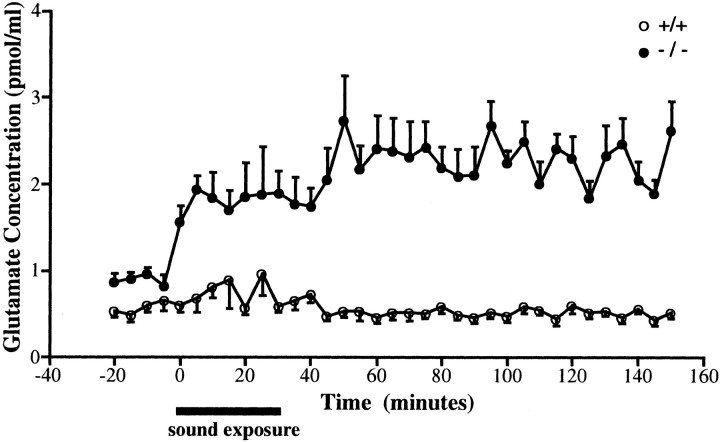
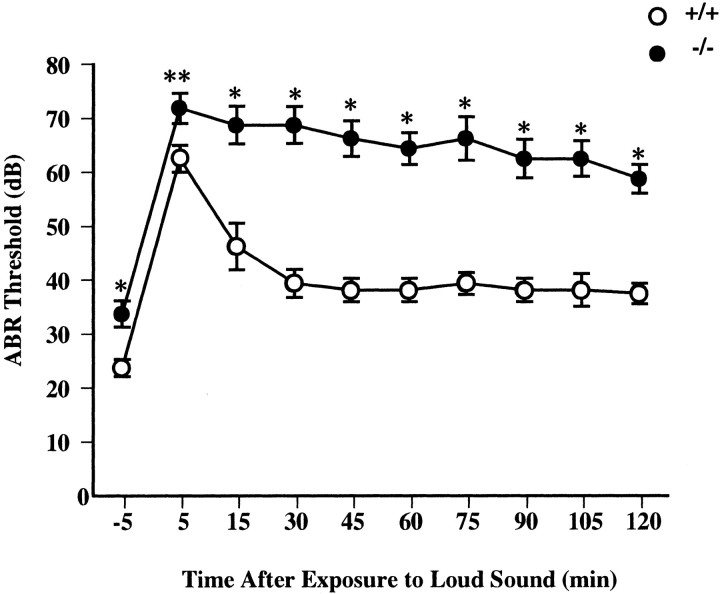
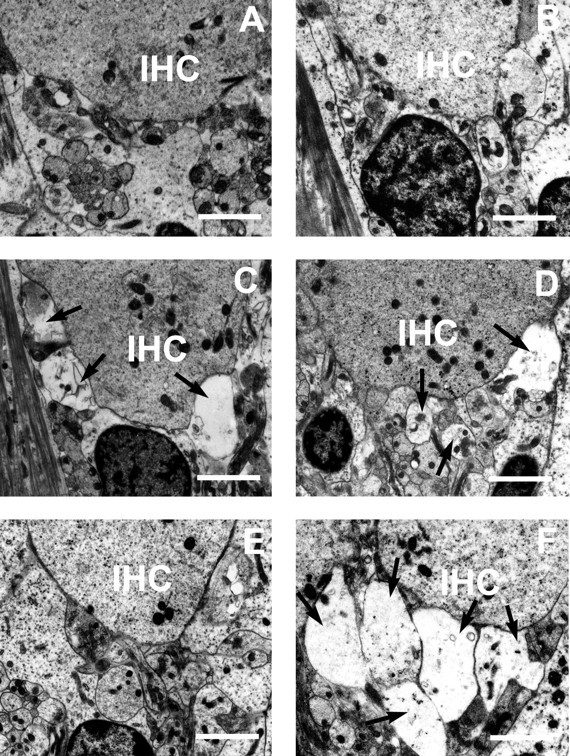
Acoustic overstimulation is one of the major causes of hearing loss. Glutamate is the most likely candidate neurotransmitter for afferent synapses in the peripheral auditory system, so it was proposed that glutamate excitotoxicity may be involved in noise trauma. However, there has been no direct evidence that noise trauma is caused by excessive release of glutamate from the inner hair cells (IHCs) during sound exposure because studies have been hampered by powerful glutamate uptake systems in the cochlea. GLAST is a glutamate transporter highly expressed in the cochlea. Here we show that after acoustic overstimulation, GLAST-deficient mice show increased accumulation of glutamate in perilymphs, resulting in exacerbation of hearing loss. These results suggest that GLAST plays an important role in keeping the concentration of glutamate in the perilymph at a nontoxic level during acoustic overstimulation. These findings also provide further support for the hypothesis that IHCs use glutamate as a neurotransmitter.
Figures

References
-
- Basile AS, Huang JM, Xie C, Webster D, Berlin C, Skolnick P. N-methyl-d-aspartate antagonists limit aminoglycoside antibiotic-induced hearing loss. Nat Med. 1996;2:1338–1343. - PubMed
-
- Eybalin M. Neurotransmitters and neuromodulators of the mammalian cochlea. Physiol Rev. 1993;73:309–373. - PubMed
-
- Furness DN, Lehre KP. Immunocytochemical localization of a high-affinity glutamate-aspartate transporter, GLAST, in the rat and guinea-pig cochlea. Eur J Neurosci. 1997;9:1961–1969. - PubMed
-
- Greenwood DD. A cochlear frequency-position function for several species—29 years later. J Acoust Soc Am. 1990;87:2592–2605. - PubMed
Publication types
MeSH terms
Substances
LinkOut - more resources
Full Text Sources
Molecular Biology Databases
