


GABAergic inhibition suppresses paroxysmal network activity in the neonatal rodent hippocampus and neocortex
- PMID: 11102490
- PMCID: PMC6773095
- DOI: 10.1523/JNEUROSCI.20-23-08822.2000
GABAergic inhibition suppresses paroxysmal network activity in the neonatal rodent hippocampus and neocortex
Abstract
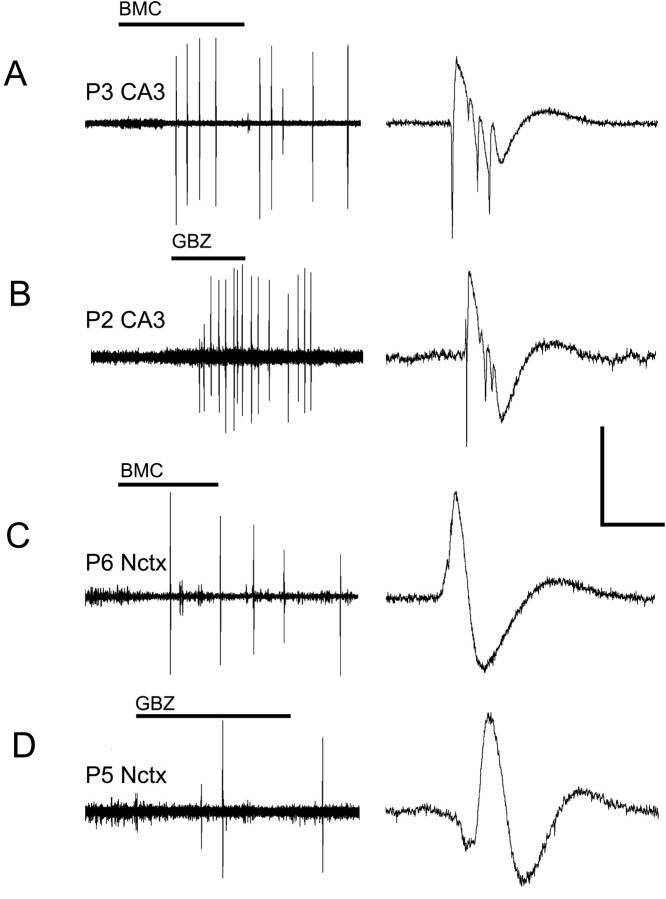
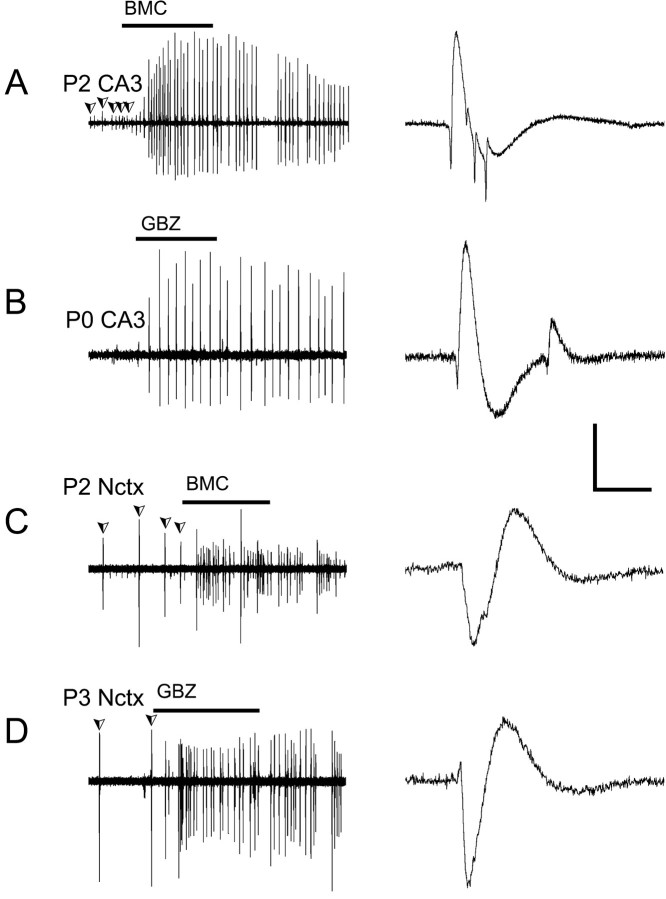
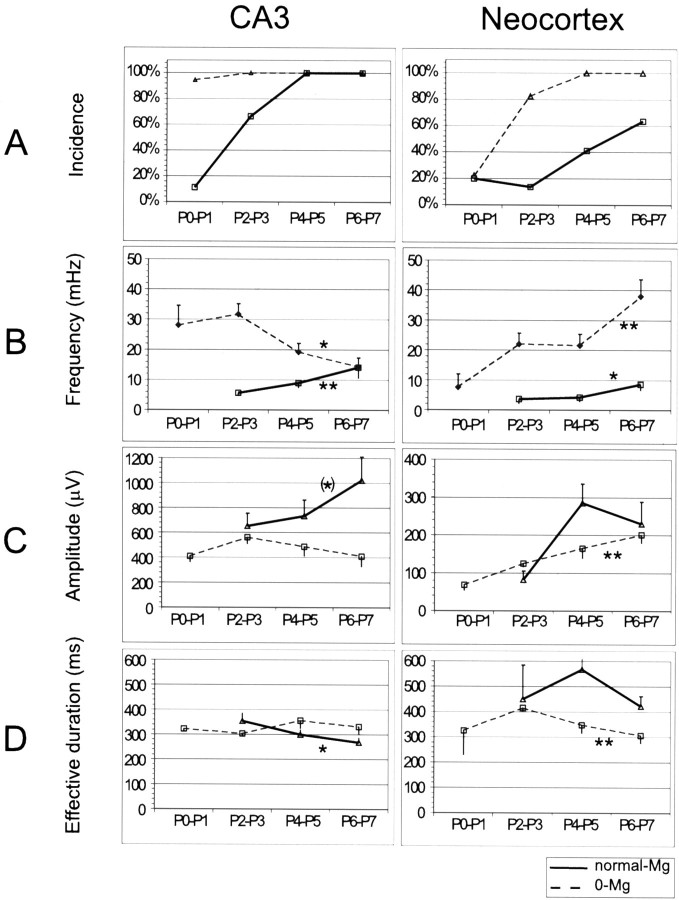
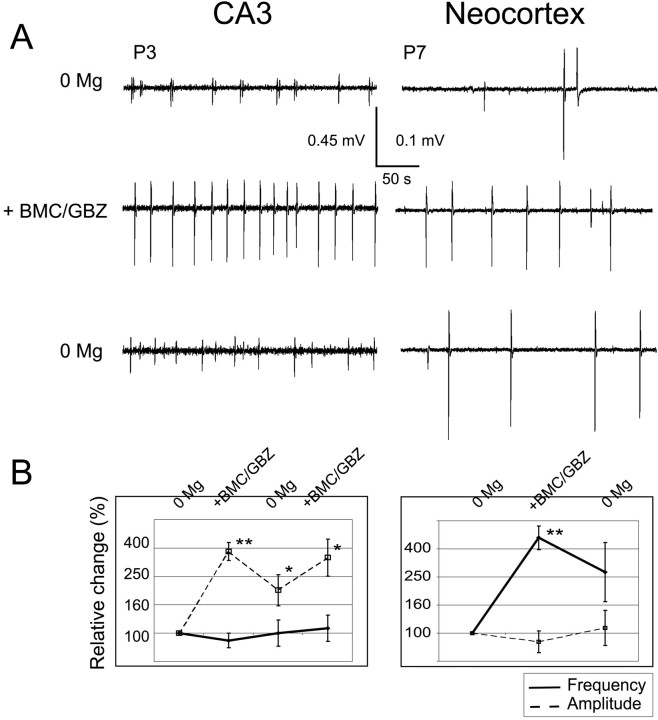
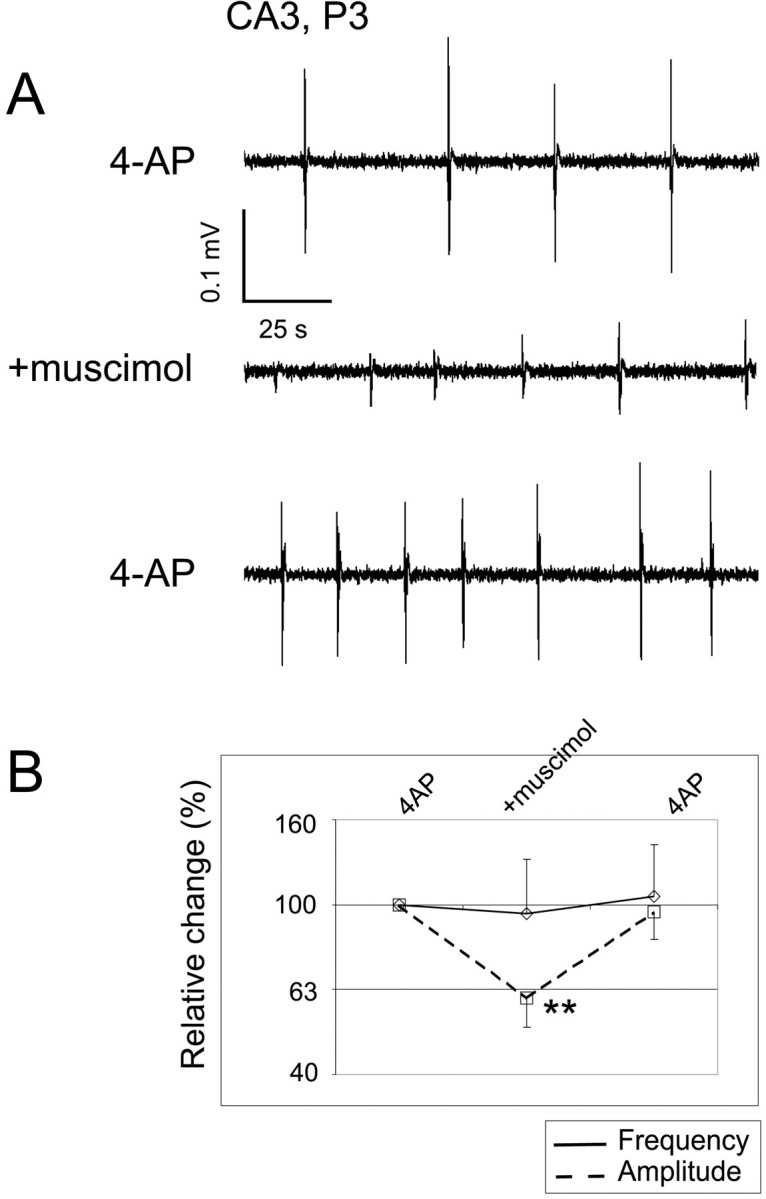
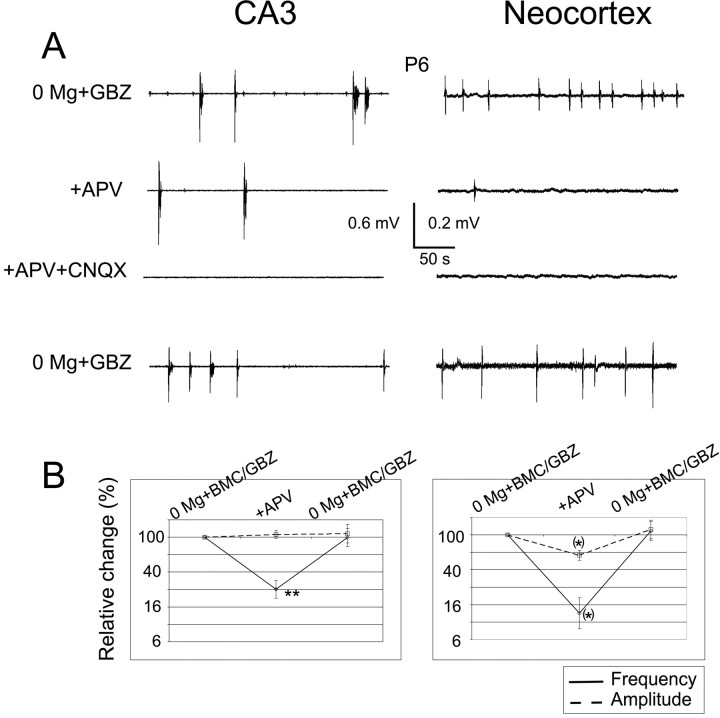
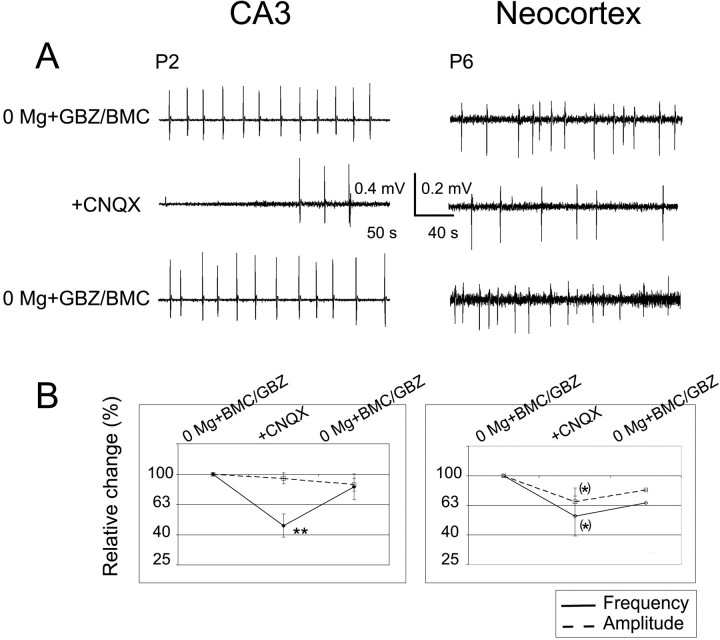
In the adult cerebral cortex, the neurotransmitter GABA is strongly inhibitory, as it profoundly decreases neuronal excitability and suppresses the network propensity for synchronous activity. When fast, GABA(A) receptor (GABA(A)R)-mediated neurotransmission is blocked in the mature cortex, neuronal firing is synchronized via recurrent excitatory (glutamatergic) synaptic connections, generating population discharges manifested extracellularly as spontaneous paroxysmal field potentials (sPFPs). This epileptogenic effect of GABA(A)R antagonists has rarely been observed in the neonatal cortex, and indeed, GABA in the neonate has been proposed to have an excitatory, rather than inhibitory, action. In contrast, we show here that when fast GABAergic neurotransmission was blocked in slices of neonatal mouse and rat hippocampus and neocortex, sPFPs occurred in nearly half the slices from postnatal day 4 (P4) to P7 neocortex and in most slices from P2 to P7 hippocampus. In Mg(2+)-free solution, GABA(A)R antagonists elicited sPFPs in nearly all slices of P2 and older neocortex and P0 and older hippocampus. Mg(2+)-free solution alone induced spontaneous events in the majority of P2 and older slices from both regions; addition of GABA(A)R antagonists caused a dramatic increase in the mean amplitude, but not frequency, of these events in the hippocampus and in their mean frequency, but not amplitude, in the neocortex. In the hippocampus, GABA(A)R agonists suppressed amplitudes, but not frequency, of sPFPs, whereas glutamate antagonists suppressed frequency but not amplitudes. We conclude that neonatal rodent cerebral cortex possesses glutamatergic circuits capable of generating synchronous network activity and that, as in the adult, tonic GABA(A)R-mediated inhibition prevents this activity from becoming paroxysmal.
Figures
References
-
- Agmon A, O'Dowd DK. NMDA receptor-mediated currents are prominent in the thalamocortical synaptic response before maturation of inhibition. J Neurophysiol. 1992;68:345–349. - PubMed
-
- Bains JS, Longacher JM, Staley KJ. Reciprocal interactions between CA3 network activity and strength of recurrent collateral synapses. Nat Neurosci. 1999;2:720–726. - PubMed
-
- Ben-Ari Y, Tseeb V, Raggozzino D, Khazipov R, Gaiarsa JL. gamma-Aminobutyric acid (GABA): a fast excitatory transmitter which may regulate the development of hippocampal neurones in early postnatal life. Prog Brain Res. 1994;102:261–273. - PubMed
Publication types
MeSH terms
Substances
Grants and funding
LinkOut - more resources
Full Text Sources
