


Personality in frontal lobe disorders
- PMID: 11122995
- PMCID: PMC5786154
- DOI: 10.1007/s11920-000-0031-5
Personality in frontal lobe disorders
Abstract
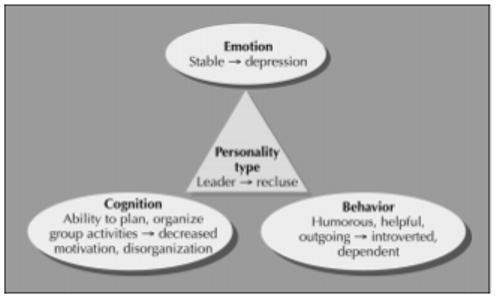
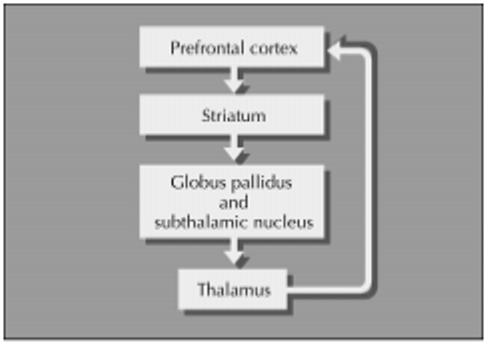
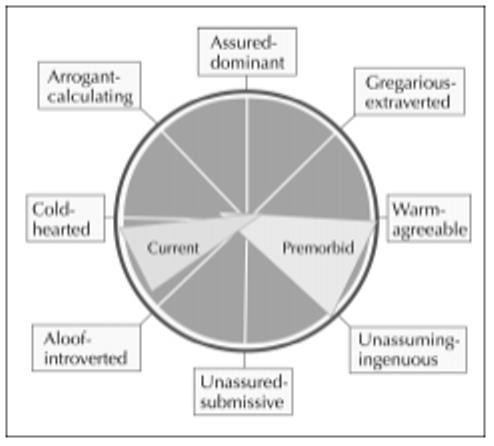
Personality changes in frontal lobe disorders are easy to recognize, but their evolution can be hard to predict. Both focal lesions and diffuse neurodegenerative processes may produce personality change based on interruption of prefrontal cortex or subcortical structures that comprise the frontal-subcortical circuits. Observed changes in personality have been classified by behavioral neurologists into three frontal-subcortical circuit syndromes, yet a given patient may defy this classification system by manifesting only selective features of one or more syndromes simultaneously, based on the neuroanatomic distribution of pathology. The orbitofrontal syndrome is the most well known and consists of major antisocial behaviors such as disinhibition, emotional lability, and impulsivity. In some cases, changes are severe enough to lead to new onset of criminality. Apathy and amotivational state lie at the other end of the personality change spectrum. Many psychologic instruments can measure the degree of change in personality, but none of them can be used to extrapolate a patient's ability to function at home or at large in society. The psychopathy checklist by Hare may predict risk of violence but has been validated only for use in criminal populations.
Figures
References
-
- American Psychiatric Association . Diagnostic and Statistical Manual of Mental Disorders. American Psychiatric Association; Washington, DC: 1994.
-
- Damasio H, Grabowski T, Frank R, et al. The return of Phineas Gage: clues about the brain from a skull of a famous patient. Science. 1994;264:1102–1105. - PubMed
-
- Harlow Recovery from the passage of an iron bar through the head. Publications of the Massachusetts Medical Society. 1868;2:329–346.
-
- Cummings JL. Frontal-subcortical circuits and human behavior. Arch Neurol. 1993;50:873–880. - PubMed
-
- Tranel D. “Acquired sociopathy”: the development of sociopathic behavior following focal brain damage. Prog Exp Pers Psychopathol Res. 1994:285–311. - PubMed
Publication types
MeSH terms
Grants and funding
LinkOut - more resources
Full Text Sources
Medical
Miscellaneous