


Proteome Analysis Database: online application of InterPro and CluSTr for the functional classification of proteins in whole genomes
- PMID: 11125045
- PMCID: PMC29822
- DOI: 10.1093/nar/29.1.44
Proteome Analysis Database: online application of InterPro and CluSTr for the functional classification of proteins in whole genomes
Abstract
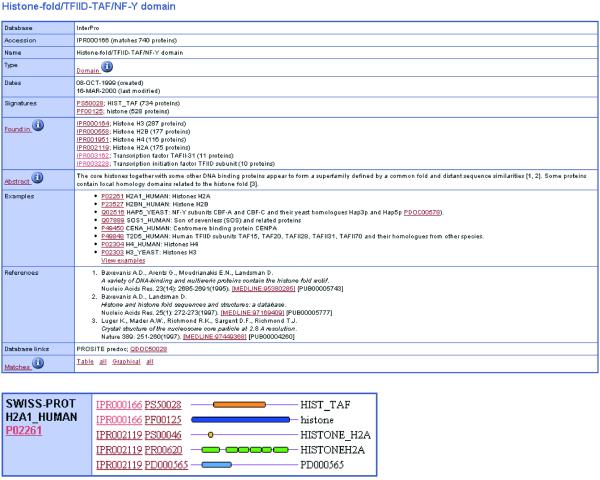
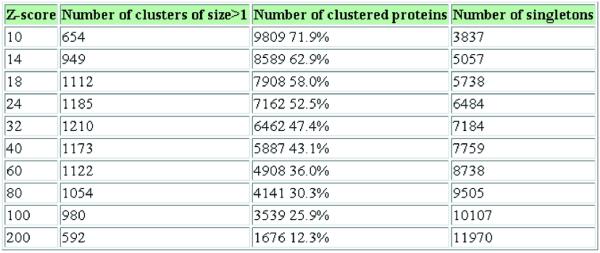
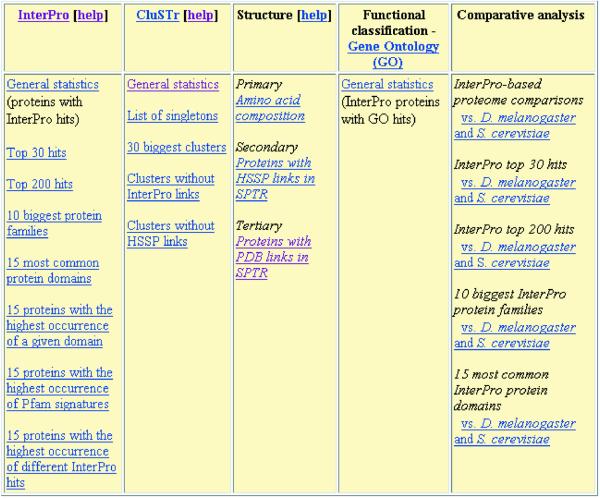
The SWISS-PROT group at EBI has developed the Proteome Analysis Database utilising existing resources and providing comparative analysis of the predicted protein coding sequences of the complete genomes of bacteria, archaea and eukaryotes (http://www.ebi.ac. uk/proteome/). The two main projects used, InterPro and CluSTr, give a new perspective on families, domains and sites and cover 31-67% (InterPro statistics) of the proteins from each of the complete genomes. CluSTr covers the three complete eukaryotic genomes and the incomplete human genome data. The Proteome Analysis Database is accompanied by a program that has been designed to carry out InterPro proteome comparisons for any one proteome against any other one or more of the proteomes in the database.
Figures
References
Publication types
MeSH terms
Substances
LinkOut - more resources
Full Text Sources
Other Literature Sources
