


Initiation of anaerobic degradation of p-cresol by formation of 4-hydroxybenzylsuccinate in desulfobacterium cetonicum
- PMID: 11133971
- PMCID: PMC94933
- DOI: 10.1128/JB.183.2.752-757.2001
Initiation of anaerobic degradation of p-cresol by formation of 4-hydroxybenzylsuccinate in desulfobacterium cetonicum
Abstract
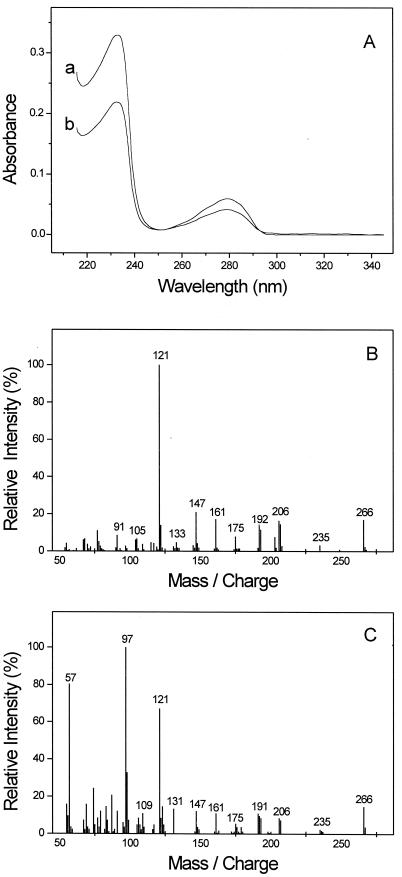
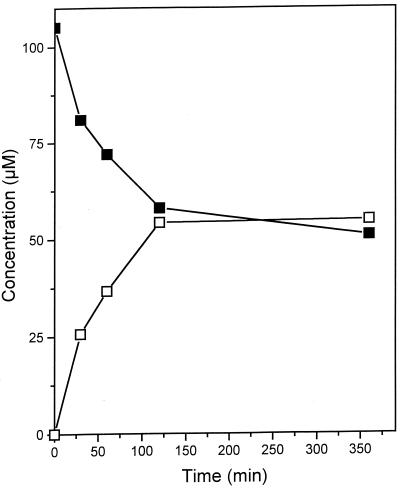
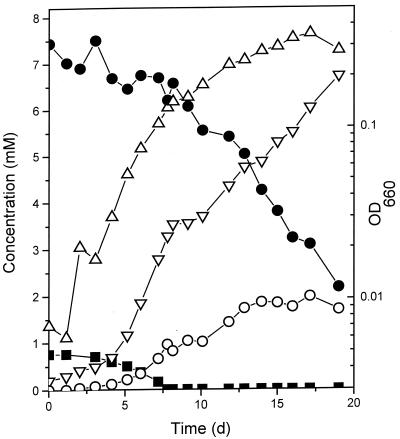
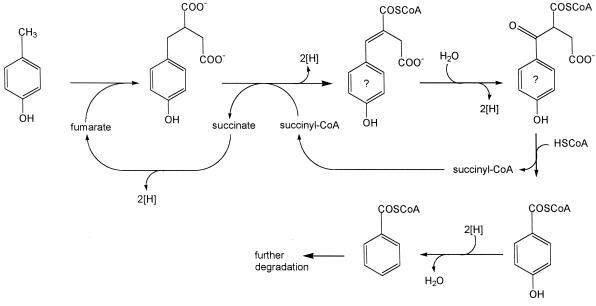
The anaerobic bacterium Desulfobacterium cetonicum oxidized p-cresol completely to CO(2) with sulfate as the electron acceptor. During growth, 4-hydroxybenzylsuccinate accumulated in the medium. This finding indicated that the methyl group of p-cresol is activated by addition to fumarate, analogous to anaerobic toluene, m-xylene, and m-cresol degradation. In cell extracts, the formation of 4-hydroxybenzylsuccinate from p-cresol and fumarate was detected at an initial rate of 0.57 nmol min(-1) (mg of protein)(-1). This activity was specific for extracts of p-cresol-grown cells. 4-Hydroxybenzylsuccinate was degraded further to 4-hydroxybenzoyl-coenzyme A (CoA), most likely via beta-oxidation. 4-Hydroxybenzoyl-CoA was reductively dehydroxylated to benzoyl-CoA. There was no evidence of degradation of p-cresol via methyl group oxidation by p-cresol-methylhydroxylase in this bacterium.
Figures
References
-
- Agency for Toxic Substances and Disease Registry. Toxicological profile for cresols (draft). U.S. Atlanta, Ga: Public Health Service, U.S. Department of Health and Human Services; 1990.
-
- Bak F, Widdel F. Anaerobic degradation of phenol and phenol derivatives by Desulfobacterium phenolicum sp. nov. Arch Microbiol. 1986;146:177–180.
-
- Beh M, Strauss G, Huber R, Stetter K-O, Fuchs G. Enzymes of the reductive citric acid cycle in the autotrophic eubacterium Aquifex pyrophilus and in the archaebacterium Thermoproteus neutrophilus. Arch Microbiol. 1993;160:306–311.
Publication types
MeSH terms
Substances
LinkOut - more resources
Full Text Sources
Research Materials
Miscellaneous
