


Pathogenesis of primary respiratory disease induced by isolates from a new genetic cluster of bovine viral diarrhea virus type I
- PMID: 11136763
- PMCID: PMC87694
- DOI: 10.1128/JCM.39.1.146-153.2001
Pathogenesis of primary respiratory disease induced by isolates from a new genetic cluster of bovine viral diarrhea virus type I
Abstract
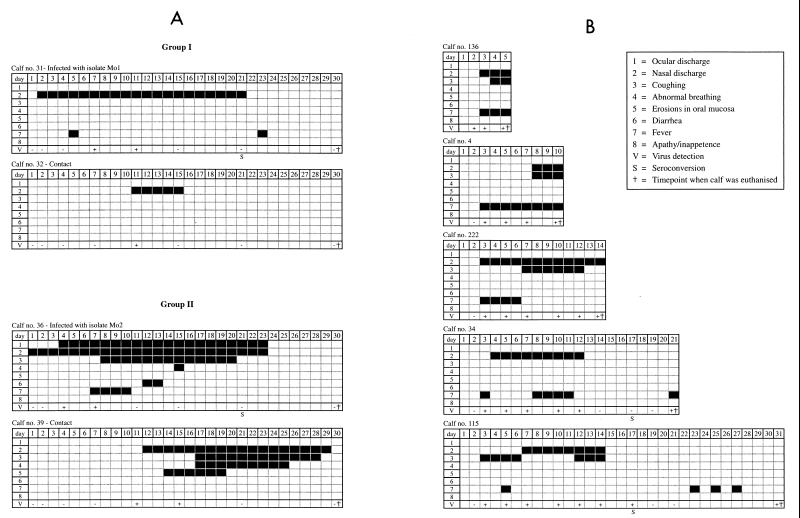
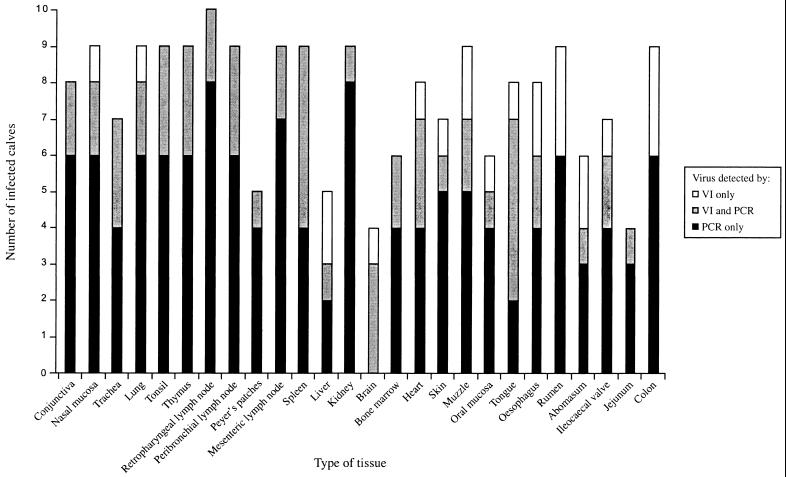
The pathogenesis of infection induced by cytopathogenic isolates from the newly identified genetic cluster Id of bovine viral diarrhea virus (BVDV) type I was studied in two experimental infections of previously seronegative, immunocompetent calves. Experiment 1 focused on the evaluation of clinical patterns, viremia, and serological responses. All infected calves in this experiment developed respiratory symptoms and seroconverted to BVDV positivity. Contact calves also contracted a respiratory tract infection following exposure to infected animals. Viremia was demonstrated between postinfection days 2 and 17, and the virus was detected in organ specimens of all but one each of the infected and contact calves. In experiment 2, the distribution of BVDV in various tissues of calves euthanized at defined days postinfection was studied. In two of these calves recurrent shedding of BVDV in nasal secretions was shown. BVDV was detected in various tissues of all infected calves throughout the experiment and also following seroconversion and the clearance of BVDV from the circulatory system. Despite the widespread distribution of the virus in various organs, significant tissue damage was found mainly in respiratory tract and lymphoid tissues. These experiments revealed that viruses from cluster Id of BVDV are able to induce primary respiratory disease in previously seronegative, immunocompetent calves. Contact transmission and virus recurrence, contrary to observations from acute experimental infections with noncytopathogenic BVDV, are likely to reflect differences in biological features of these cytopathogenic isolates. Virus shedding and its presence in tissues following peripheral clearance and in the presence of antibodies may have implications in the diagnosis, pathogenesis, and epidemiology of BVDV-induced syndromes in cattle.
Figures
References
-
- Baker J C. The clinical manifestations of bovine viral diarrhea infection. Vet Clin North Am Food Anim Pract. 1995;11:425–445. - PubMed
-
- Baszler T V, Evermann J F, Kaylor P S, Byington T C, Dilbeck P M. Diagnosis of naturally occurring bovine viral diarrhea virus infections in ruminants using monoclonal antibody-based immunohistochemistry. Vet Pathol. 1995;32:609–618. - PubMed
-
- Baule C, van Vuuren M, Lowings J P, Belák S. Genetic heterogeneity of bovine viral diarrhoea viruses isolated in Southern Africa. Virus Res. 1997;52:205–220. - PubMed
-
- Becher P, König M, Paton D J, Thiel H-J. Further characterisation of border disease virus isolates: evidence for the presence of more than three species within the genus Pestivirus. Virology. 1995;209:200–206. - PubMed
-
- Becher P, Orlich M, Shannon A D, Horner G, König M, Thiel H-J. Phylogenetic analysis of pestiviruses from domestic and wild ruminants. J Gen Virol. 1997;78:1357–1366. - PubMed
Publication types
MeSH terms
Substances
LinkOut - more resources
Full Text Sources
