


Glucocorticoid receptor-mediated suppression of activator protein-1 activation and matrix metalloproteinase expression after spinal cord injury
- PMID: 11150324
- PMCID: PMC6762457
- DOI: 10.1523/JNEUROSCI.21-01-00092.2001
Glucocorticoid receptor-mediated suppression of activator protein-1 activation and matrix metalloproteinase expression after spinal cord injury
Abstract
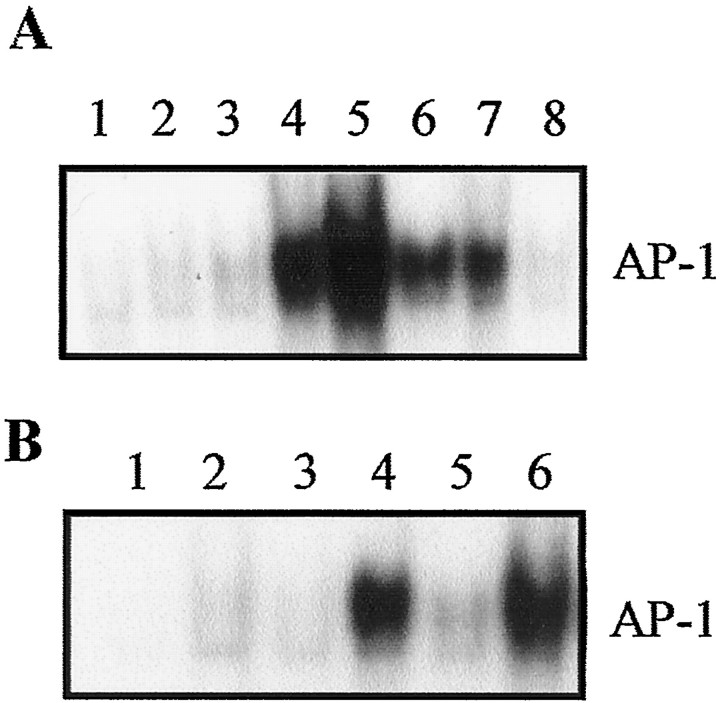
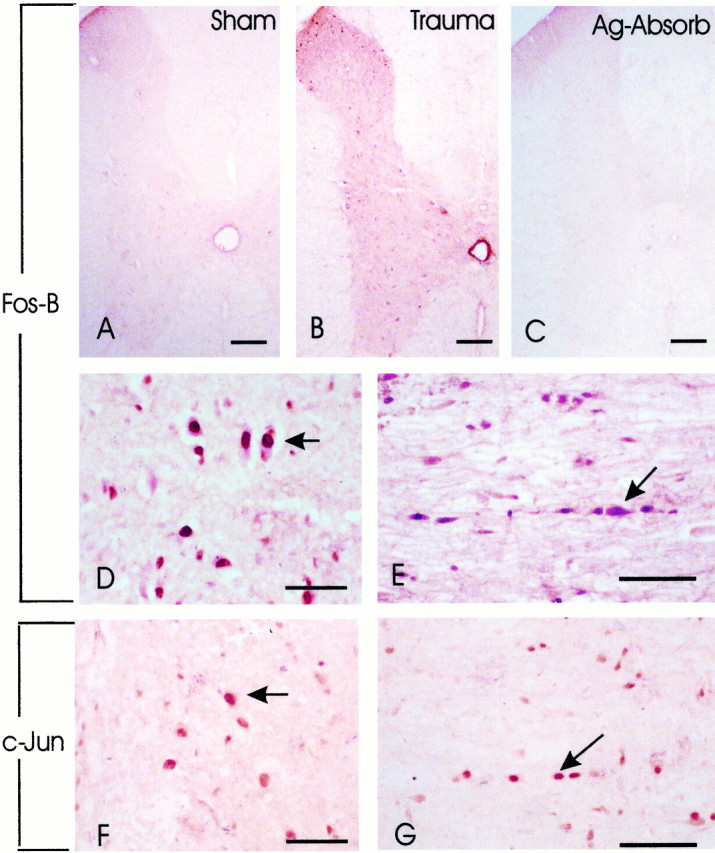
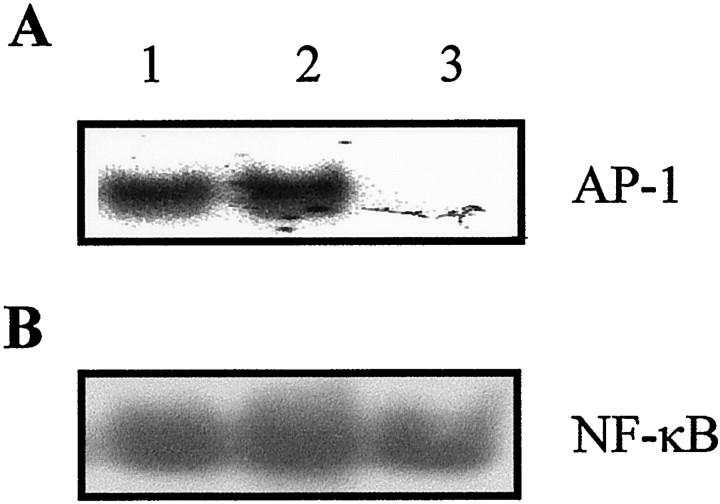
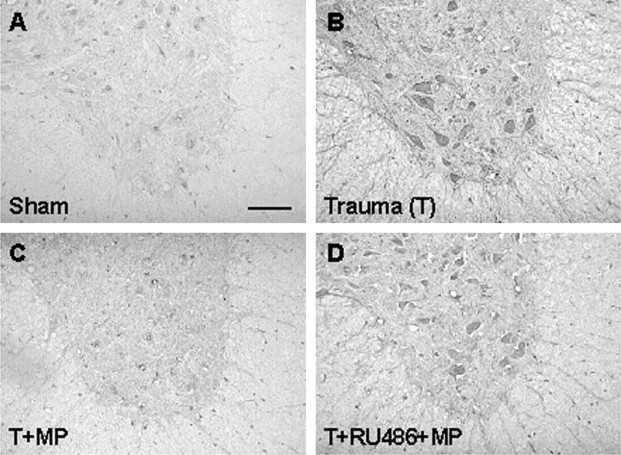
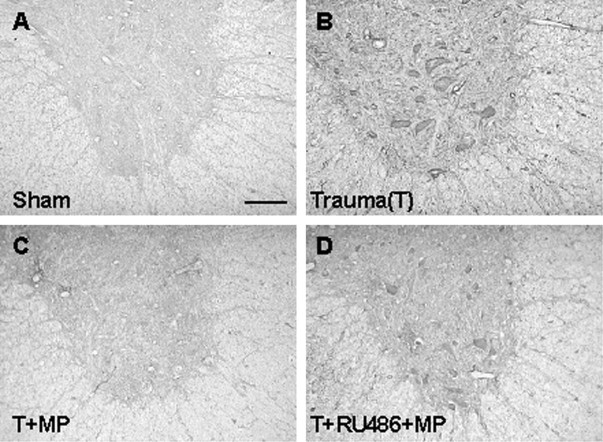
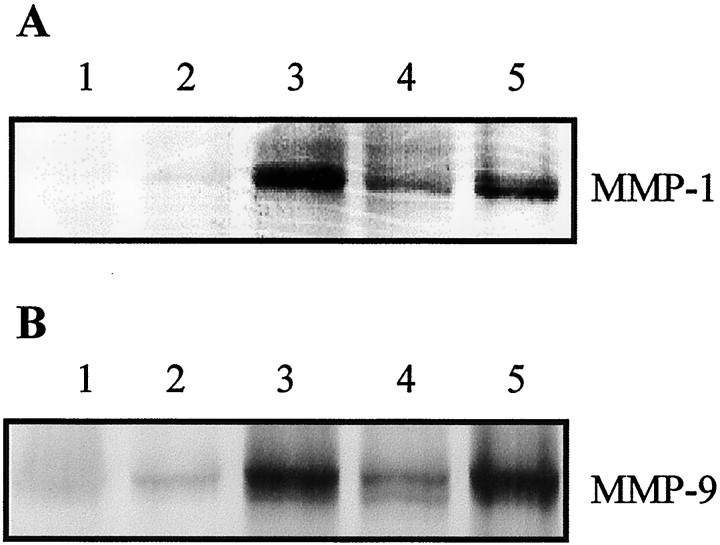
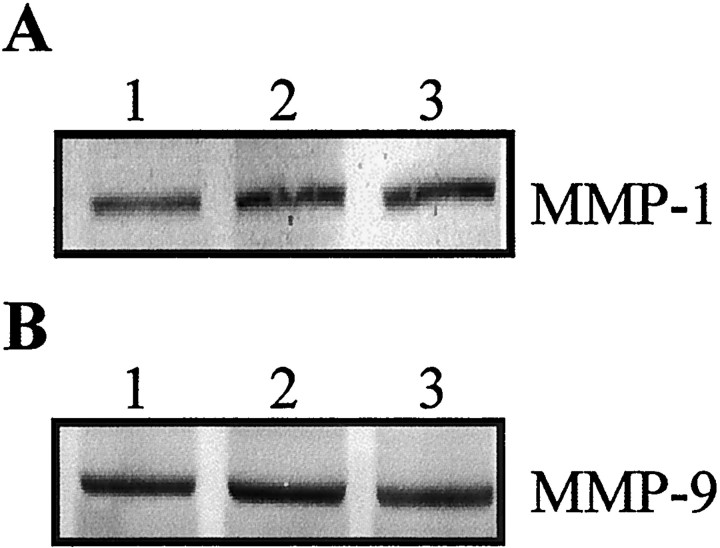
Post-traumatic inflammatory reaction may contribute to progressive tissue damage after spinal cord injury (SCI). Two key transcription factors, nuclear factor kappaB (NF-kappaB) and activator protein-1 (AP-1), are activated in inflammation. An increase in NF-kappaB binding activity has been shown in the injured spinal cord. We report activation of AP-1 after SCI. Electrophoretic mobility shift assay showed that AP-1 binding activity increased after SCI, starting at 1 hr, peaking at 8 hr, and declining to basal levels by 7 d. Methylprednisolone (MP) is the only therapeutic agent approved by the Food and Drug Administration for treating patients with acute traumatic SCI. MP reduced post-traumatic AP-1 activation. RU486, a glucocorticoid receptor (GR) antagonist, reversed MP inhibition of AP-1 activation. Immunostaining showed an increase in the expression of the Fos-B and c-Jun components of AP-1 in the injured cord. A c-fos antisense oligodeoxynucleotide (ODN) inhibited AP-1, but not NF-kappaB, activation after SCI. AP-1 and NF-kappaB can transactivate genes encoding matrix metalloproteinase-1 (MMP-1) and MMP-9. Western blotting and immunostaining show increased expression of MMP-1 and MMP-9 in the injured cord. MP inhibited MMP-1 and MMP-9 expression after SCI. RU486 reversed this MP effect. The c-fos antisense ODN, however, failed to suppress MMP-1 or MMP-9 expression. These findings demonstrate that MP may suppress post-traumatic inflammatory reaction by inhibiting both the AP-1 and NF-kappaB transcription cascades via a GR mechanism. Expression of inflammatory genes such as MMP-1 and MMP-9 that are transactivated jointly by AP-1 and NF-kappaB may not be suppressed by inhibiting only AP-1 activity.
Figures
References
-
- Alexander CM, Werb Z. Proteinases and extracellular matrix remodeling. Curr Opin Cell Biol. 1989;1:974–982. - PubMed
-
- An G, Lin TN, Liu JS, Xue JJ, He YY, Hsu CY. Expression of c-fos and c-jun family genes after focal cerebral ischemia. Ann Neurol. 1993;33:457–464. - PubMed
-
- Balentine JD. Pathology of experimental spinal cord trauma. I. The necrotic lesion as a function of vascular injury. Lab Invest. 1978a;39:236–253. - PubMed
-
- Balentine JD. Pathology of experimental spinal cord trauma. II. Ultrastructure of axons and myelin. Lab Invest. 1978b;39:254–266. - PubMed
-
- Barnes PJ. Anti-inflammatory actions of glucocorticoids: molecular mechanisms. Clin Sci (Colch) 1998;94:557–572. - PubMed
Publication types
MeSH terms
Substances
Grants and funding
LinkOut - more resources
Full Text Sources
Medical
Research Materials
Miscellaneous
