


Toxin synthesis and mucin breakdown are related to swarming phenomenon in Clostridium septicum
- PMID: 11160009
- PMCID: PMC97993
- DOI: 10.1128/IAI.69.2.1120-1126.2001
Toxin synthesis and mucin breakdown are related to swarming phenomenon in Clostridium septicum
Abstract
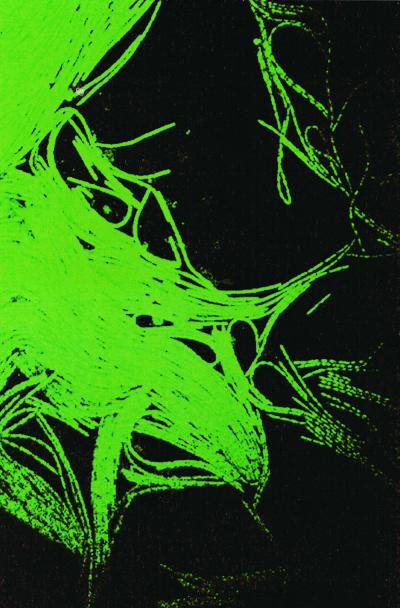
Clostridium septicum is responsible for several diseases in humans and animals. The bacterium is capable of a simple kind of multicellular behavior known as swarming. In this investigation, environmental and physiologic factors affecting growth and swarm cell formation in C. septicum were studied over a range of dilution rates (D = 0.02 to 0.65 h(-1)) in glucose-limited, glucose-excess, and mucin-limited chemostats. Cellular differentiation was observed at low specific growth rates, irrespective of the carbon and energy source, showing that swarming occurred in response to nutrient depletion. Differential expression of virulence determinants was detected in swarm cells. Hemolysin was secreted by short motile rods but not swarm cells, whereas in cultures grown with glucose, only swarm cells formed DNase, hyaluronidase, and neuraminidase. However, neuraminidase and, to a lesser degree, hyaluronidase were induced in short motile rods in mucin-limited cultures. Both swarm cells and short rods were cytotoxic to Vero cells. Mucin was chemotaxic to C. septicum, and large amounts of mucin-degrading enzymes (beta-galactosidase, N-acetyl beta-glucosaminidase, glycosulfatase, and neuraminidase) were produced. Synthesis of these enzymes was catabolite regulated. In chemostat experiments, glycosulfatase secretion occurred only in swarm cells at low dilution rates in mucin-limited cultures. Determinations of oligosaccharide utilization demonstrated that N-acetylglucosamine, galactose, and N-acetylgalactosamine were the main carbon sources for C. septicum in mucin. Neuraminic acid was not assimilated, showing that neuraminidase does not have a direct nutritional function in this pathogen.
Figures

References
-
- Adler J. A method for measuring chemotaxis and use of the method to determine optimum conditions for chemotaxis by Escherichia coli. J Gen Microbiol. 1973;74:77–91. - PubMed
-
- Allen A. Structure of gastrointestinal mucus glycoproteins and the gel-forming properties of mucus. Br Med Bull. 1978;34:28–33. - PubMed
-
- Allison A, Hughes C. Bacterial swarming: an example of prokaryotic differentiation and multicellular behaviour. Sci Prog Edin. 1991;75:403–422. - PubMed
-
- Allison C, Lai H-C, Gygi D, Hughes C. Cell differentiation of Proteus mirabilis is initiated by glutamine, a specific chemoattractant for swarming cells. Mol Microbiol. 1993;8:53–60. - PubMed
MeSH terms
Substances
LinkOut - more resources
Full Text Sources
Molecular Biology Databases
