


Thermostable and site-specific DNA binding of the gene product ORF56 from the Sulfolobus islandicus plasmid pRN1, a putative archael plasmid copy control protein
- PMID: 11160922
- PMCID: PMC29613
- DOI: 10.1093/nar/29.4.904
Thermostable and site-specific DNA binding of the gene product ORF56 from the Sulfolobus islandicus plasmid pRN1, a putative archael plasmid copy control protein
Abstract
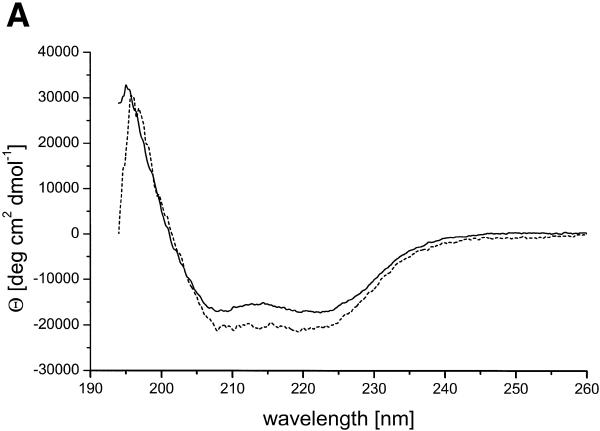
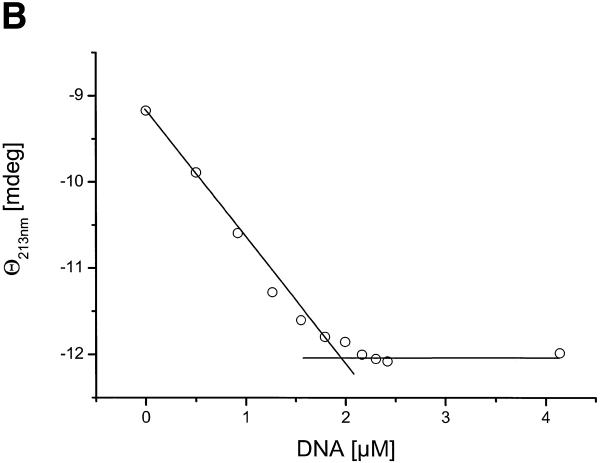
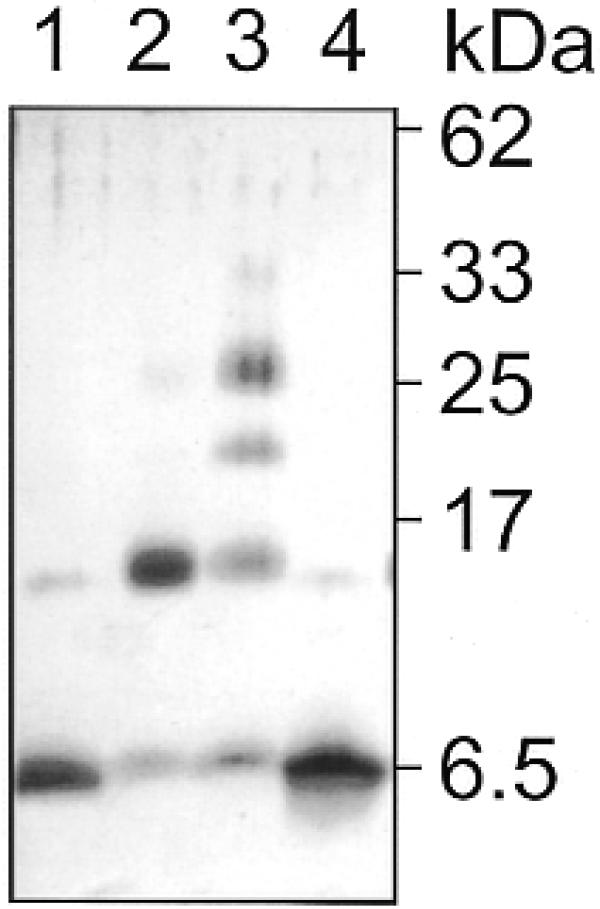
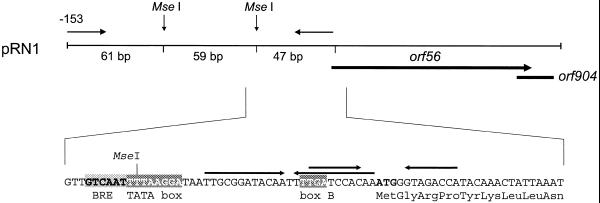
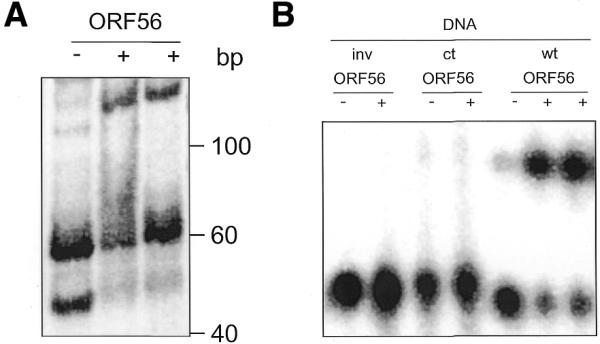
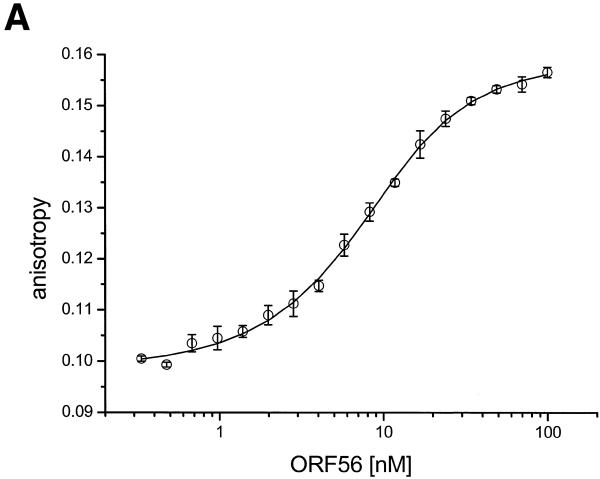
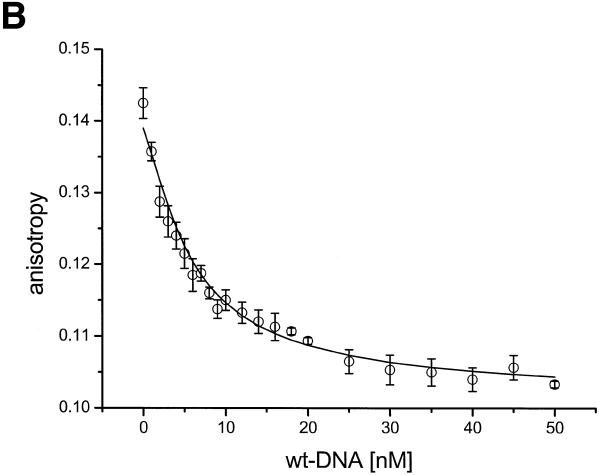
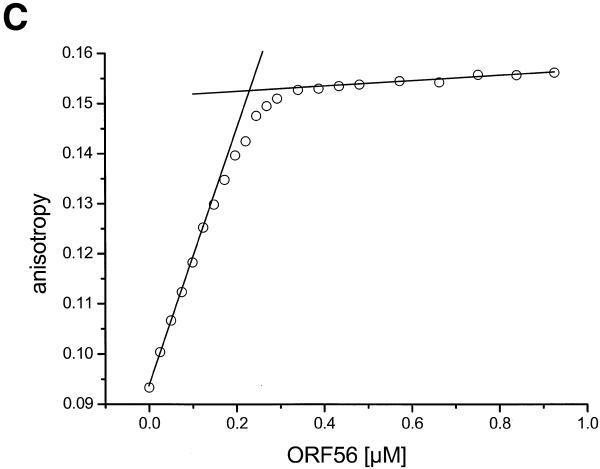
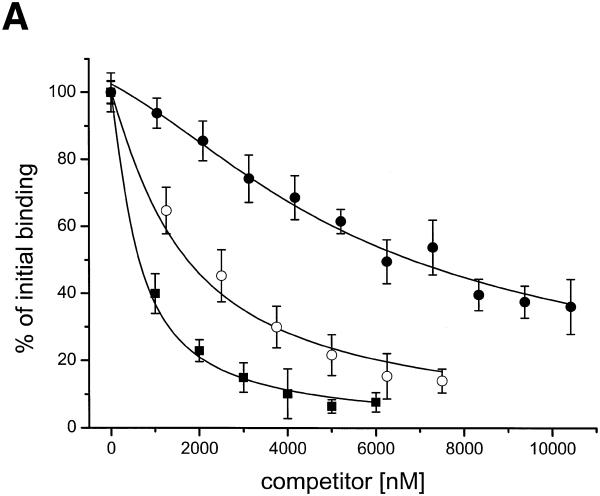
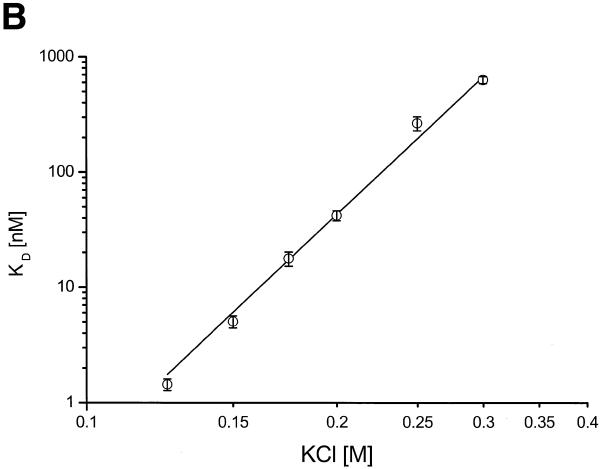
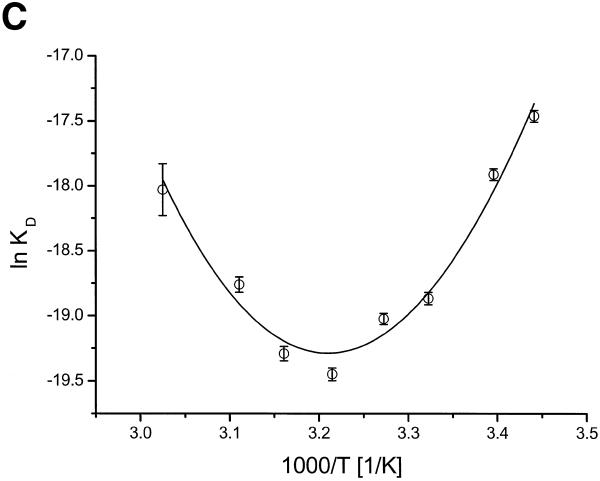
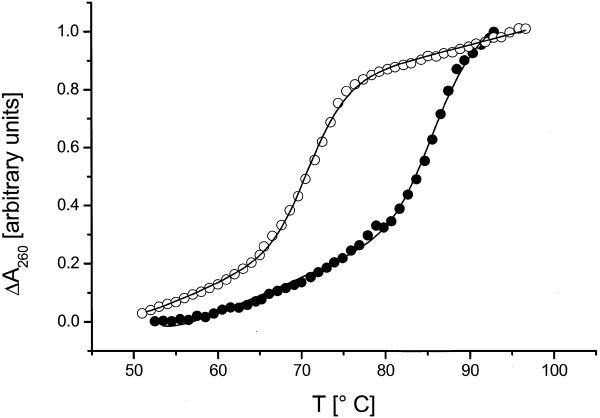
There is still a lack of information on the specific characteristics of DNA-binding proteins from hyperthermophiles. Here we report on the product of the gene orf56 from plasmid pRN1 of the acidophilic and thermophilic archaeon Sulfolobus islandicus. orf56 has not been characterised yet but low sequence similarily to several eubacterial plasmid-encoded genes suggests that this 6.5 kDa protein is a sequence-specific DNA-binding protein. The DNA-binding properties of ORF56, expressed in Escherichia coli, have been investigated by EMSA experiments and by fluorescence anisotropy measurements. Recombinant ORF56 binds to double-stranded DNA, specifically to an inverted repeat located within the promoter of orf56. Binding to this site could down-regulate transcription of the orf56 gene and also of the overlapping orf904 gene, encoding the putative initiator protein of plasmid replication. By gel filtration and chemical crosslinking we have shown that ORF56 is a dimeric protein. Stoichiometric fluorescence anisotropy titrations further indicate that ORF56 binds as a tetramer to the inverted repeat of its target binding site. CD spectroscopy points to a significant increase in ordered secondary structure of ORF56 upon binding DNA. ORF56 binds without apparent cooperativity to its target DNA with a dissociation constant in the nanomolar range. Quantitative analysis of binding isotherms performed at various salt concentrations and at different temperatures indicates that approximately seven ions are released upon complex formation and that complex formation is accompanied by a change in heat capacity of -6.2 kJ/mol. Furthermore, recombinant ORF56 proved to be highly thermostable and is able to bind DNA up to 85 degrees C.
Figures

References
-
- Zillig W., Kletzin,A., Schleper,C., Holz,I., Janekovic,D., Hain,J., Lanzendoerfer,M. and Kristjansson,J.K. (1994) Screening for Sulfolobales, their plasmids and their viruses in Icelandic solfataras. Syst. Appl. Microbiol., 16, 609–628.
-
- Keeling P.J., Klenk,H.P., Singh,R.K., Feeley,O., Schleper,C., Zillig,W., Doolittle,W.F. and Sensen,C.W. (1996) Complete nucleotide sequence of the Sulfolobus islandicus multicopy plasmid pRN1. Plasmid, 35, 141–144. - PubMed
-
- Peng X., Holz,I., Zillig,W., Garrett,R.A. and She,Q. (2000) Evolution of the family of pRN plasmids and their integrase-mediated insertion into the chromosome of the crenarchaeon Sulfolobus solfataricus. J. Mol. Biol., 303, 449–454. - PubMed
MeSH terms
Substances
LinkOut - more resources
Full Text Sources
Other Literature Sources
