


Analysis of lipooligosaccharide biosynthesis in the Neisseriaceae
- PMID: 11208792
- PMCID: PMC94961
- DOI: 10.1128/JB.183.3.934-941.2001
Analysis of lipooligosaccharide biosynthesis in the Neisseriaceae
Abstract
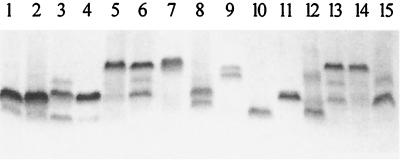
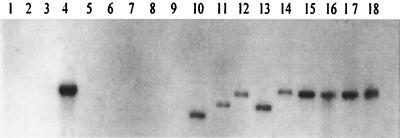
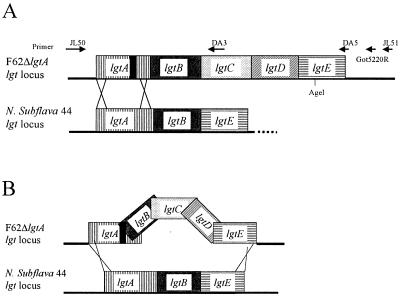
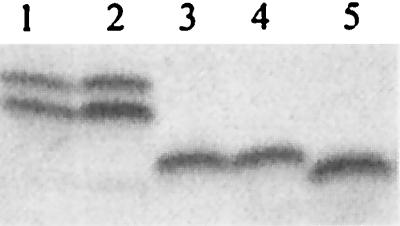
Neisserial lipooligosaccharide (LOS) contains three oligosaccharide chains, termed the alpha, beta, and gamma chains. We used Southern hybridization experiments on DNA isolated from various Neisseria spp. to determine if strains considered to be nonpathogenic possessed DNA sequences homologous with genes involved in the biosynthesis of these oligosaccharide chains. The presence or absence of specific genes was compared to the LOS profiles expressed by each strain, as characterized by their mobilities on sodium dodecyl sulfate-polyacrylamide gel electrophoresis gel and their reactivities with various LOS-specific monoclonal antibodies. A great deal of heterogeneity was seen with respect to the presence of genes encoding glycosyltransferases in Neisseria. All pathogenic species were found to possess DNA sequences homologous with the lgt gene cluster, a group of genes needed for the synthesis of the alpha chain. Some of these genes were also found to be present in strains considered to be nonpathogenic, such as Neisseria lactamica, N. subflava, and N. sicca. Some nonpathogenic Neisseria spp. were able to express high-molecular-mass LOS structures, even though they lacked the DNA sequences homologous with rfaF, a gene whose product must act before gonococcal and meningococcal LOS can be elongated. Using a PCR amplification strategy, in combination with DNA sequencing, we demonstrated that N. subflava 44 possessed lgtA, lgtB, and lgtE genes. The predicted amino acid sequence encoded by each of these genes suggested that they encoded functional proteins; however, structural analysis of LOS isolated from this strain indicated that the bulk of its LOS was not modified by these gene products. This suggests the existence of an additional regulatory mechanism that is responsible for the limited expression of these genes in this strain.
Figures
References
-
- Amsel B J, Moulijn A C. Nonfebrile mitral valve endocarditis due to Neisseria subflava. Chest. 1996;109:280–282. - PubMed
-
- Apicella M A, Westerink M A J, Morse S A, Schneider H, Rice P A, Griffiss J M. Bactericidal antibody response of normal human serum to the lipooligosaccharides of Neisseria gonorrhoeae. J Infect Dis. 1986;153:520–526. - PubMed
Publication types
MeSH terms
Substances
Associated data
- Actions
- Actions
Grants and funding
LinkOut - more resources
Full Text Sources
Other Literature Sources
Miscellaneous
