


Circulating insulin-like growth factor I mediates exercise-induced increases in the number of new neurons in the adult hippocampus
- PMID: 11222653
- PMCID: PMC6762955
- DOI: 10.1523/JNEUROSCI.21-05-01628.2001
Circulating insulin-like growth factor I mediates exercise-induced increases in the number of new neurons in the adult hippocampus
Abstract
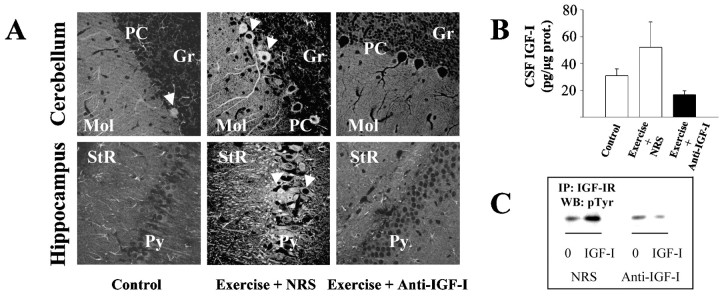
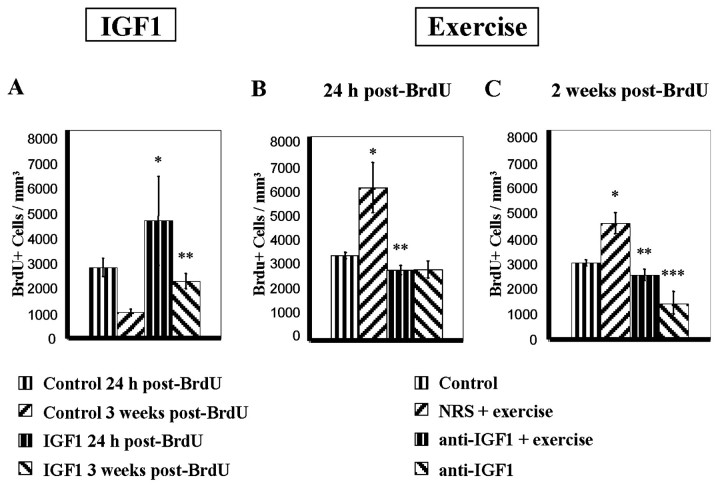
Although the physiological significance of continued formation of new neurons in the adult mammalian brain is still uncertain, therapeutic strategies aimed to potentiate this process show great promise. Several external factors, including physical exercise, increase the number of new neurons in the adult hippocampus, but underlying mechanisms are not yet known. We recently found that exercise stimulates uptake of the neurotrophic factor insulin-like growth factor I (IGF-I) from the bloodstream into specific brain areas, including the hippocampus. In addition, IGF-I participates in the effects of exercise on hippocampal c-fos expression and mimics several other effects of exercise on brain function. Because subcutaneous administration of IGF-I to sedentary adult rats markedly increases the number of new neurons in the hippocampus, we hypothesized that exercise-induced brain uptake of blood-borne IGF-I could mediate the stimulatory effects of exercise on the adult hippocampus. Thus, we blocked the entrance of circulating IGF-I into the brain by subcutaneous infusion of a blocking IGF-I antiserum to rats undergoing exercise training. The resulting inhibition of brain uptake of IGF-I was paralleled by complete inhibition of exercise-induced increases in the number of new neurons in the hippocampus. Exercising rats receiving an infusion of nonblocking serum showed normal increases in the number of new hippocampal neurons after exercise. Thus, increased uptake of blood-borne IGF-I is necessary for the stimulatory effects of exercise on the number of new granule cells in the adult hippocampus. Taken together with previous results, we conclude that circulating IGF-I is an important determinant of exercise-induced changes in the adult brain.
Figures
References
-
- Azcoitia I, Sierra A, Garcia-Segura LM. Neuroprotective effects of estradiol in the adult rat hippocampus: interaction with insulin-like growth factor-I signalling. J Neurosci Res. 1999;58:815–822. - PubMed
-
- Beck KD, Powell-Braxton L, Widmer HR, Valverde J, Hefti F. Igf1 gene disruption results in reduced brain size, CNS hypomyelination, and loss of hippocampal granule and striatal parvalbumin-containing neurons. Neuron. 1995;14:717–730. - PubMed
-
- Boyes BE, Kim SU, Lee V, Sung SC. Immunohistochemical co-localization of S-100b and the glial fibrillary acidic protein in rat brain. Neuroscience. 1986;17:857–865. - PubMed
-
- Brooker GJ, Kalloniatis M, Russo VC, Murphy M, Werther GA, Bartlett PF. Endogenous IGF-1 regulates the neuronal differentiation of adult stem cells. J Neurosci Res. 2000;59:332–341. - PubMed
Publication types
MeSH terms
Substances
LinkOut - more resources
Full Text Sources
Other Literature Sources
