


Spontaneous retinopathy in HLA-A29 transgenic mice
- PMID: 11226280
- PMCID: PMC30179
- DOI: 10.1073/pnas.051595998
Spontaneous retinopathy in HLA-A29 transgenic mice
Abstract
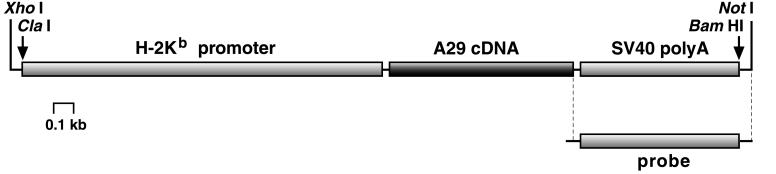
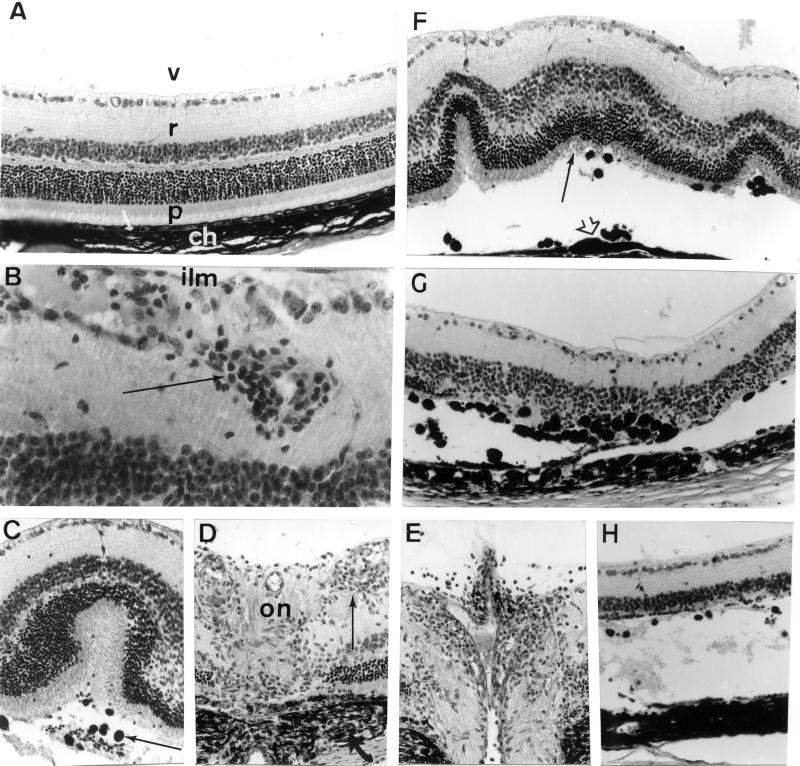
Humans who have inherited the class I major histocompatibility allele HLA-A29 have a markedly increased relative risk of developing the eye disease termed birdshot chorioretinopathy. This disease affecting adults is characterized by symmetrically scattered, small, cream-colored spots in the fundus associated with retinal vasculopathy and inflammatory signs causing damage to the ocular structures, leading regularly to visual loss. To investigate the role of HLA-A29 in this disease, we introduced the HLA-A29 gene into mice. Aging HLA-A29 transgenic mice spontaneously developed retinopathy, showing a striking resemblance to the HLA-A29-associated chorioretinopathy. These results strongly suggest that HLA-A29 is involved in the pathogenesis of this disease. Elucidation of the role of HLA-A29 should be assisted by this transgenic model.
Figures
References
-
- Dausset J, Svejgaard A. HLA and Disease. Baltimore: Williams & Wilkins; 1977.
-
- Amiel J C. In: Histocompatibility Testing 1967. Curtoni E S, Mattiuz P L, Tosi R M, editors. Copenhagen: Munksgaard; 1967. pp. 79–89.
-
- Kourilsky F M, Dausset J, Feingold N, Dupuy J M, Bernard J. First International Congress of the Transplantation Society. Paris: Munksgaard; 1967. pp. 515–522.
-
- Ryder L P, Andersen E, Svejgaard A. HLA and Disease Registry. Copenhagen: Munksgaard; 1979.
-
- Dausset J. Science. 1981;213:1469–1474. - PubMed
Publication types
MeSH terms
Substances
LinkOut - more resources
Full Text Sources
Medical
Molecular Biology Databases
Research Materials
