


Prevention of ischemia-induced retinopathy by the natural ocular antiangiogenic agent pigment epithelium-derived factor
- PMID: 11226284
- PMCID: PMC30183
- DOI: 10.1073/pnas.031252398
Prevention of ischemia-induced retinopathy by the natural ocular antiangiogenic agent pigment epithelium-derived factor
Abstract
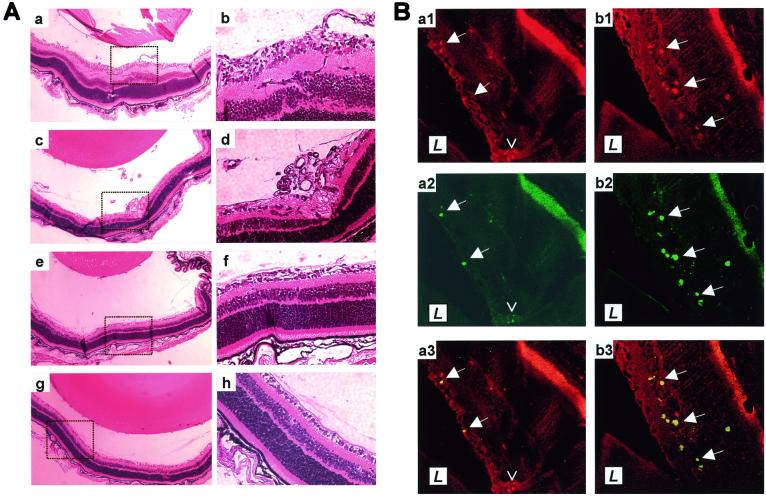
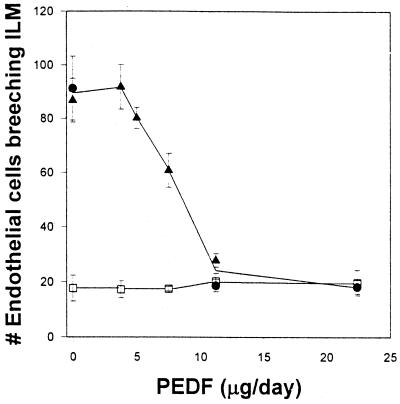
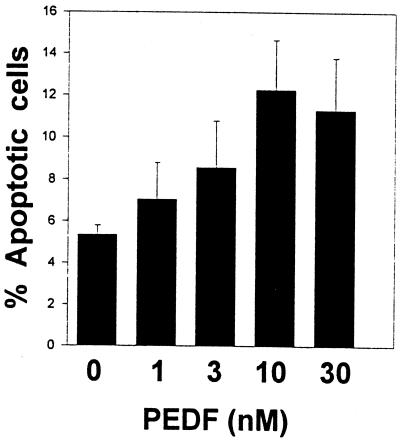
Aberrant blood vessel growth in the retina that underlies the pathology of proliferative diabetic retinopathy and retinopathy of prematurity is the result of the ischemia-driven disruption of the normally antiangiogenic environment of the retina. In this study, we show that a potent inhibitor of angiogenesis found naturally in the normal eye, pigment epithelium-derived growth factor (PEDF), inhibits such aberrant blood vessel growth in a murine model of ischemia-induced retinopathy. Inhibition was proportional to dose and systemic delivery of recombinant protein at daily doses as low as 2.2 mg/kg could prevent aberrant endothelial cells from crossing the inner limiting membrane. PEDF appeared to inhibit angiogenesis by causing apoptosis of activated endothelial cells, because it induced apoptosis in cultured endothelial cells and an 8-fold increase in apoptotic endothelial cells could be detected in situ when the ischemic retinas of PEDF-treated animals were compared with vehicle-treated controls. The ability of low doses of PEDF to curtail aberrant growth of ocular endothelial cells without overt harm to retinal morphology suggests that this natural protein may be beneficial in the treatment of a variety of retinal vasculopathies.
Figures
Comment in
-
PEDF: Raising both hopes and questions in controlling angiogenesis.Proc Natl Acad Sci U S A. 2001 Feb 27;98(5):2122-4. doi: 10.1073/pnas.061024098. Proc Natl Acad Sci U S A. 2001. PMID: 11226201 Free PMC article. No abstract available.
References
Publication types
MeSH terms
Substances
Grants and funding
LinkOut - more resources
Full Text Sources
Other Literature Sources
Medical
Miscellaneous
