


The relationship between spontaneous telomere loss and chromosome instability in a human tumor cell line
- PMID: 11228547
- PMCID: PMC1508089
- DOI: 10.1038/sj.neo.7900107
The relationship between spontaneous telomere loss and chromosome instability in a human tumor cell line
Abstract
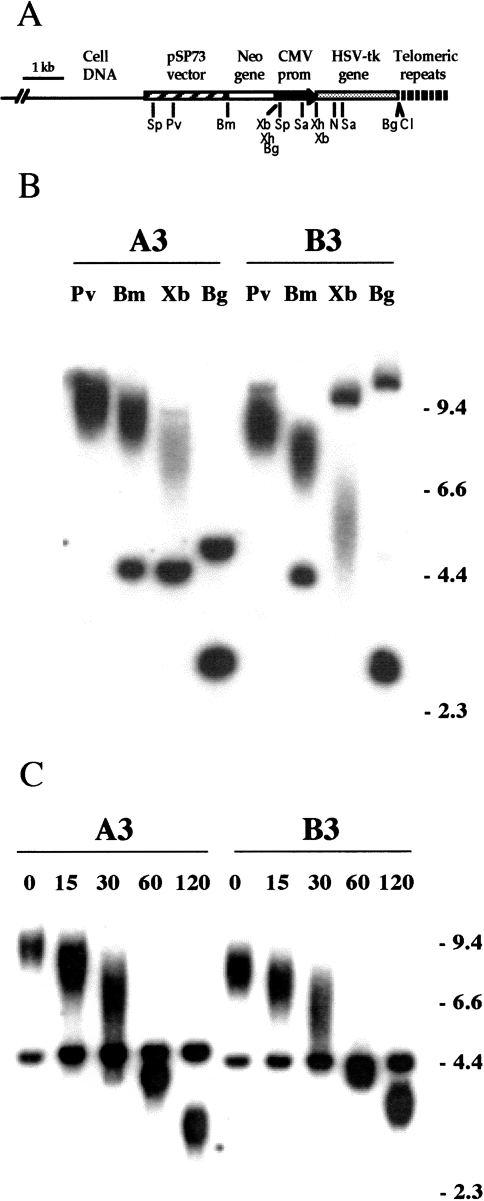
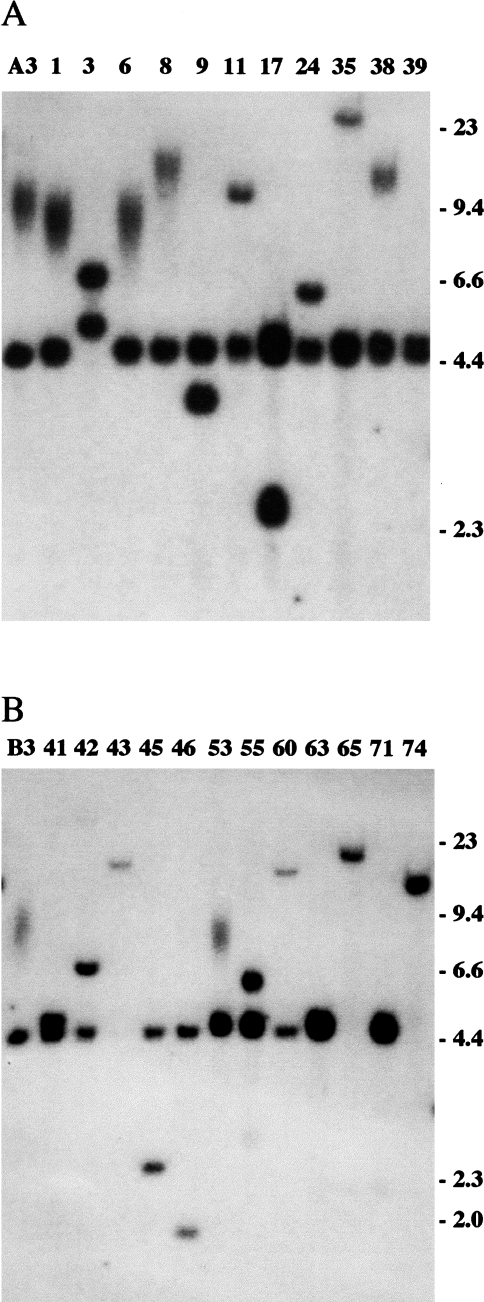
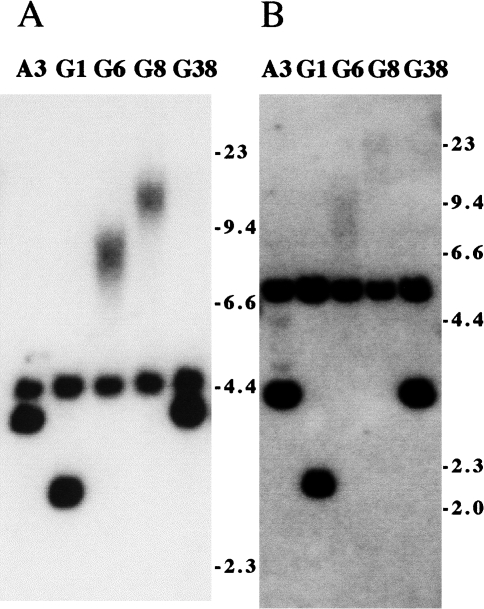
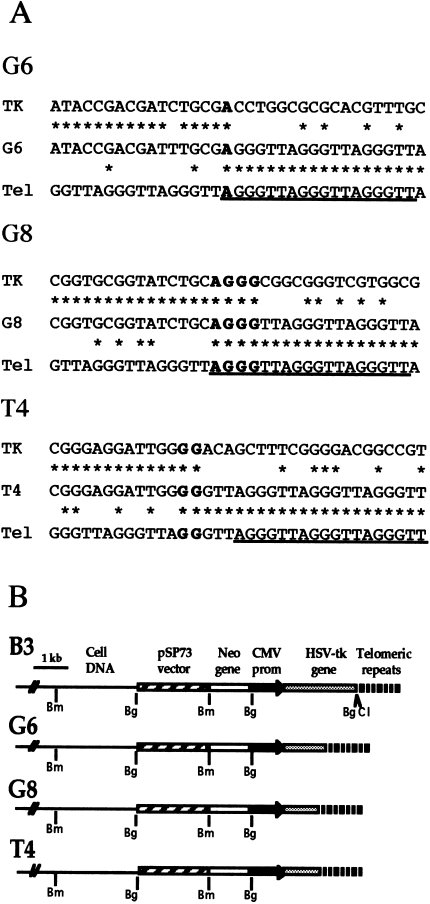
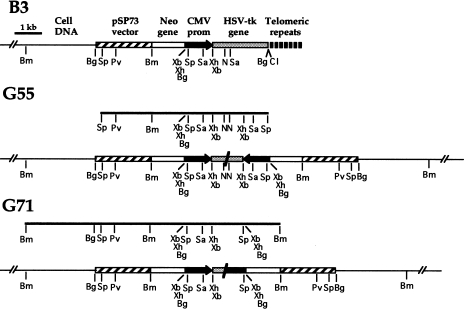
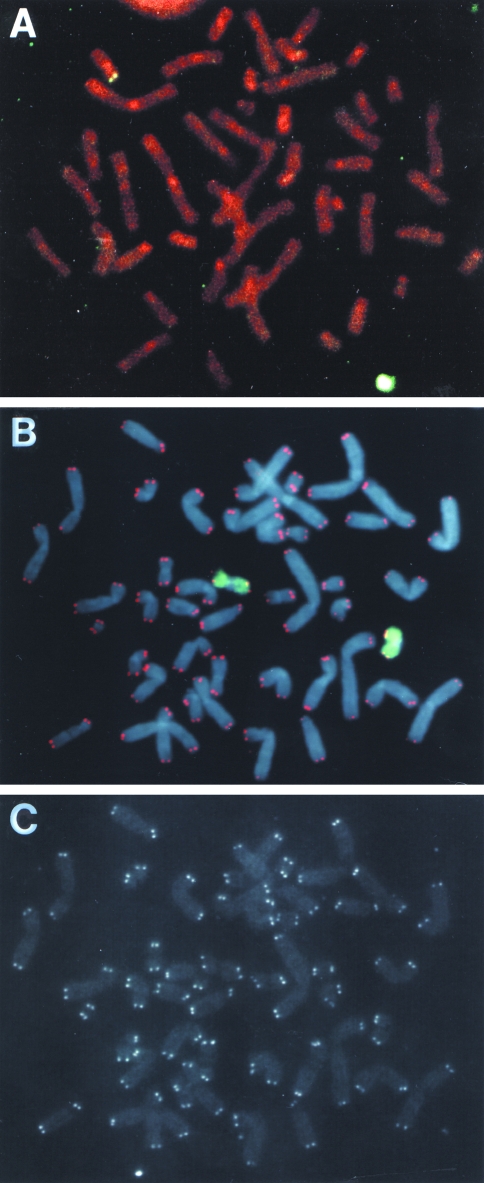
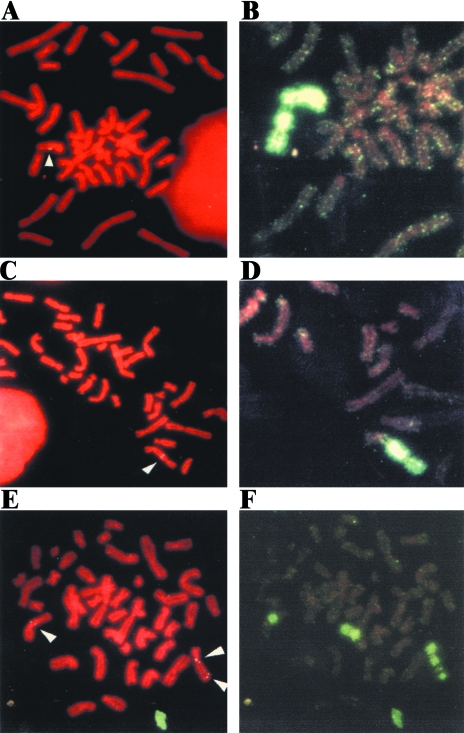
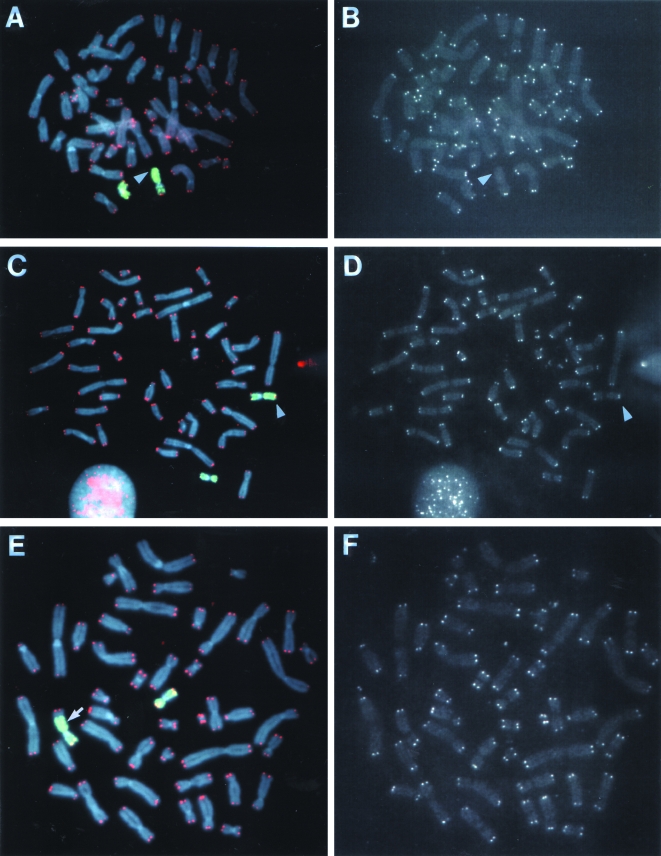
Chromosome instability plays an important role in cancer by promoting the alterations in the genome required for tumor cell progression. The loss of telomeres that protect the ends of chromosomes and prevent chromosome fusion has been proposed as one mechanism for chromosome instability in cancer cells, however, there is little direct evidence to support this hypothesis. To investigate the relationship between spontaneous telomere loss and chromosome instability in human cancer cells, clones of the EJ-30 tumor cell line were isolated in which a herpes simplex virus thymidine kinase (HSV-tk) gene was integrated immediately adjacent to a telomere. Selection for HSV-tk-deficient cells with ganciclovir demonstrated a high rate of loss of the end these "marked" chromosomes (10-4 events/cell per generation). DNA sequence and cytogenetic analysis suggests that the loss of function of the HSV-tk gene most often involves telomere loss, sister chromatid fusion, and prolonged periods of chromosome instability. In some HSV-tk-deficient cells, telomeric repeat sequences were added on to the end of the truncated HSV-tk gene at a new location, whereas in others, no telomere was detected on the end of the marked chromosome. These results suggest that spontaneous telomere loss is a mechanism for chromosome instability in human cancer cells.
Figures
References
-
- Blackburn EH, Greider CW, editors. Telomeres. Plainview, NY: Cold Spring Harbor Laboratory Press; 1995.
-
- de Lange T. Telomere dynamics and genome instability in human cancer. In: Blackburn EH , Greider CW, editors. Telomeres. Plainview, NY: Cold Spring Harbor Press; 1995. pp. 265–293.
-
- Hastie ND, Allshire RC. Human telomeres: fusion and interstitial sites. Trends Genet. 1989;5:326–331. - PubMed
-
- Conrad MN, Dominguez AM, Dresser ME. Ndj1p, a meiotic telomere protein required for normal chromosome synapsis and segregation in yeast. Science. 1997;276:1252–1255. - PubMed
Publication types
MeSH terms
Substances
Grants and funding
LinkOut - more resources
Full Text Sources
Medical
Research Materials