


Comparison of information processing technologies
- PMID: 11230385
- PMCID: PMC134556
- DOI: 10.1136/jamia.2001.0080174
Comparison of information processing technologies
Abstract
Objective: To examine the type of information obtainable from scientific papers, using three different methods for the extraction, organization, and preparation of literature reviews.
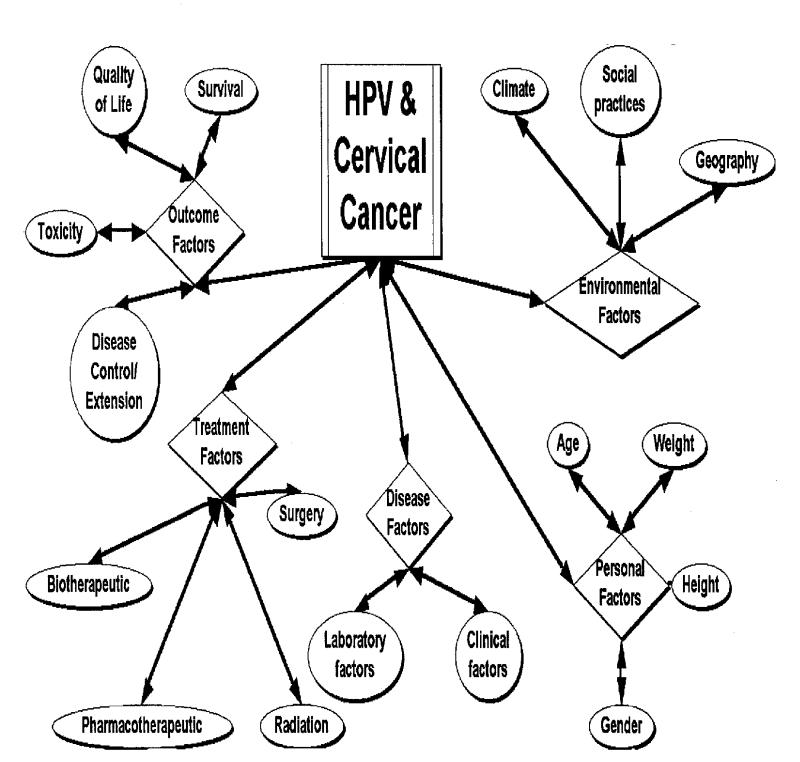
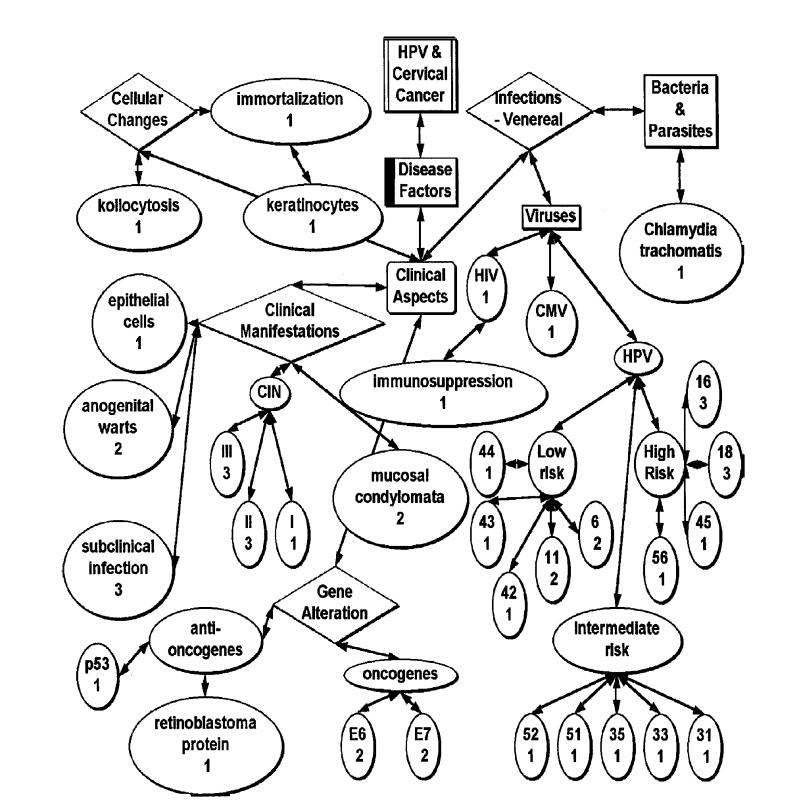
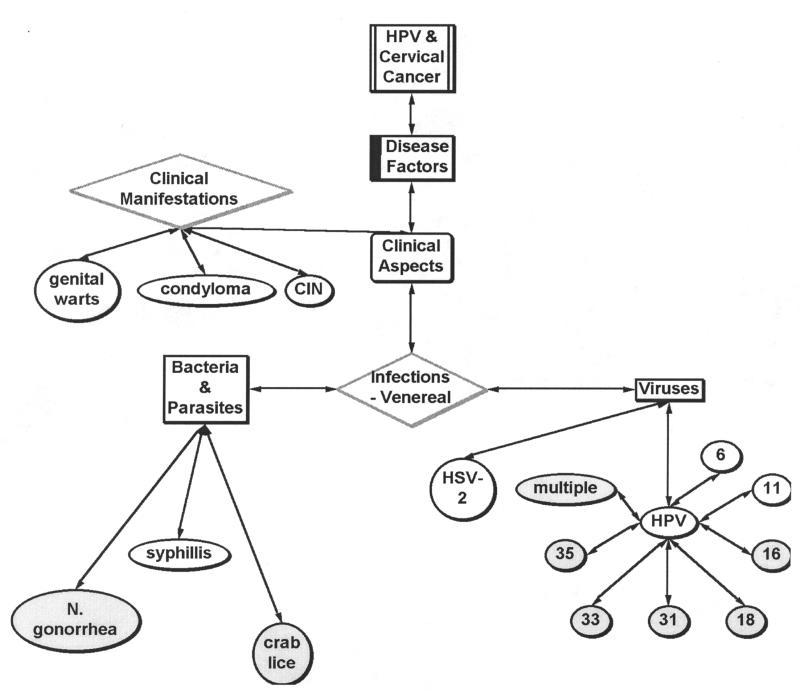
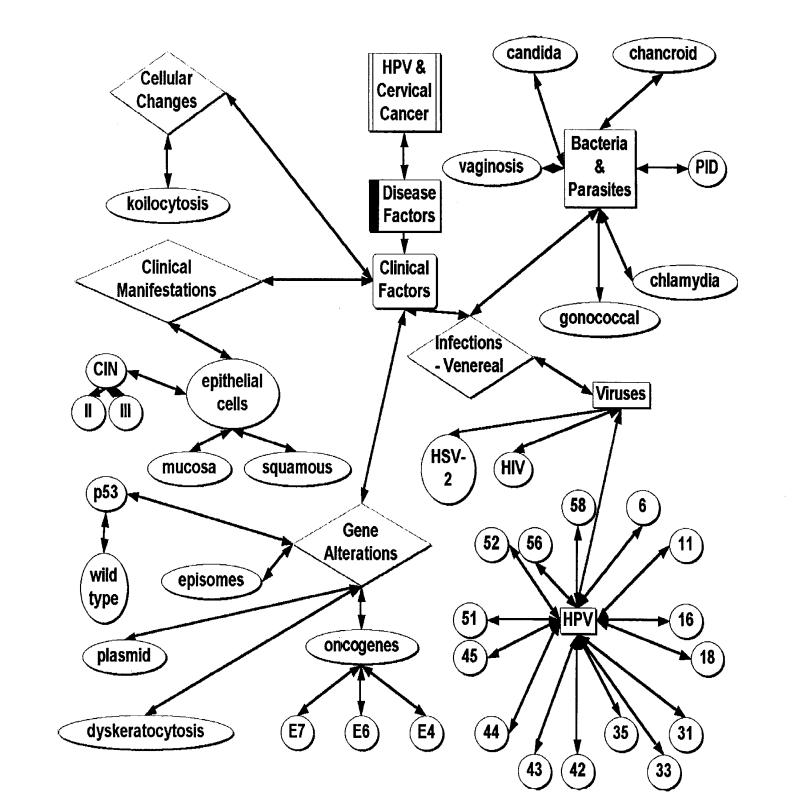
Design: A set of three review papers was identified, and the ideas represented by the authors of those papers were extracted. The 161 articles referenced in those three reviews were then analyzed using 1) a formalized data extraction approach, which uses a protocol-driven manual process to extract the variables, values, and statistical significance of the stated relationships; and 2) a computerized approach known as "Idea Analysis," which uses the abstracts of the original articles and processes them through a computer software program that reads the abstracts and organizes the ideas presented by the authors. The results were then compared. The literature focused on the human papillomavirus and its relationship to cervical cancer.
Results: Idea Analysis was able to identify 68.9 percent of the ideas considered by the authors of the three review papers to be of importance in describing the association between human papillomavirus and cervical cancer. The formalized data extraction identified 27 percent of the authors' ideas. The combination of the two approaches identified 74.3 percent of the ideas considered important in the relationship between human papillomavirus and cervical cancer, as reported by the authors of the three review articles.
Conclusion: This research demonstrated that both a technically derived and a computer derived collection, categorization, and summarization of original articles and abstracts could provide a reliable, valid, and reproducible source of ideas duplicating, to a major degree, the ideas presented by subject specialists in review articles. As such, these tools may be useful to experts preparing literature reviews by eliminating many of the clerical-mechanical features associated with present-day scientific text processing.
Figures
Comment in
-
Get both the medicine and the informatics right.J Am Med Inform Assoc. 2001 Mar-Apr;8(2):192. doi: 10.1136/jamia.2001.0080192. J Am Med Inform Assoc. 2001. PMID: 11230388 Free PMC article. No abstract available.
References
-
- Weiner JM, Schuster JHR, Horowitz RS. Development of Research Strategies and Designs. Buffalo, NY: 24th Century Press, 1994.
-
- Archibald G, Line MB. The size and growth of serial literature 1950–1987, in terms of number of articles per serial. Scientometrics. 1991;20(1):173–96.
-
- Durack DT. The weight of medical literature. N Engl J Med. 1978;298(14):773–5. - PubMed
-
- Weiner JM, Shirley S, Gilman NJ, Stowe SM, Wolf RM. Access to data and the information explosion: oral contraceptives and risk of cancer. Contraception. 1981;24:301–13. - PubMed
-
- Weiner JM, Horowitz RS. Idea analysis: a combination of knowledge representation and rule-based information processing in creating research strategies. In: Feeney M, Merry K (eds): Information Technology and the Research Process. London, UK: Bowker-Saur, 1990:52–71.
Publication types
MeSH terms
LinkOut - more resources
Full Text Sources
Research Materials
