Comparative Study
. 2001 Apr;60(4):316-21.
doi: 10.1136/ard.60.4.316.

Immunohistological study of entheses in spondyloarthropathies: comparison in rheumatoid arthritis and osteoarthritis

Affiliations
Comparative Study

Immunohistological study of entheses in spondyloarthropathies: comparison in rheumatoid arthritis and osteoarthritis

L Laloux et al. Ann Rheum Dis. 2001 Apr.

Abstract

Objective: To determine which inflammatory cell types are present in entheses from patients with spondyloarthropathy (SpA) compared with patients with rheumatoid arthritis (RA) or osteoarthritis (OA).

Methods: Enthesis specimens were obtained during orthopaedic procedures in eight patients with SpA, four with RA, and three with OA. After decalcification, the lymphocyte subsets (CD3, CD4, CD8, CD20) in the bone marrow component of each enthesis were measured by an immunohistochemical technique.

Results: Oedema and an inflammatory infiltrate were present in all the SpA specimens, being clearly predominant in the bone marrow component of the entheses. The density of all cell types in the bone marrow was significantly higher in the SpA group than in the two other groups. The cell type CD3+ showed the greatest difference between the SpA and RA groups, being increased fivefold in the SpA group. Within the SpA group, CD3+ cells were considerably more numerous than CD20+ cells-a difference from the RA group-and the predominant T cells were CD8+.

Conclusion: Persistent oedema with an inflammatory infiltrate composed predominantly of CD8+ cells was noted in the entheses of patients with SpA, being predominant in the bone marrow. These results suggest that CD8+ cells may have a key role in local inflammation in SpAs.


Figures
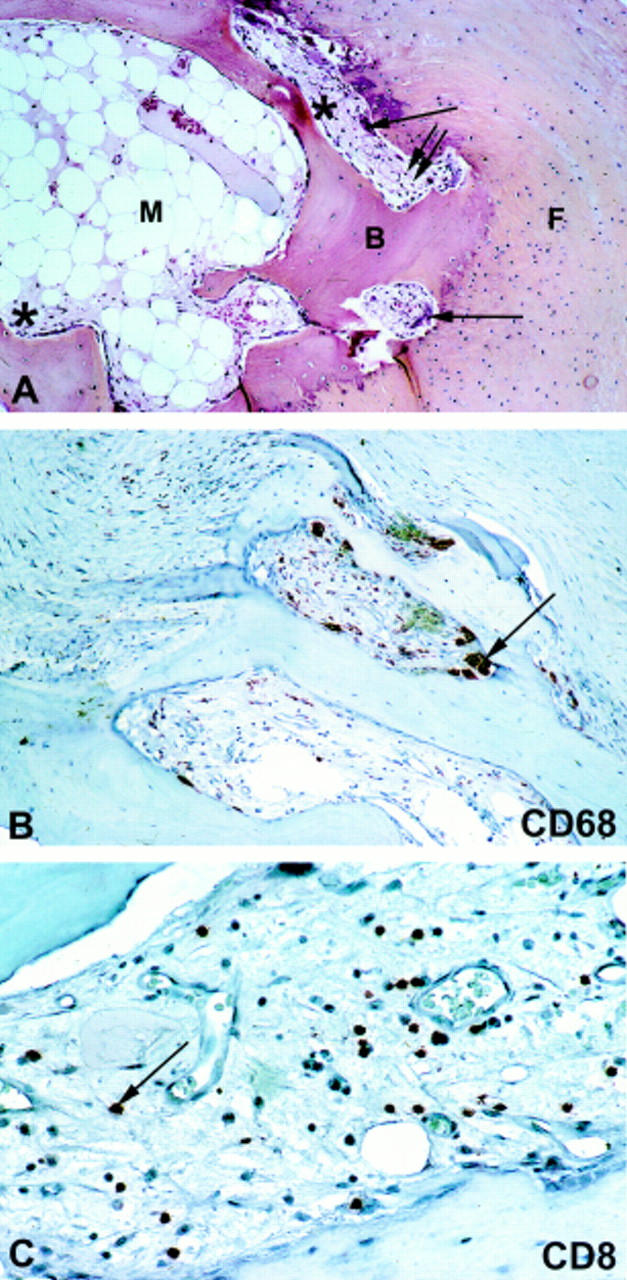
Figure 1
Figure 1
Serial sections of an erosive lesion of a vastus lateralis enthesis in a patient with ankylosing spondylitis (patient 5). (A) Haematoxylin, eosin, and saffron staining. Osteoclastic hyperresorption of osseous areas of the enthesis associated with oedema and lymphocytic infiltration of the underlying bone marrow. B= bone; F = tendinous fibrosis; M = bone marrow; single arrow = osteoclasts; double arrows = lymphocytes; * = oedema. (B) Immunostaining with anti-CD68 antibody. Visualisation of the osteoclasts as CD68+ cells (arrow). (c) Immunostaining with anti-CD8 antibody showing sparse CD8 lymphocytes (arrow) in the bone marrow part of the same enthesis. (A), (B), (C) Original magnification ×100.
Figure 2
Figure 2
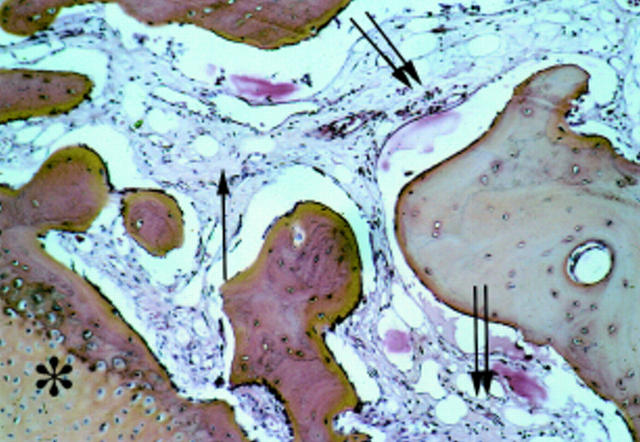
Vastus lateralis enthesis from a patient with ankylosing spondylitis (patient 7). Bone marrow oedema (single arrow) with scattered mononuclear cell infiltrates (double arrows). Hyperplasia of the enthesis fibrocartilage (*). Haematoxylin, eosin, and saffron staining. Original magnification ×100.
Figure 3
Figure 3
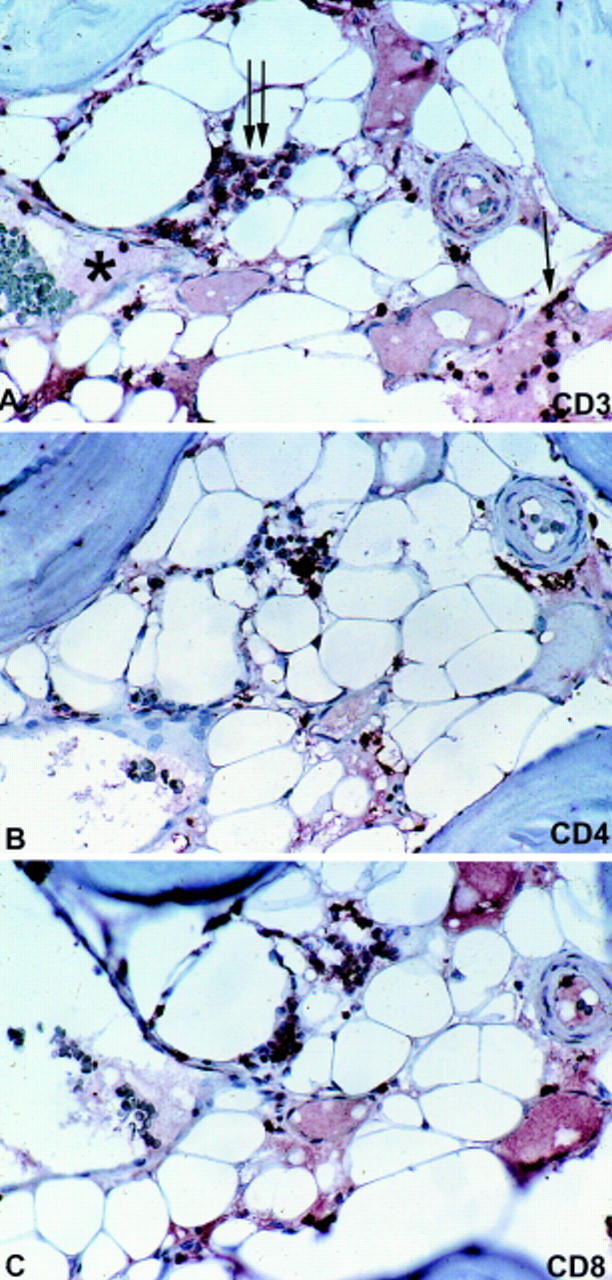
Serial immunohistochemistry sections of a cruciate ligament enthesis from a patient with ankylosing spondylitis (patient 4). (A) Anti-CD3+ antibody. Sparse (single arrow) or nodular (double arrows) CD3+ cell infiltrates of the bone marrow around a congestive vascular sinus (*). (B and C) Anti-CD4 and anti-CD8 antibodies, respectively. The CD3+ cell infiltrate contains both CD4+ and CD8+ cells, with an apparent predominance of CD8+ cells, which was confirmed by the cell count. Original magnification ×250.

References

    1. Ann Rheum Dis. 1971 May;30(3):213-23 - PubMed
    1. Curr Opin Rheumatol. 1999 Jul;11(4):244-50 - PubMed
    1. Clin Exp Immunol. 1982 Jul;49(1):22-30 - PubMed
    1. Arthritis Rheum. 1984 Apr;27(4):361-8 - PubMed
    1. Arthritis Rheum. 1986 Aug;29(8):1039-49 - PubMed

Publication types

MeSH terms