


An essential role for nuclear receptors SXR/PXR in detoxification of cholestatic bile acids
- PMID: 11248086
- PMCID: PMC30661
- DOI: 10.1073/pnas.051014398
An essential role for nuclear receptors SXR/PXR in detoxification of cholestatic bile acids
Abstract
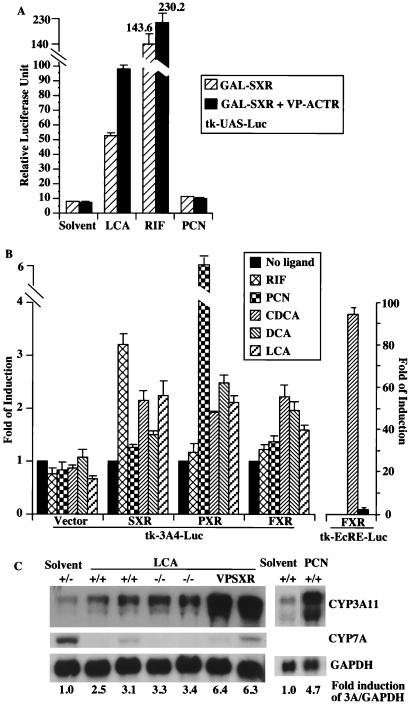
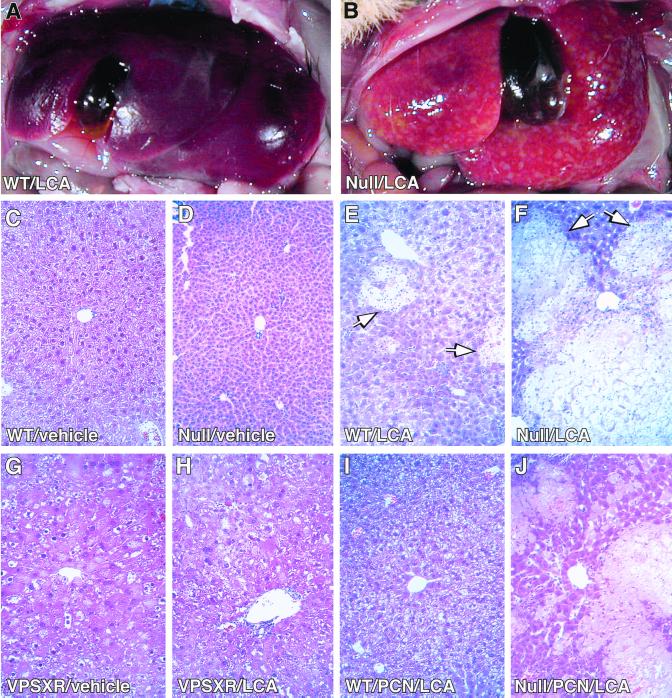
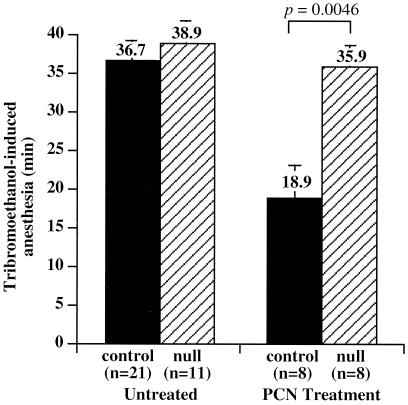
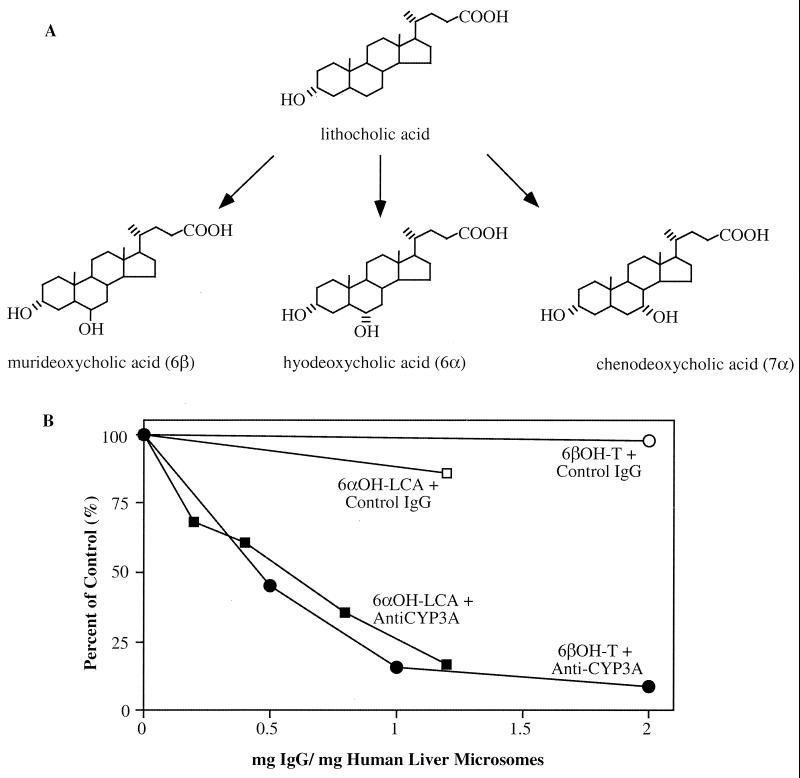
Hepatic hydroxylation is an essential step in the metabolism and excretion of bile acids and is necessary to avoid pathologic conditions such as cholestasis and liver damage. In this report, we demonstrate that the human xenobiotic receptor SXR (steroid and xenobiotic receptor) and its rodent homolog PXR (pregnane X receptor) serve as functional bile acid receptors in both cultured cells and animals. In particular, the secondary bile acid derivative lithocholic acid (LCA) is highly hepatotoxic and, as we show here, a metabolic substrate for CYP3A hydroxylation. By using combinations of knockout and transgenic animals, we show that activation of SXR/PXR is necessary and sufficient to both induce CYP3A enzymes and confer resistance to toxicity by LCA, as well as other xenotoxicants such as tribromoethanol and zoxazolamine. Therefore, we establish SXR and PXR as bile acid receptors and a role for the xenobiotic response in the detoxification of bile acids.
Figures
References
-
- Denison M S, Whitlock J P., Jr J Biol Chem. 1995;270:18175–18178. - PubMed
-
- Maurel P. In: Cytochrome P450: Metabolic and Toxicological Aspects. Ioannides C, editor. Boca Raton, FL: CRC; 1996. pp. 241–270.
-
- Selye H. J Pharm Sci. 1971;60:1–28. - PubMed
-
- Kliewer S A, Moore J T, Wade L, Staudinger J L, Jones M A, McKee D D, Oliver B M, Willson T M, Zetterstrom R H, Perlmann T, et al. Cell. 1998;92:73–82. - PubMed
Publication types
MeSH terms
Substances
Grants and funding
LinkOut - more resources
Full Text Sources
Other Literature Sources
Molecular Biology Databases
Research Materials
