


Potency of Michael reaction acceptors as inducers of enzymes that protect against carcinogenesis depends on their reactivity with sulfhydryl groups
- PMID: 11248091
- PMCID: PMC30666
- DOI: 10.1073/pnas.051632198
Potency of Michael reaction acceptors as inducers of enzymes that protect against carcinogenesis depends on their reactivity with sulfhydryl groups
Abstract
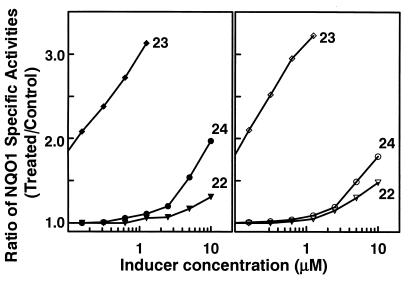
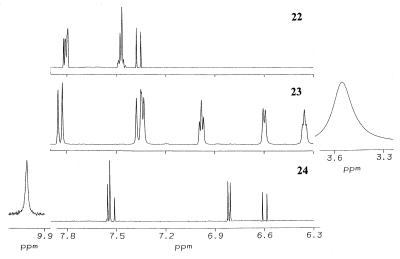
Induction of phase 2 enzymes and elevations of glutathione are major and sufficient strategies for protecting mammals and their cells against the toxic and carcinogenic effects of electrophiles and reactive forms of oxygen. Inducers belong to nine chemical classes and have few common properties except for their ability to modify sulfhydryl groups by oxidation, reduction, or alkylation. Much evidence suggests that the cellular "sensor" molecule that recognizes the inducers and signals the enhanced transcription of phase 2 genes does so by virtue of unique and highly reactive sulfhydryl functions that recognize and covalently react with the inducers. Benzylidene-alkanones and -cycloalkanones are Michael reaction acceptors whose inducer potency is profoundly increased by the presence of ortho- (but not other) hydroxyl substituent(s) on the aromatic ring(s). This enhancement correlates with more rapid reactivity of the ortho-hydroxylated derivatives with model sulfhydryl compounds. Proton NMR spectroscopy provides no evidence for increased electrophilicity of the beta-vinyl carbons (the presumed site of nucleophilic attack) on the hydroxylated inducers. Surprisingly, these ortho-hydroxyl groups display a propensity for extensive intermolecular hydrogen bond formation, which may raise the reactivity and facilitate addition of mercaptans, thereby raising inducer potencies.
Figures
Comment in
-
Chemoprevention: increased potential to bear fruit.Proc Natl Acad Sci U S A. 2001 Mar 13;98(6):2941-3. doi: 10.1073/pnas.071042698. Proc Natl Acad Sci U S A. 2001. PMID: 11248007 Free PMC article. Review. No abstract available.
References
-
- Talalay P, Fahey J W, Holtzclaw W D, Prestera T, Zhang Y. Toxicol Lett. 1995;82/83:173–179. - PubMed
-
- Talalay P. Proc Am Phil Soc. 1999;143:52–72.
-
- Benson A M, Batzinger R P, Ou S-Y L, Bueding E, Cha Y-N, Talalay P. Cancer Res. 1978;38:4486–4495. - PubMed
-
- Cha Y-N, Bueding E. Biochem Pharmacol. 1979;28:1917–1921. - PubMed
Publication types
MeSH terms
Substances
Grants and funding
LinkOut - more resources
Full Text Sources
Other Literature Sources
