


Probing physiology and molecular function using optical imaging: applications to breast cancer
- PMID: 11250744
- PMCID: PMC150034
- DOI: 10.1186/bcr269
Probing physiology and molecular function using optical imaging: applications to breast cancer
Abstract
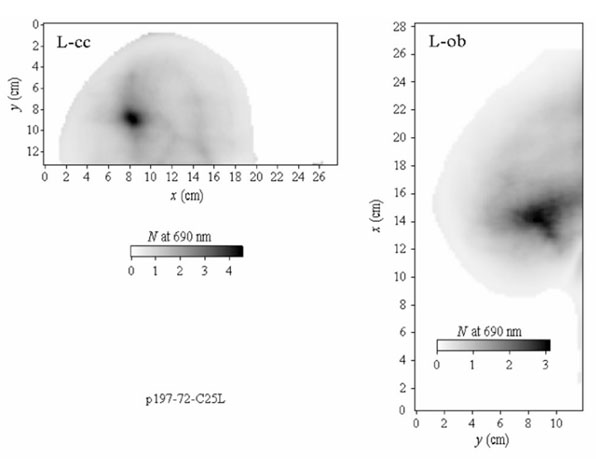
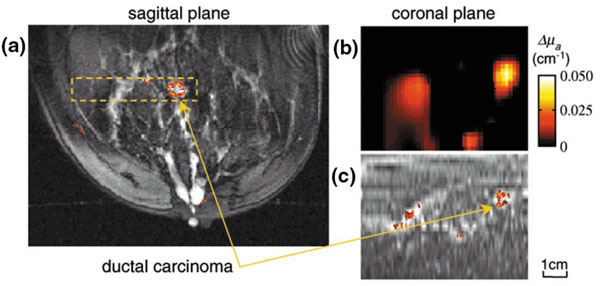
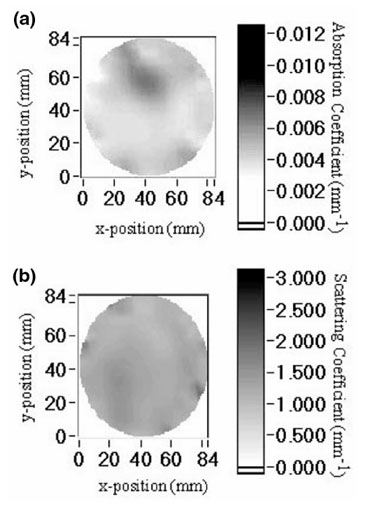
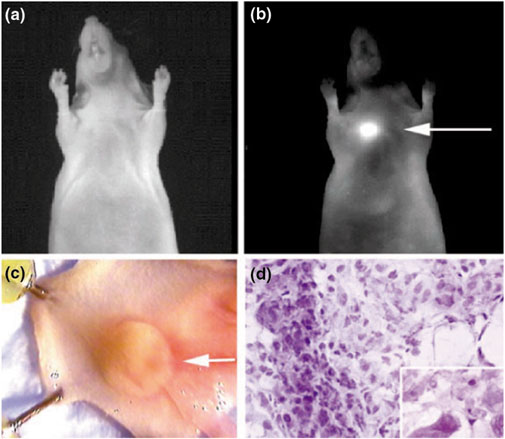
The present review addresses the capacity of optical imaging to resolve functional and molecular characteristics of breast cancer. We focus on recent developments in optical imaging that allow three-dimensional reconstruction of optical signatures in the human breast using diffuse optical tomography (DOT). These technologic advances allow the noninvasive, in vivo imaging and quantification of oxygenated and deoxygenated hemoglobin and of contrast agents that target the physiologic and molecular functions of tumors. Hence, malignancy differentiation can be based on a novel set of functional features that are complementary to current radiologic imaging methods. These features could enhance diagnostic accuracy, lower the current state-of-the-art detection limits, and play a vital role in therapeutic strategy and monitoring.
Figures
References
-
- Svanberg K, Wang I, Colleen S, Idvall I, Ingvar C, Rydell R, Jocham D, Diddens H, Bown S, Gregory G, Montan S, Andersson-Engels S, Svanberg S. Clinical multi-colour fluorescence imaging of malignant tumours: initial experience. Acta Radiol. 1998;39:2–9. - PubMed
-
- Stepp H, Sroka R, Baumgartner R. Fluorescence endoscopy of gastrointestinal diseases: basic principles, techniques, and clinical experience. Endoscopy. 1998;30:379–386. - PubMed
-
- Sickles EA. Breast cancer detection with transillumination and mammography. Am J Roentgenol. 1984;142:841–844. - PubMed
Publication types
MeSH terms
Substances
LinkOut - more resources
Full Text Sources
Other Literature Sources
Medical
