Review
. 2000 Nov;1(5):399-403.
doi: 10.1093/embo-reports/kvd098.

The atypical protein kinase Cs. Functional specificity mediated by specific protein adapters

Affiliations
Review

The atypical protein kinase Cs. Functional specificity mediated by specific protein adapters

J Moscat et al. EMBO Rep. 2000 Nov.

Abstract

Since its discovery more than 10 years ago, the atypical PKC (aPKC) subfamily has attracted great interest. A number of reports have shown that the kinases of this subfamily play critical roles in signaling pathways that control cell growth, differentiation and survival. Recently, several investigators have identified a number of aPKC-interacting proteins whose characterization is helping to unravel the mechanisms of action and functions of these kinases. These interactors include p62, Par-6, MEK5 and Par-4. The details of how these adapters serve to link the aPKCs to different receptor signaling pathways and substrates in response to specific stimuli are crucial not only for developing an understanding of the roles and functions of the aPKCs themselves, but also for more generally establishing a view of how specificity in signal transduction is achieved.


Figures
None
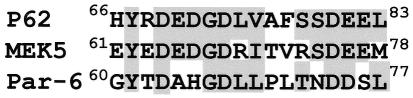
Fig. 1. The AID sequences of p62 and MEK5 aligned with the corresponding putative region of Par-6. Identical and closely related residues are shown in gray.
None
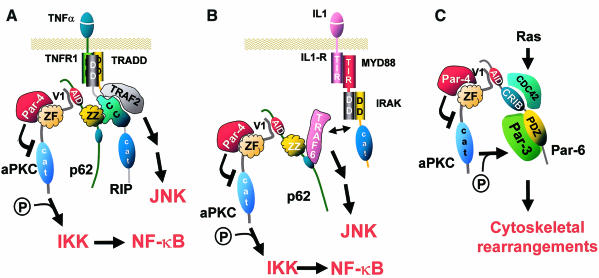
Fig. 2. The modulation of aPKC function by different protein complexes. (A) In response to TNFα receptor stimulation, the death domain (DD) of the corresponding receptor binds the adapter TRADD, which serves to recruit RIP. The coiled-coil (CC) region of RIP interacts with the atypical zinc finger (ZZ) of p62. The AID sequence of p62 interacts with the V1 domain of the aPKCs and serves to recruit them to the receptor signaling complex, and to activate them through an unknown mechanism. The inhibitory protein Par-4 can target the zinc finger (ZF) of the aPKCs, provoking their inhibition and the subsequent induction of apoptosis. (B) TRAF6 also interacts with p62, linking the aPKCs to the IL-1 signaling cascade. IRAK, after it is recruited to the IL-1 signaling complex, is hyperphosphorylated and released to interact with TRAF6. The recruitment of IRAK to the IL-1 receptor complex takes place through its interaction with the adapter MyD88, which binds the IL-1 receptor through the TIR domain. IKK can be recruited to these complexes through RIP or the TRAFs where its β subunit can be phosphorylated and activated by the aPKCs. (C) CDC42 or Rac may stimulate Par-6 (AID site), which forms a complex with the aPKCs (V1 site) in close proximity to Par-3, which interacts with the PDZ domain of Par-6. This results in the phosphorylation of Par-3 by the aPKCs, leading to downstream effects on cytoskeletal arrangement. The interaction between Par-6 and CDC42 may explain the role of the aPKCs in cytoskeletal remodeling during Ras transformation, since Ras is known to activate CDC42.
None
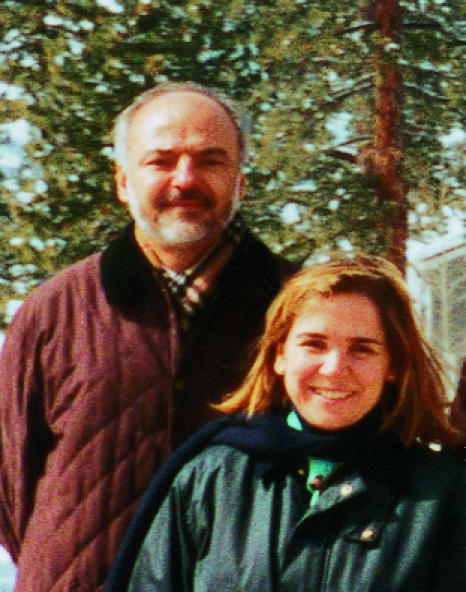
Jorge Moscat and María Diaz-Meco

References

    1. Akimoto K. et al. (1996) EGF or PDGF receptors activate atypical PKCλ through phosphatidylinositol 3-kinase. EMBO J., 15, 788–798. - PMC - PubMed
    1. Barradas M., Monjas, A., Diaz-Meco, M.T., Serrano, M. and Moscat, J. (1999) The downregulation of the pro-apoptotic protein Par-4 is critical for Ras-induced survival and tumor progression. EMBO J., 18, 6362–6369. - PMC - PubMed
    1. Berra E., Diaz-Meco, M.T., Dominguez, I., Municio, M.M., Sanz, L., Lozano, J., Chapkin, R.S. and Moscat, J. (1993) Protein kinase Cζ isoform is critical for mitogenic signal transduction. Cell, 74, 555–563. - PubMed
    1. Berra E., Diaz-Meco, M.T., Lozano, J., Frutos, S., Municio, M.M., Sanchez, P., Sanz, L. and Moscat, J. (1995) Evidence for a role of MEK and MAPK during signal transduction by protein kinase Cζ. EMBO J., 14, 6157–6163. - PMC - PubMed
    1. Bjorkoy G., Perander, M., Overvatn, A. and Johansen, T. (1997) Reversion of Ras- and phosphatidylcholine-hydrolyzing phospholipase C-mediated transformation of NIH 3T3 cells by a dominant interfering mutant of protein kinase Cλ is accompanied by the loss of constitutive nuclear mitogen-activated protein kinase/extracellular signal-regulated kinase activity. J. Biol. Chem., 272, 11557–11565. - PubMed

Substances