


Prevention and elimination of upper respiratory colonization of mice by group A streptococci by using a bacteriophage lytic enzyme
- PMID: 11259652
- PMCID: PMC31187
- DOI: 10.1073/pnas.061038398
Prevention and elimination of upper respiratory colonization of mice by group A streptococci by using a bacteriophage lytic enzyme
Abstract
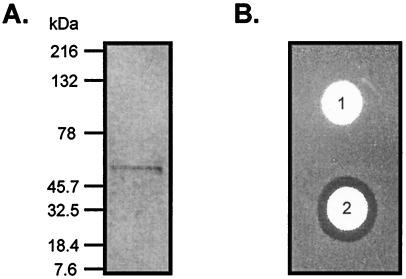
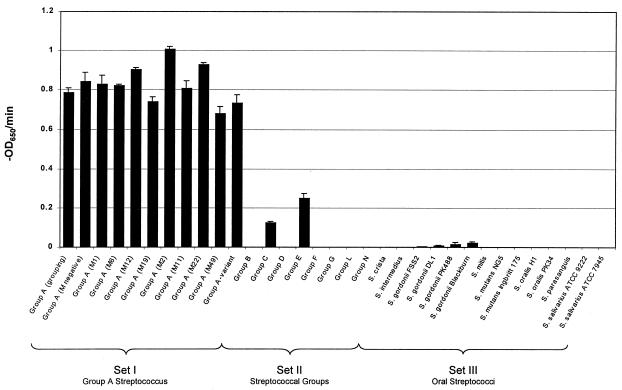
Bacteriophage lytic enzymes quickly destroy the cell wall of the host bacterium to release progeny phage. Because such lytic enzymes specifically kill the species in which they were produced, they may represent an effective way to control pathogenic bacteria without disturbing normal microflora. In this report, we studied a murein hydrolase from the streptococcal bacteriophage C(1) termed lysin. This enzyme is specific for groups A, C, and E streptococci, with little or no activity toward several oral streptococci or other commensal organisms tested. Using purified lysin in vitro, we show that 1,000 units (10 ng) of enzyme is sufficient to sterilize a culture of approximately 10(7) group A streptococci within 5 seconds. When a single dose of lysin (250 units) is first added to the oral cavity of mice, followed by 10(7) live group A streptococci, it provides protection from colonization (28.5% infected, n = 21) compared with controls without lysin (70.5% infected, n = 17) (P < 0.03). Furthermore, when lysin (500 units) was given orally to 9 heavily colonized mice, no detectable streptococci were observed 2 h after lysin treatment. In all, these studies show that lysin represents a unique murein hydrolase that has a rapid lethal effect both in vitro and in vivo on group A streptococci, without affecting other indigenous microorganisms analyzed. This general approach may be used to either eliminate or reduce streptococci from the upper respiratory mucosal epithelium of either carriers or infected individuals, thus reducing associated disease.
Figures
References
-
- Macris M H, Hartman N, Murray B, Klein R F, Roberts R B, Kaplan E L, Horn D, Zabriskie J B. Pediatr Infect Dis J. 1998;17:377–381. - PubMed
-
- Schappert S M, Nelson C. Vital Health Stat. 1999;13:1–122. - PubMed
-
- Pichichero M E. Pediatr Rev. 1998;19:291–302. - PubMed
-
- Feldman S, Bisno A L, Lott L, Dodge R, Jackson R E. J Pediatr. 1987;110:783–787. - PubMed
Publication types
MeSH terms
Substances
Grants and funding
LinkOut - more resources
Full Text Sources
Other Literature Sources
Medical
Molecular Biology Databases
