


Ku80 is required for addition of N nucleotides to V(D)J recombination junctions by terminal deoxynucleotidyl transferase
- PMID: 11266568
- PMCID: PMC31272
- DOI: 10.1093/nar/29.7.1638
Ku80 is required for addition of N nucleotides to V(D)J recombination junctions by terminal deoxynucleotidyl transferase
Abstract
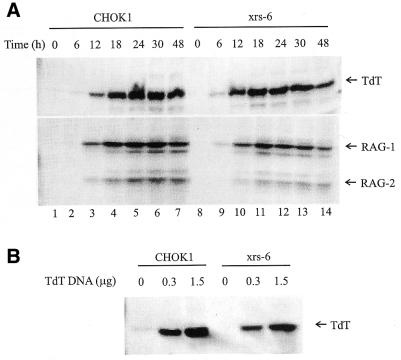
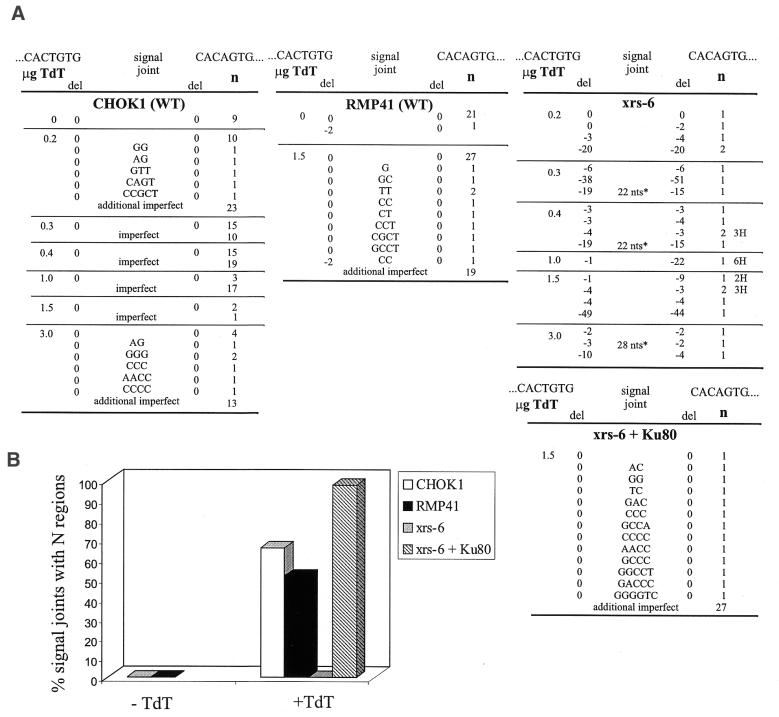
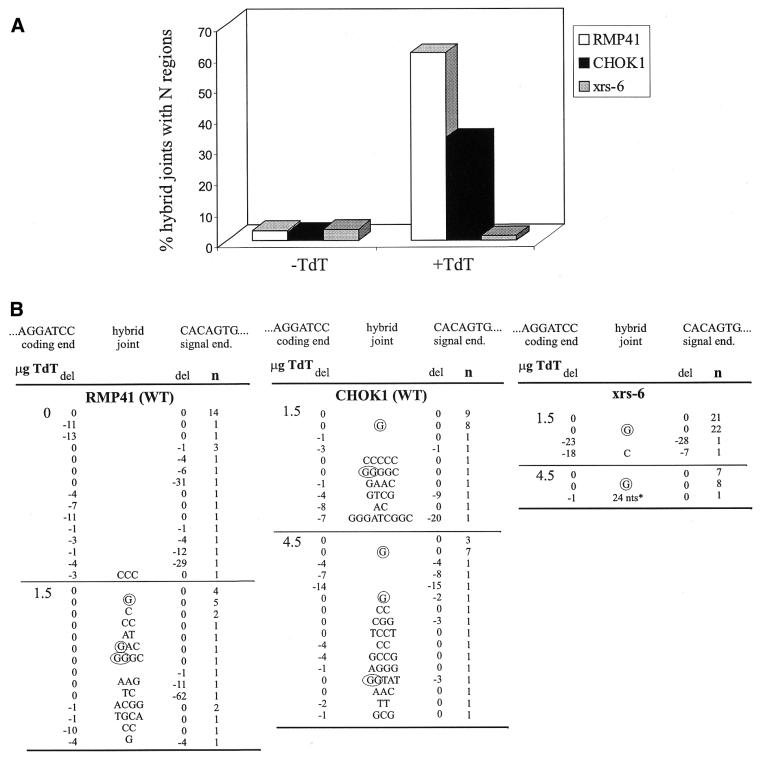
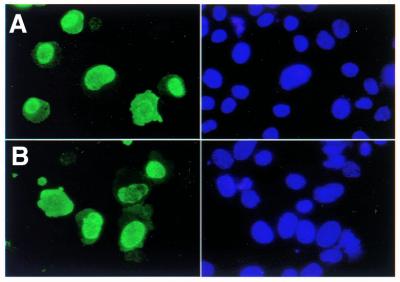
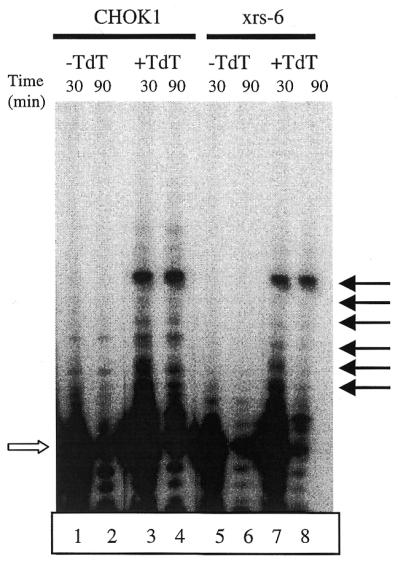
V(D)J recombination generates a remarkably diverse repertoire of antigen receptors through the rearrangement of germline DNA. Terminal deoxynucleotidyl transferase (TdT), a polymerase that adds random nucleotides (N regions) to recombination junctions, is a key enzyme contributing to this diversity. The current model is that TdT adds N regions during V(D)J recombination by random collision with the DNA ends, without a dependence on other cellular factors. We previously demonstrated, however, that V(D)J junctions from Ku80-deficient mice unexpectedly lack N regions, although the mechanism responsible for this effect remains undefined in the mouse system. One possibility is that junctions are formed in these mice during a stage in development when TdT is not expressed. Alternatively, Ku80 may be required for the expression, nuclear localization or enzymatic activity of TdT. Here we show that V(D)J junctions isolated from Ku80-deficient fibroblasts are devoid of N regions, as were junctions in Ku80-deficient mice. In these cells TdT protein is abundant at the time of recombination, localizes properly to the nucleus and is enzymatically active. Based on these data, we propose that TdT does not add to recombination junctions through random collision but is actively recruited to the V(D)J recombinase complex by Ku80.
Figures
References
-
- Lewis S.M. (1994) The mechanism of V(D)J joining: lessons from molecular, immunological and comparative analyses. Adv. Immunol., 56, 27–150. - PubMed
-
- Bogue M. and Roth,D.B. (1996) Mechanism of V(D)J recombination. Curr. Opin. Immunol., 8, 175–180. - PubMed
-
- Roth D.B., Menetski,J.P., Nakajima,P.B., Bosma,M.J. and Gellert,M. (1992) V(D)J recombination: broken DNA molecules with covalently sealed (hairpin) coding ends in scid mouse thymocytes. Cell, 70, 983–991. - PubMed
-
- Schlissel M., Constantinescu,A., Morrow,T., Baxter,M. and Peng,A. (1993) Double-strand signal sequence breaks in V(D)J recombination are blunt, 5′-phosphorylated, RAG-dependent, and cell cycle regulated. Genes Dev., 7, 2520–2532. - PubMed
Publication types
MeSH terms
Substances
Grants and funding
LinkOut - more resources
Full Text Sources
Other Literature Sources
Research Materials
Miscellaneous
