Genotypic characterization of Toxoplasma gondii strains associated with human toxoplasmosis in Spain: direct analysis from clinical samples
- PMID: 11283088
- PMCID: PMC87971
- DOI: 10.1128/JCM.39.4.1566-1570.2001
Genotypic characterization of Toxoplasma gondii strains associated with human toxoplasmosis in Spain: direct analysis from clinical samples
Abstract
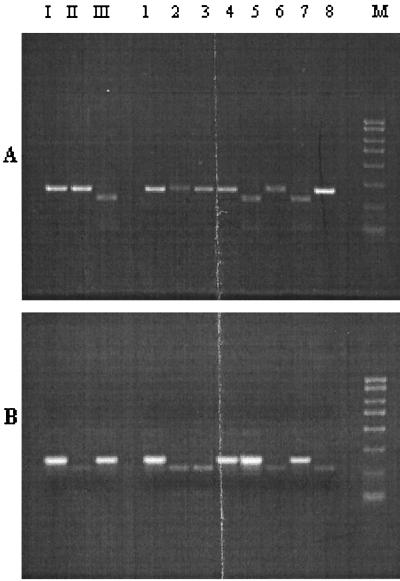
Genetic analysis of the SAG2 locus was performed to determine the prevalence of the different genotypes of Toxoplasma gondii (strain types I, II, and III) associated with human toxoplasmosis in Spain. This determination was made directly from primary clinical samples, obviating the previous process of isolation in mice or cell culture. A total of 34 isolates of T. gondii, collected from immunocompromised patients and congenital infection cases, were analyzed. Restriction fragment length polymorphism in PCR-amplified SAG2 products was used to group strains into one of the three genotypes of T. gondii. Complete characterization of the SAG2 gene was successful in 76.5% of the cases, demonstrating the feasibility of direct genotype analysis from clinical samples of different origins. Strains of T. gondii type II were the most prevalent in immunocompromised patients, with 52% of cases, while strains of type I were present in 75% of the congenital infection cases. These data differ from previous reports that show type II strains to be mostly associated with all kinds of human toxoplasmosis. These differences might be an effect of selection in the process of culture and isolation of the samples performed by other researchers prior to strain characterization.
Figures
References
-
- Cristina N, Dardé M L, Boudin C, Tavernier G, Pestre-Alexandre M, Ambroise-Thomas P. A DNA fingerprinting method for individual characterization of Toxoplasma gondii strains: combination with isoenzymatic characters for determination of linkage groups. Parasitol Res. 1995;81:32–37. - PubMed
-
- Dardé M L, Bouteille, Pestre-Alexandre M. Isoenzyme analysis of 35 Toxoplasma gondii isolates and the biological and epidemiological implications. J Parasitol. 1992;78:786–794. - PubMed
-
- Dubey J P, Beattie C P. Toxoplasmosis of animals and man. Boca Raton, Fla: CRC Press, Inc.; 1988.
-
- Frenkel J K, Ambroise-Thomas P. Genomic drift of Toxoplasma gondii. Parasitol Res. 1997;83:1–5. - PubMed
Publication types
MeSH terms
Substances
LinkOut - more resources
Full Text Sources
Medical