


Protein kinase C isoform-dependent modulation of ATP-sensitive K+ channels during reoxygenation in guinea-pig ventricular myocytes
- PMID: 11283232
- PMCID: PMC2278517
- DOI: 10.1111/j.1469-7793.2001.0165g.x
Protein kinase C isoform-dependent modulation of ATP-sensitive K+ channels during reoxygenation in guinea-pig ventricular myocytes
Abstract
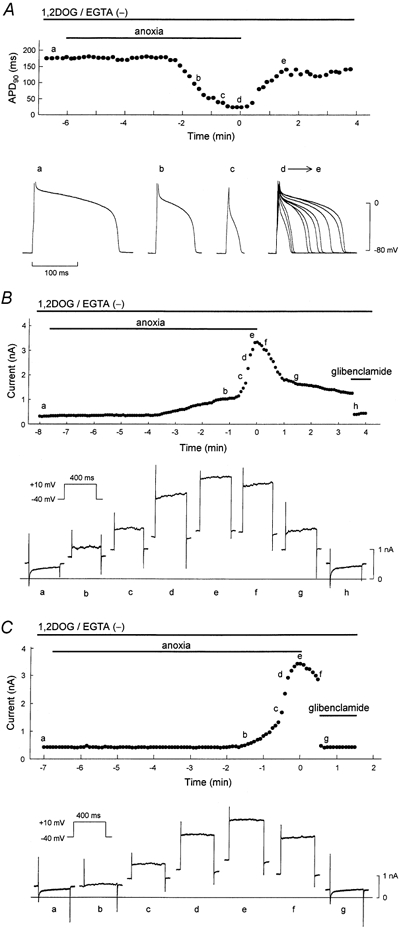
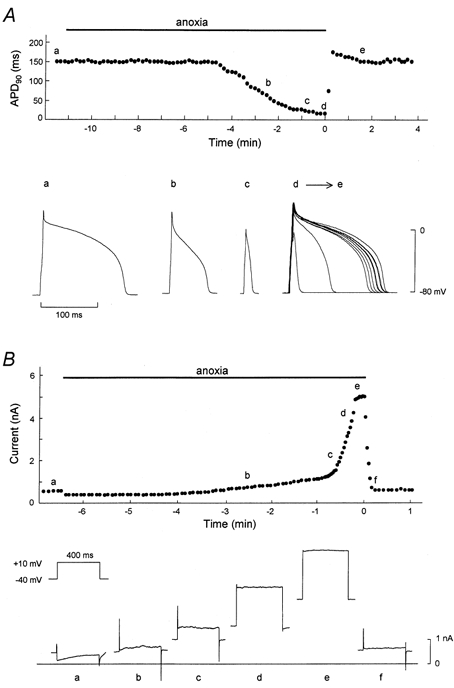
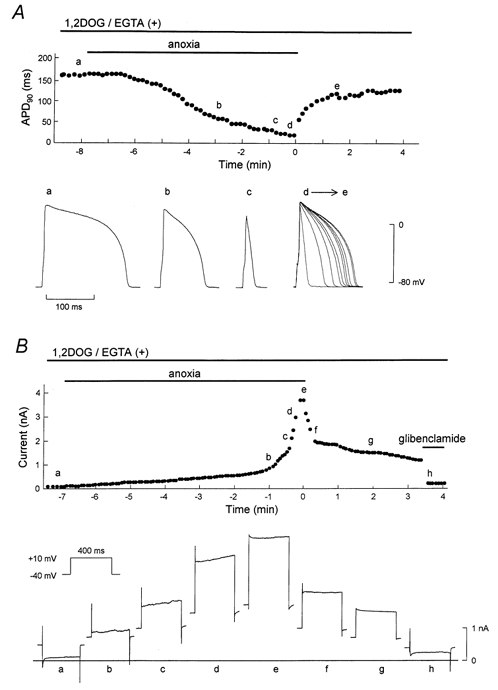
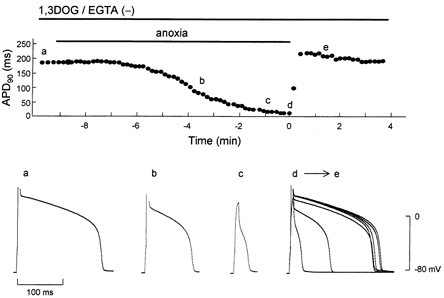
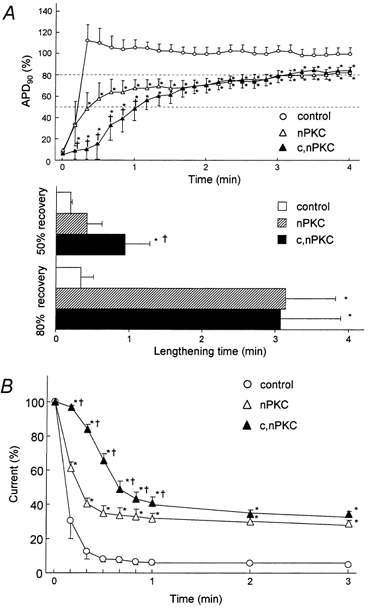
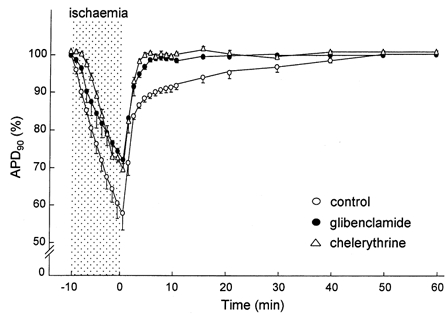
ATP-sensitive K+ (KATP) channels activated by glucose-free anoxia close immediately upon reoxygenation in single guinea-pig ventricular myocytes, while KATP channels open persistently during reperfusion in coronary-perfused guinea-pig ventricular myocardium. To investigate the reasons behind this discrepancy, we investigated whether protein kinase C (PKC) modulates the opening of KATP channels during anoxia-reoxygenation and ischaemia-reperfusion. Exposure of guinea-pig ventricular cells to glucose-free anoxia shortened the action potential duration at 90% repolarisation (APD90) and evoked the glibenclamide-sensitive robust outward current (IK,ATP). Subsequent reoxygenation caused an immediate prolongation of APD90 and a decrease in IK,ATP within approximately 20 s. When the novel (Ca2+-independent) PKC was activated by applying 1,2-dioctanoyl-sn-glycerol (1,2DOG, 20 M) with EGTA (20 mM) in the pipette, the APD90 restored gradually after reoxygenation and the extent of recovery was appoximately 80% of the pre-anoxic value. Moreover, IK,ATP decreased slowly and remained opened for up to approximately 4 min after reoxygenation. These results suggest persistent opening of KATP channels during reoxygenation. The persistent activation of KATP channels was augmented when both novel and conventional (Ca2+-dependent) isoforms of PKC were activated by applying 1,2DOG without EGTA in the pipette. In coronary-perfused right ventricular myocardium, APD90 remained shortened for up to approximately 30 min of reperfusion. The gradual restoration of APD90 after ischaemia-reperfusion was facilitated by the KATP channel blocker glibenclamide and by the potent PKC inhibitor chelerythrine. Our results provide the first evidence that PKC activation contributes to the persistent opening of KATP channels during reoxygenation and reperfusion. We also conclude that both novel and conventional PKC isoforms co-operatively modulate the opening of KATP channels during the early phase of reoxygenation.
Figures
References
-
- Black SC, Fagbemi SO, Chi L, Friedrichs GS, Lucchesi BR. Phorbol ester-induced ventricular fibrillation in the Langendorff-perfused rabbit heart: antagonism by staurosporine and glibenclamide. Journal of Molecular and Cellular Cardiology. 1993;25:1427–1438. - PubMed
-
- Clement PJ, IV, Kunjilwar K, Gonzalez G, Schwanstercher M, Panten U, Aguilar-Bryan L, Bryan J. Association and stoichiometry of KATP channel subunit. Neuron. 1997;18:827–838. - PubMed
-
- Garlid KD, Paucek P, Yarov-Yarovoy V, Murray HM, Darbenzo RB, D'Alonzo AJ, Smith MA, Grover GJ. Cardioprotective effect of diazoxide and its interaction with mitochondrial ATP-sensitive K+ channels: possible mechanism of cardioprotection. Circulation Research. 1997;81:1072–1082. - PubMed
-
- Grover GJ, D'Alonzo AJ, Parham CS, Darbenzio RB. Cardioprotection with the KATP opener cromakalim is not correlated with ischaemic myocardial action potential duration. Journal of Cardiovascular Pharmacology. 1995;26:145–152. - PubMed
Publication types
MeSH terms
Substances
LinkOut - more resources
Full Text Sources
Miscellaneous
