


Turning a disulfide isomerase into an oxidase: DsbC mutants that imitate DsbA
- PMID: 11285220
- PMCID: PMC145499
- DOI: 10.1093/emboj/20.7.1555
Turning a disulfide isomerase into an oxidase: DsbC mutants that imitate DsbA
Abstract
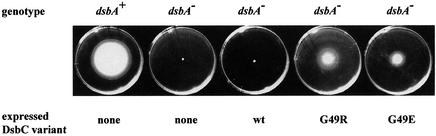
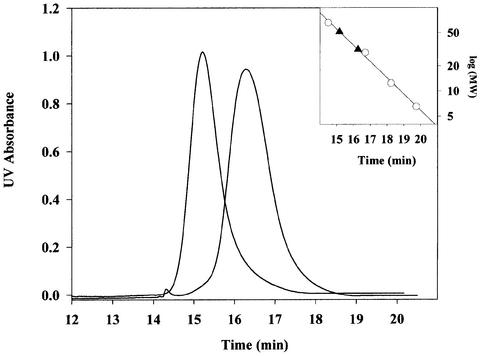
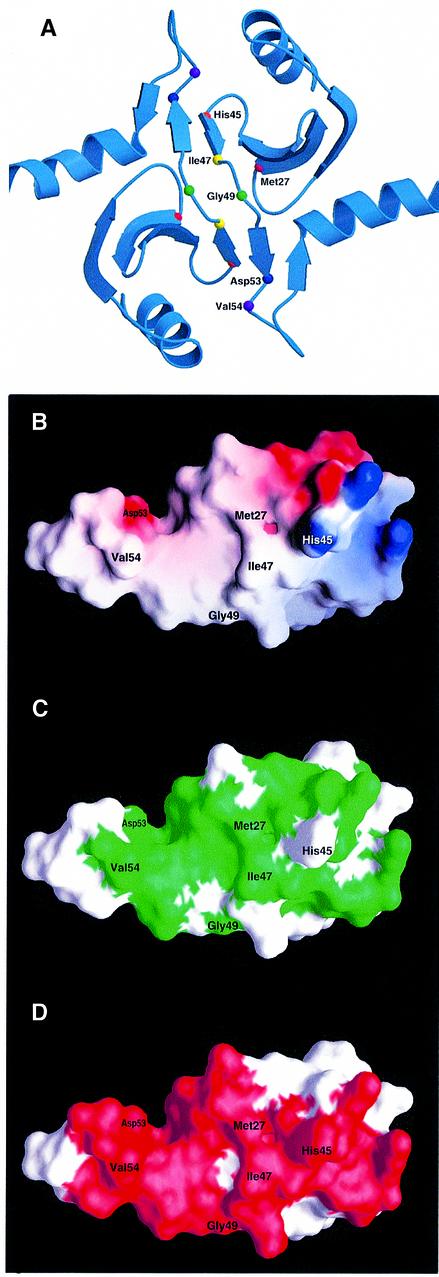
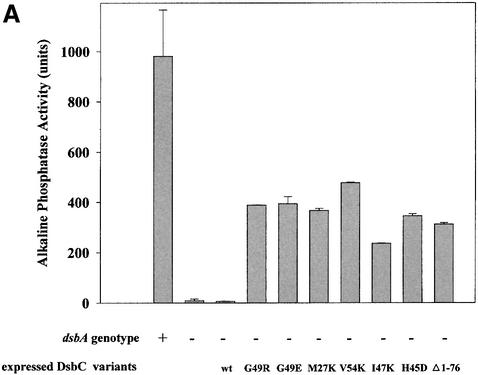
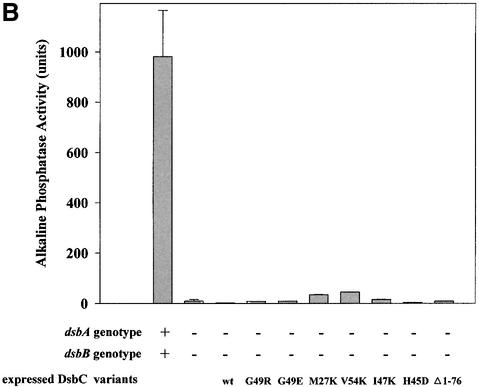
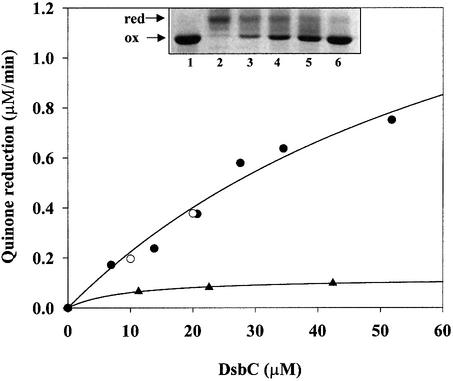
There are two distinct pathways for disulfide formation in prokaryotes. The DsbA-DsbB pathway introduces disulfide bonds de novo, while the DsbC-DsbD pathway functions to isomerize disulfides. One of the key questions in disulfide biology is how the isomerase pathway is kept separate from the oxidase pathway in vivo. Cross-talk between these two systems would be mutually destructive. To force communication between these two systems we have selected dsbC mutants that complement a dsbA null mutation. In these mutants, DsbC is present as a monomer as compared with dimeric wild-type DsbC. Based on these findings we rationally designed DsbC mutants in the dimerization domain. All of these mutants are able to rescue the dsbA null phenotype. Rescue depends on the presence of DsbB, the native re-oxidant of DsbA, both in vivo and in vitro. Our results suggest that dimerization acts to protect DsbC's active sites from DsbB-mediated oxidation. These results explain how oxidative and reductive pathways can co-exist in the periplasm of Escherichia coli.
Figures
References
-
- Bader M., Muse,W., Ballou,D.P., Gassner,C. and Bardwell,J.C. (1999) Oxidative protein folding is driven by the electron transport system. Cell, 98, 217–227. - PubMed
-
- Bader M.W., Xie,T., Yu,C.A. and Bardwell,J.C. (2000) Disulfide bonds are generated by quinone reduction. J. Biol. Chem., 275, 26082–26088. - PubMed
-
- Bardwell J.C., McGovern,K. and Beckwith,J. (1991) Identification of a protein required for disulfide bond formation in vivo. Cell, 67, 581–589. - PubMed
-
- Bessette P.H., Cotto,J.J., Gilbert,H.F. and Georgiou,G. (1999) In vivo and in vitro function of the Escherichia coli periplasmic cysteine oxidoreductase DsbG. J. Biol. Chem., 274, 7784–7792. - PubMed
Publication types
MeSH terms
Substances
LinkOut - more resources
Full Text Sources
Other Literature Sources
Molecular Biology Databases
