


Chrysanthemyl diphosphate synthase: isolation of the gene and characterization of the recombinant non-head-to-tail monoterpene synthase from Chrysanthemum cinerariaefolium
- PMID: 11287653
- PMCID: PMC31842
- DOI: 10.1073/pnas.071543598
Chrysanthemyl diphosphate synthase: isolation of the gene and characterization of the recombinant non-head-to-tail monoterpene synthase from Chrysanthemum cinerariaefolium
Abstract
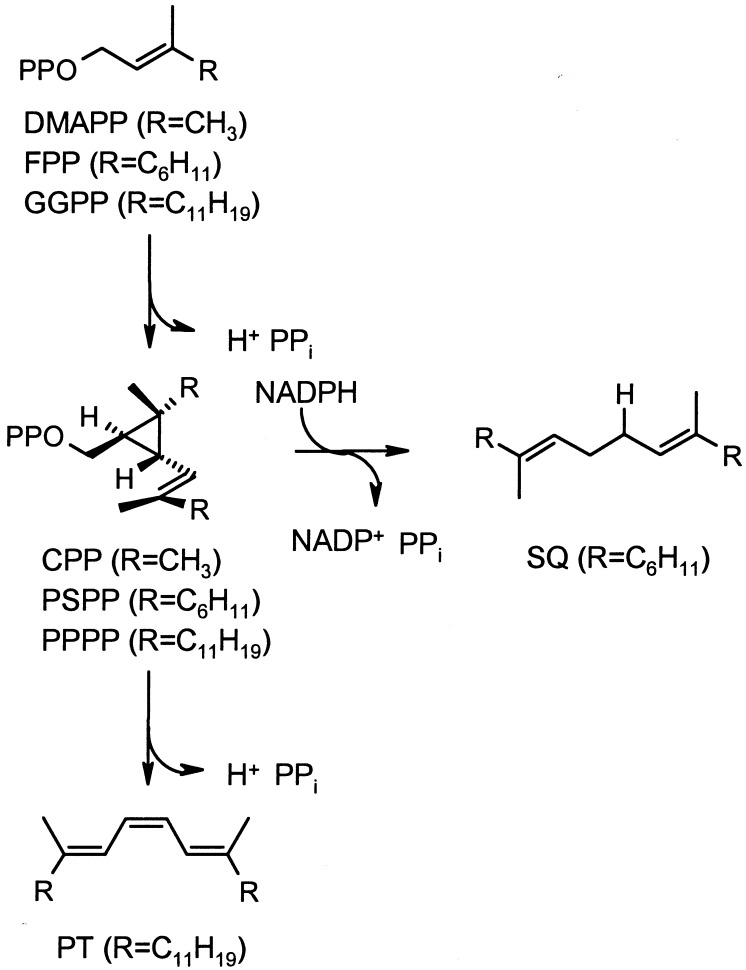
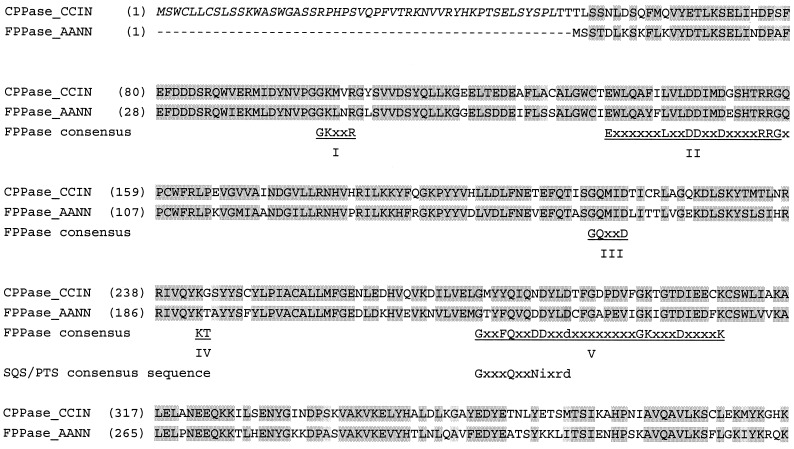
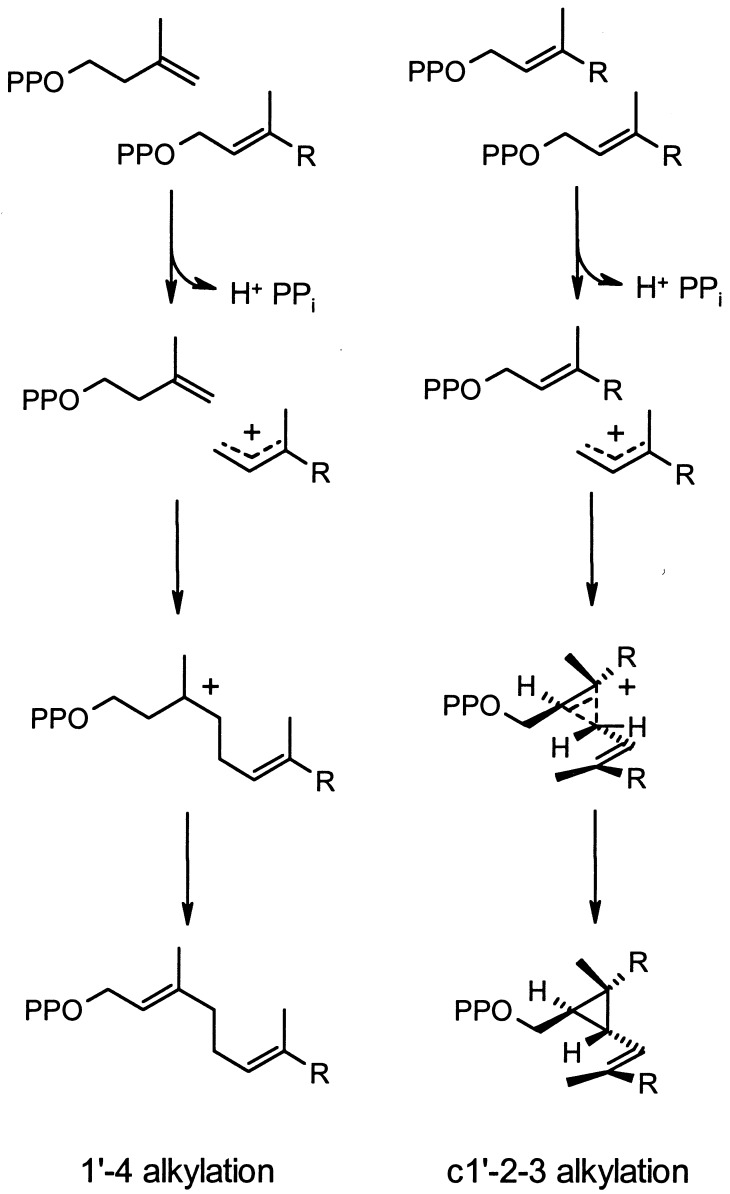
Chrysanthemyl diphosphate synthase (CPPase) catalyzes the condensation of two molecules of dimethylallyl diphosphate to produce chrysanthemyl diphosphate (CPP), a monoterpene with a non-head-to-tail or irregular c1'-2-3 linkage between isoprenoid units. Irregular monoterpenes are common in Chrysanthemum cinerariaefolium and related members of the Asteraceae family. In C. cinerariaefolium, CPP is an intermediate in the biosynthesis of the pyrethrin ester insecticides. CPPase was purified from immature chrysanthemum flowers, and the N terminus of the protein was sequenced. A C. cinerariaefolium lambda cDNA library was screened by using degenerate oligonucleotide probes based on the amino acid sequence to identify a CPPase clone that encoded a 45-kDa preprotein. The first 50 aa of the ORF constitute a putative plastidial targeting sequence. Recombinant CPPase bearing an N-terminal polyhistidine affinity tag in place of the targeting sequence was purified to homogeneity from an overproducing Escherichia coli strain by Ni(2+) chromatography. Incubation of recombinant CPPase with dimethylallyl diphosphate produced CPP. The diphosphate ester was hydrolyzed by alkaline phosphatase, and the resulting monoterpene alcohol was analyzed by GC/MS to confirm its structure. The amino acid sequence of CPPase aligns closely with that of the chain elongation prenyltransferase farnesyl diphosphate synthase rather than squalene synthase or phytoene synthase, which catalyze c1'-2-3 cyclopropanation reactions similar to the CPPase reaction.
Figures
References
-
- Eisenreich W, Schwartz M, Cartayrade A, Arigoni D, Zenk M H, Bacher A. Chem Biol. 1998;5:R221–R233. - PubMed
-
- Poulter C D. Acc Chem Res. 1990;23:70–77.
-
- Kellogg B A, Poulter C D. Curr Opin Chem Biol. 1997;4:570–578. - PubMed
-
- Koyama T, Ogura K. In: Comprehensive Natural Products Chemistry: Isoprenoids. Cane D E, editor. Vol. 2. Oxford: Elsevier Science; 1998. pp. 73–96.
-
- Gunawardena K. Ph.D. dissertation. Salt Lake City: Univ. of Utah; 1994.
Publication types
MeSH terms
Substances
Associated data
- Actions
Grants and funding
LinkOut - more resources
Full Text Sources
Other Literature Sources
Molecular Biology Databases
Miscellaneous
