A simplified model for predicting malaria entomologic inoculation rates based on entomologic and parasitologic parameters relevant to control
- PMID: 11289661
- PMCID: PMC2483339
- DOI: 10.4269/ajtmh.2000.62.535
A simplified model for predicting malaria entomologic inoculation rates based on entomologic and parasitologic parameters relevant to control
Abstract
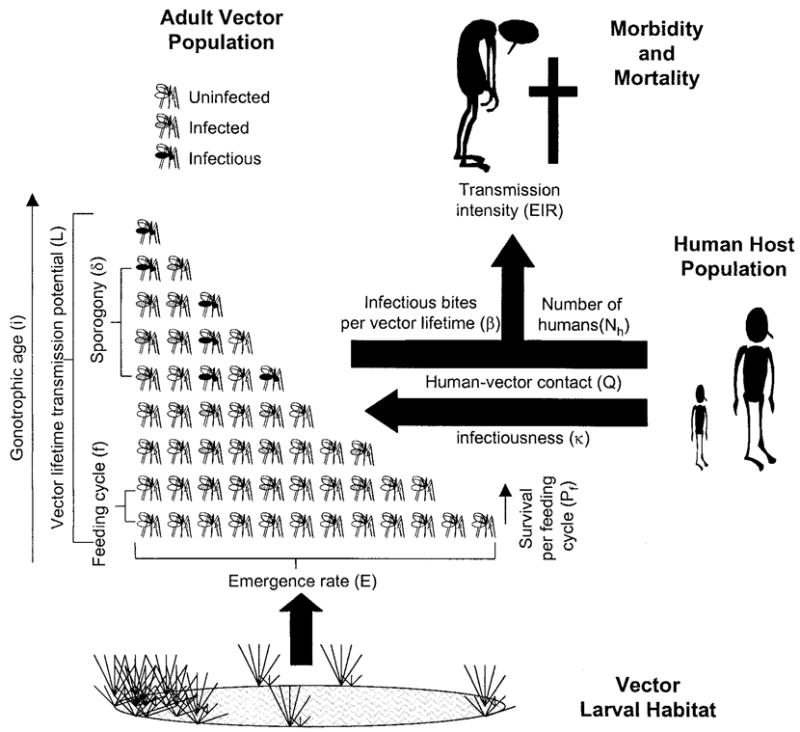
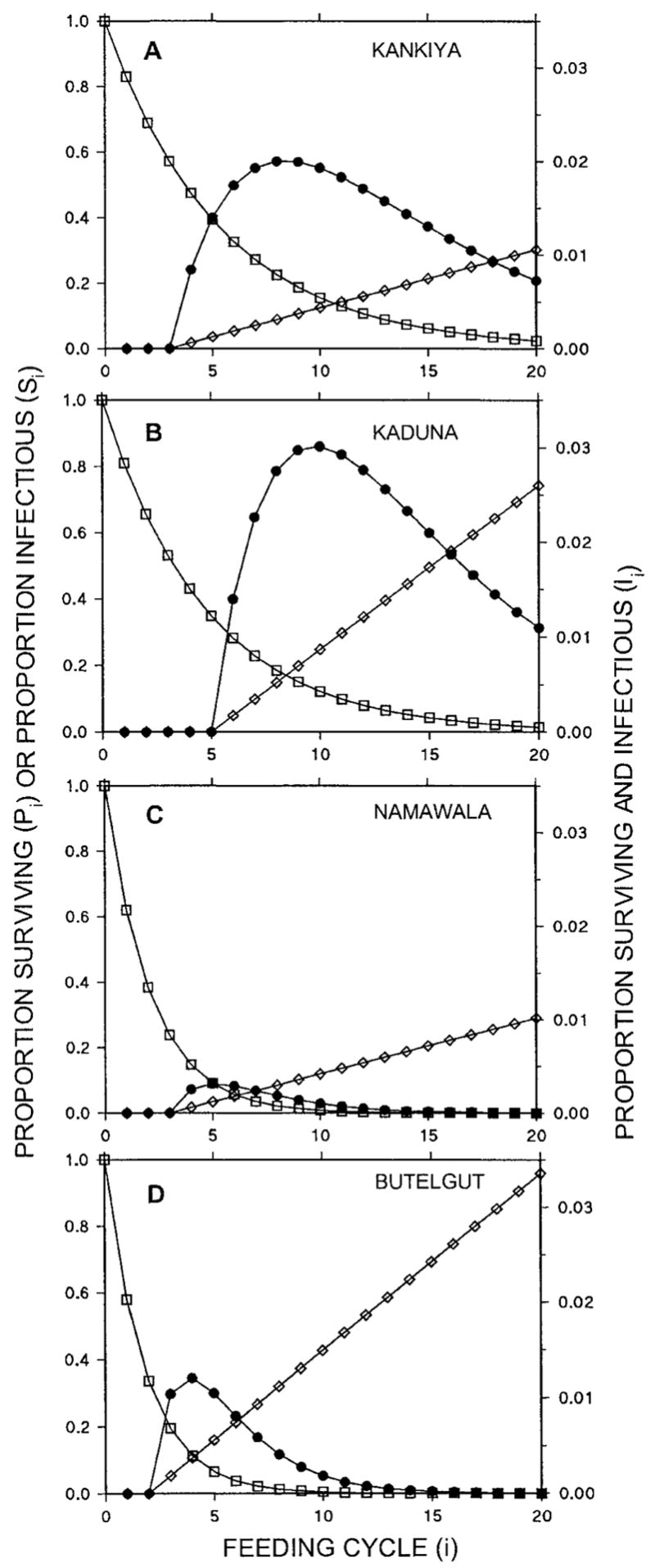
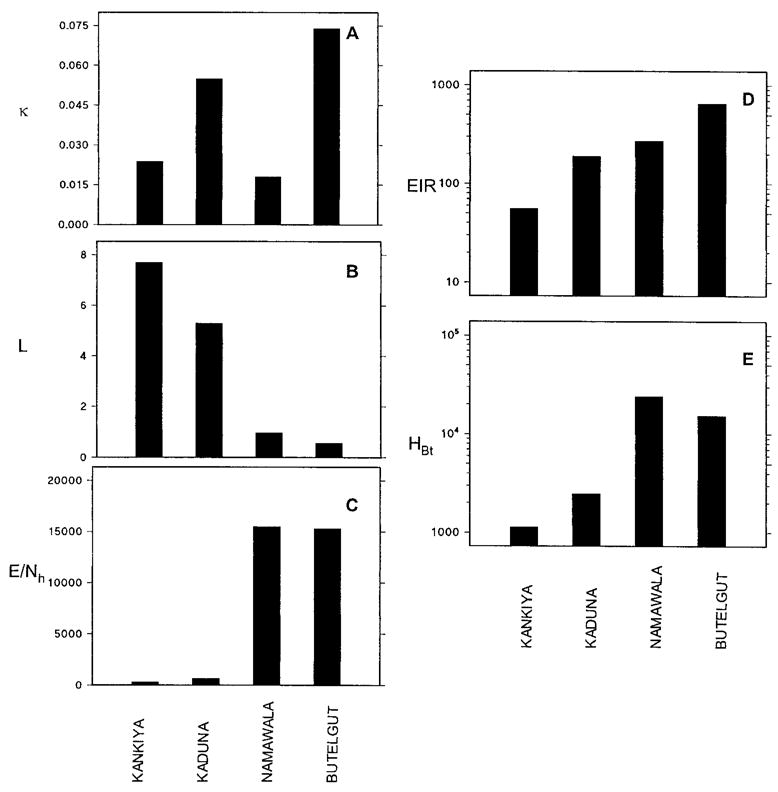
Malaria transmission intensity is modeled from the starting perspective of individual vector mosquitoes and is expressed directly as the entomologic inoculation rate (EIR). The potential of individual mosquitoes to transmit malaria during their lifetime is presented graphically as a function of their feeding cycle length and survival, human biting preferences, and the parasite sporogonic incubation period. The EIR is then calculated as the product of 1) the potential of individual vectors to transmit malaria during their lifetime, 2) vector emergence rate relative to human population size, and 3) the infectiousness of the human population to vectors. Thus, impacts on more than one of these parameters will amplify each other's effects. The EIRs transmitted by the dominant vector species at four malaria-endemic sites from Papua New Guinea, Tanzania, and Nigeria were predicted using field measurements of these characteristics together with human biting rate and human reservoir infectiousness. This model predicted EIRs (+/- SD) that are 1.13 +/- 0.37 (range = 0.84-1.59) times those measured in the field. For these four sites, mosquito emergence rate and lifetime transmission potential were more important determinants of the EIR than human reservoir infectiousness. This model and the input parameters from the four sites allow the potential impacts of various control measures on malaria transmission intensity to be tested under a range of endemic conditions. The model has potential applications for the development and implementation of transmission control measures and for public health education.
Figures
References
-
- Koella JC. On the use of mathematical models of malaria transmission. Acta Trop. 1991;49:1–25. - PubMed
-
- Molineaux L. Malaria and mortality: some epidemiological considerations. Ann Trop Med Parasitol. 1997;91:811–825. - PubMed
-
- Lengeler C, Smith TA, Armstrong–Schellenberg J. Focus on the effect of bednets on malaria morbidity and mortality. Parasitol Today. 1997;13:123–124. - PubMed
-
- Beier JC, Killeen GF, Githure J. Short report: entomologic inoculation rates and Plasmodium falciparum malaria prevalence in Africa. Am J Trop Med Hyg. 1999;61:109–113. - PubMed
-
- Stirnadel H, Beck HP, Alpers MP, Smith TA. Heritability and segregation analysis of immune responses to specific malaria antigens in Papua New Guinea. Genet Epidemiol. 1999;17:16–34. - PubMed
Publication types
MeSH terms
Grants and funding
LinkOut - more resources
Full Text Sources