The potential impact of integrated malaria transmission control on entomologic inoculation rate in highly endemic areas
- PMID: 11289662
- PMCID: PMC2500225
- DOI: 10.4269/ajtmh.2000.62.545
The potential impact of integrated malaria transmission control on entomologic inoculation rate in highly endemic areas
Abstract
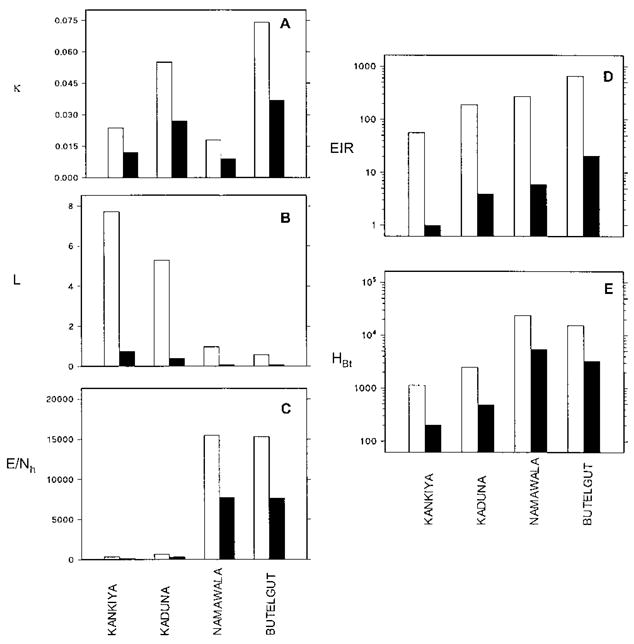
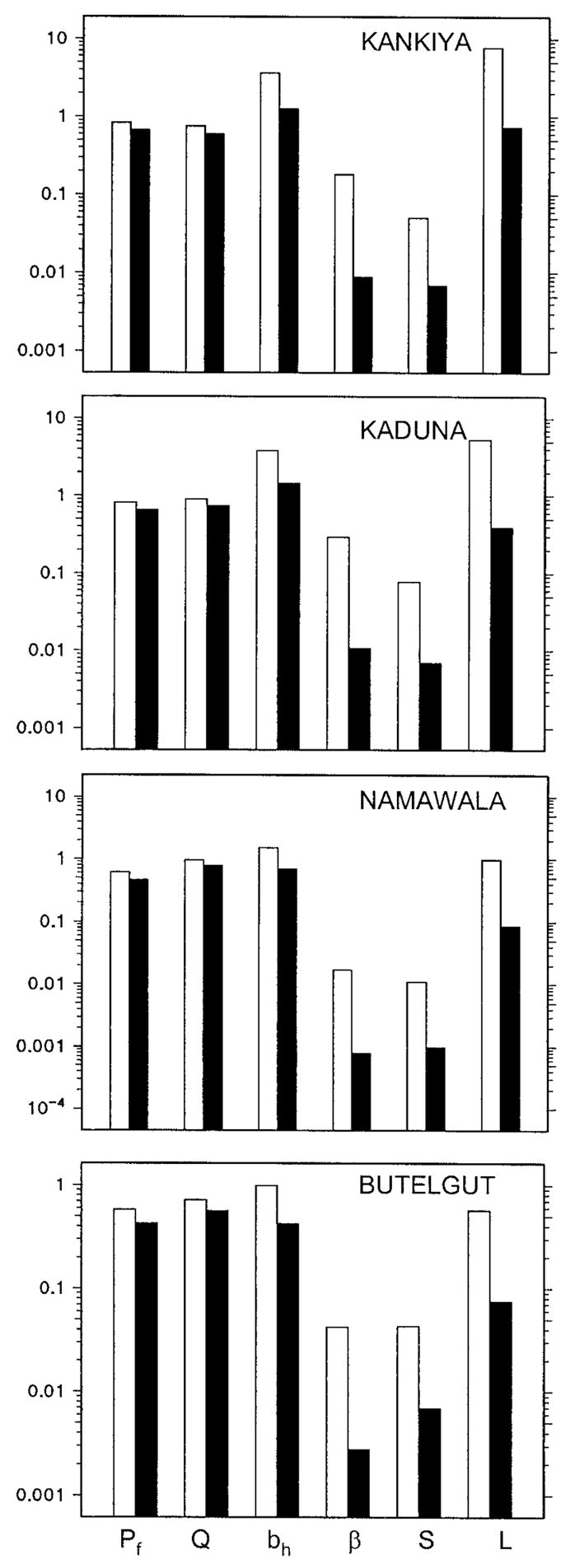
We have used a relatively simple but accurate model for predicting the impact of integrated transmission control on the malaria entomologic inoculation rate (EIR) at four endemic sites from across sub-Saharan Africa and the southwest Pacific. The simulated campaign incorporated modestly effective vaccine coverage, bed net use, and larval control. The results indicate that such campaigns would reduce EIRs at all four sites by 30- to 50-fold. Even without the vaccine, 15- to 25-fold reductions of EIR were predicted, implying that integrated control with a few modestly effective tools can meaningfully reduce malaria transmission in a range of endemic settings. The model accurately predicts the effects of bed nets and indoor spraying and demonstrates that they are the most effective tools available for reducing EIR. However, the impact of domestic adult vector control is amplified by measures for reducing the rate of emergence of vectors or the level of infectiousness of the human reservoir. We conclude that available tools, including currently neglected methods for larval control, can reduce malaria transmission intensity enough to alleviate mortality. Integrated control programs should be implemented to the fullest extent possible, even in areas of intense transmission, using simple models as decision-making tools. However, we also conclude that to eliminate malaria in many areas of intense transmission is beyond the scope of methods which developing nations can currently afford. New, cost-effective, practical tools are needed if malaria is ever to be eliminated from highly endemic areas.
Figures
References
-
- Beier JC, Killeen GF, Githure J. Short report: entomologic inoculation rates and Plasmodium falciparum malaria prevalence in Africa. Am J Trop Med Hyg. 1999;61:109–113. - PubMed
-
- Burkot TR, Graves PM, Paru R, Battistuta D, Barnes A, Saul A. Variations in malaria transmission rates are not related to anopheline survivorship per feeding cycle. Am J Trop Med Hyg. 1990;43:321–327. - PubMed
-
- Stirnadel H, Beck HP, Alpers MP, Smith TA. Heritability and segregation analysis of immune responses to specific malaria antigens in Papua New Guinea. Genet Epidemiol. 1999;17:16–34. - PubMed
Publication types
MeSH terms
Substances
Grants and funding
LinkOut - more resources
Full Text Sources
Other Literature Sources