Two imported cases of cutaneous larva migrans
- PMID: 11301593
- PMCID: PMC2721068
- DOI: 10.3347/kjp.2001.39.1.77
Two imported cases of cutaneous larva migrans
Abstract
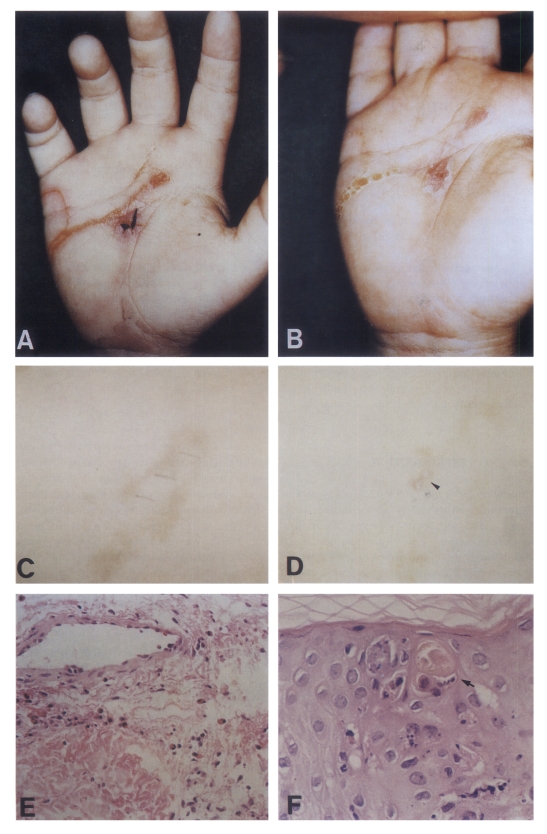
Cutaneous larva migrans (CLM) is a rare serpiginous cutaneous eruption caused by accidental penetration and migration in the skin with infective larvae of nematode that normally do not have the human as their host. Although CLM has a worldwide distribution, the infection is most frequent in warmer climates. More recently, they have been increasingly imported from the tropics or subtropics by travelers. We experienced two patients who had pruritic serpiginous linear eruption in their skin for a few weeks after traveling to the endemic areas (Brazil and Thailand, respectively). After the treatment with albendazole, the skin lesions resolved with post-inflammatory hyperpigmentation. We report herein two cases of cutaneous larva migrans successfully treated with albendazole.
Figures
References
-
- Allen C. Cutaneous larva migrans: a traveler's disease. NZ Med J. 1990;103:345. - PubMed
-
- Chang SE, Seo CW, Choi JH, Sung KJ, Moon KC, Koh JK. A case of cutaneous larva migrans showing a larva on biopsy. Korean J Dermatol. 1999;37:547–549. (in Korean)
-
- Davies HD, Sakulus P, Keystone JS. Creeping eruption. A review of clinical presentation and management of 60 cases presenting to a tropical disease unit. Arch Dermatol. 1993;129:588–591. - PubMed
-
- Edelglas JW, Douglas MC, Stiefler R, Tessler M. Cutaneous larva migrans in a nothern climate. A souvenir of your dream vacation. J Am Acad Dermatol. 1982;7:353–358. - PubMed
-
- Elder D, Elenitsas R, Johnson B, Jr, Jaworsky C. Histopathology of the Skin. Philadelphia, USA: Lippincott-Raven; 1997. Parasitic infestations of the skin; p. 560.
Publication types
MeSH terms
Substances
LinkOut - more resources
Full Text Sources
Medical