Mechanisms of nutritional and hormonal regulation of lipogenesis
- PMID: 11306547
- PMCID: PMC1083868
- DOI: 10.1093/embo-reports/kve071
Mechanisms of nutritional and hormonal regulation of lipogenesis
Abstract
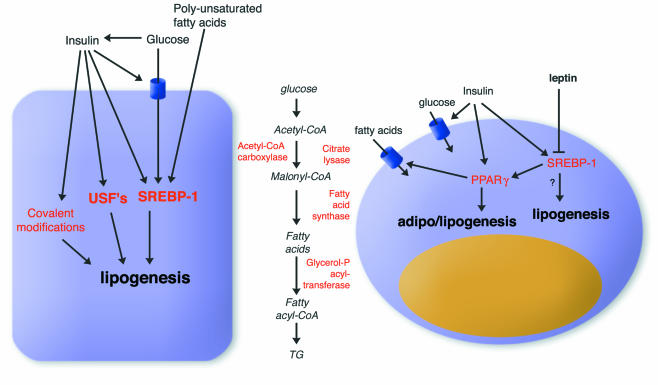
Fat build-up is determined by the balance between lipogenesis and lipolysis/fatty acid oxidation. In the past few years, our understanding of the nutritional, hormonal and particularly transcriptional regulation of lipogenesis has expanded greatly. Lipogenesis is stimulated by a high carbohydrate diet, whereas it is inhibited by polyunsaturated fatty acids and by fasting. These effects are partly mediated by hormones, which inhibit (growth hormone, leptin) or stimulate (insulin) lipogenesis. Recent research has established that sterol regulatory element binding protein-1 is a critical intermediate in the pro- or anti-lipogenic action of several hormones and nutrients. Another transcription factor implicated in lipogenesis is the peroxisome proliferator activated receptor gamma. Both transcription factors are attractive targets for pharmaceutical intervention of disorders such as hypertriglyceridemia and obesity.
Figures
References
-
- Assimacopoulos-Jeannet F., Brichard, S., Rencurel, F., Cusin, I. and Jeanrenaud, B. (1995) In vivo effects of hyperinsulinemia on lipogenic enzymes and glucose transporter expression in rat liver and adipose tissues. Metabolism, 44, 228–233. - PubMed
-
- Bai Y., Zhang, S., Kim, K.S., Lee, J.K. and Kim, K.H. (1996) Obese gene expression alters the ability of 30A5 preadipocytes to respond to lipogenic hormones. J. Biol. Chem., 271, 13939–13942. - PubMed
-
- Casado M., Vallet, V.S., Kahn, A. and Vaulont, S. (1999) Essential role in vivo of upstream stimulatory factors for a normal dietary response of the fatty acid synthase gene in the liver. J. Biol. Chem., 274, 2009–2013. - PubMed
Publication types
MeSH terms
Substances
LinkOut - more resources
Full Text Sources
Other Literature Sources
Research Materials
Miscellaneous