


Sequence analysis of insecticidal genes from Xenorhabdus nematophilus PMFI296
- PMID: 11319082
- PMCID: PMC92837
- DOI: 10.1128/AEM.67.5.2062-2069.2001
Sequence analysis of insecticidal genes from Xenorhabdus nematophilus PMFI296
Abstract
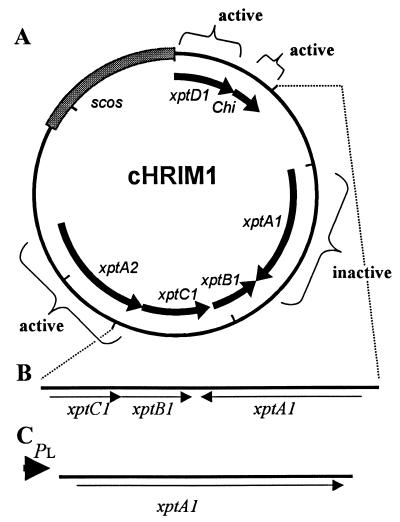
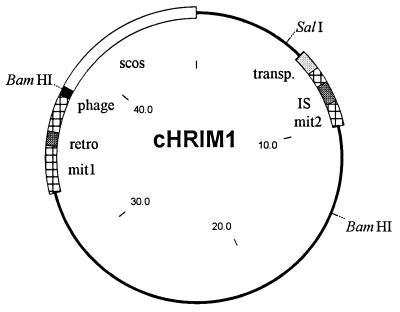
Three strains of Xenorhabdus nematophilus showed insecticidal activity when fed to Pieris brassicae (cabbage white butterfly) larvae. From one of these strains (X. nematophilus PMFI296) a cosmid genome library was prepared in Escherichia coli and screened for oral insecticidal activity. Two overlapping cosmid clones were shown to encode insecticidal proteins, which had activity when expressed in E. coli (50% lethal concentration [LC(50)] of 2 to 6 microg of total protein/g of diet). The complete sequence of one cosmid (cHRIM1) was obtained. On cHRIM1, five genes (xptA1, -A2, -B1, -C1, and -D1) showed homology with up to 49% identity to insecticidal toxins identified in Photorhabdus luminescens, and also a smaller gene (chi) showed homology to a putative chitinase gene (38% identity). Transposon mutagenesis of the cosmid insert indicated that the genes xptA2, xptD1, and chi were not important for the expression of insecticidal activity toward P. brassicae. One gene (xptA1) was found to be central for the expression of activity, and the genes xptB1 and xptC1 were needed for full activity. The location of these genes together on the chromosome and therefore present on a single cosmid insert probably accounted for the detection of insecticidal activity in this E. coli clone. Although multiple genes may be needed for full activity, E. coli cells expressing the xptA1 gene from the bacteriophage lambda P(L) promoter were shown to have insecticidal activity (LC(50) of 112 microg of total protein/g of diet). This is contrary to the toxin genes identified in P. luminescens, which were not insecticidal when expressed individually in E. coli. High-level gene expression and the use of a sensitive insect may have aided in the detection of insecticidal activity in the E. coli clone expressing xptA1. The location of these toxin genes and the chitinase gene and the presence of mobile elements (insertion sequence) and tRNA genes on cHRIM1 indicates that this region of DNA represents a pathogenicity island on the genome of X. nematophilus PMFI296.
Figures
References
-
- Akhurst R J. Morphological and functional dimorphism in Xenorhabdus spp. bacteria symbiotically associated with insect pathogenic nematodes Neoaplectana and Heterorhabditis. J Gen Microbiol. 1980;121:303–309. - PubMed
-
- Akhurst R J, Dunphy G B. Symbiotically associated entomopathogenic bacteria, nematodes, and their insect hosts. In: Beckage N, Thompson S, Federici B, editors. Parasites and pathogens of insects. Vol. 2. New York, N.Y: Academic Press, Inc.; 1993. pp. 1–23.
-
- Augustyniak J, Dabert M, Wypijewski K. Transgenes in plants:protection against viruses and insects. Acta Physiol Planta. 1997;19:561–569.
-
- Bedding R A, Akhurst R J. Nematodes and their biological control of insect pests. Nematologia. 1975;21:109–110.
Publication types
MeSH terms
Substances
Associated data
- Actions
LinkOut - more resources
Full Text Sources
Other Literature Sources
