


Retain or sacrifice the posterior cruciate ligament in total knee arthroplasty? A histopathological study of the cruciate ligament in osteoarthritic and rheumatoid disease
- PMID: 11328838
- PMCID: PMC1731430
- DOI: 10.1136/jcp.54.5.381
Retain or sacrifice the posterior cruciate ligament in total knee arthroplasty? A histopathological study of the cruciate ligament in osteoarthritic and rheumatoid disease
Abstract
Background: The decision whether to retain or resect the posterior cruciate ligament in total knee arthroplasty is at present determined clinically by preoperative radiological variables focusing upon the amount of joint destruction, and subsequent soft tissue contractures. However, these variables give only indirect information on the histological integrity and proprioceptive properties of the posterior cruciate ligament.
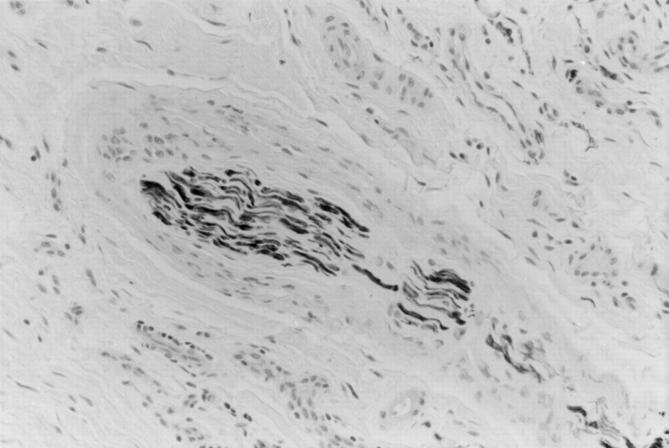
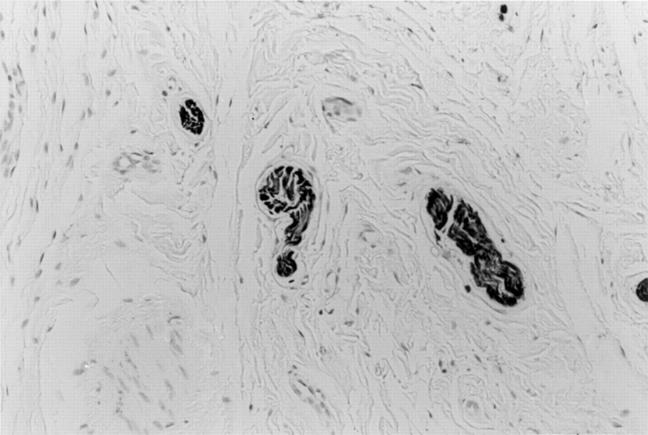
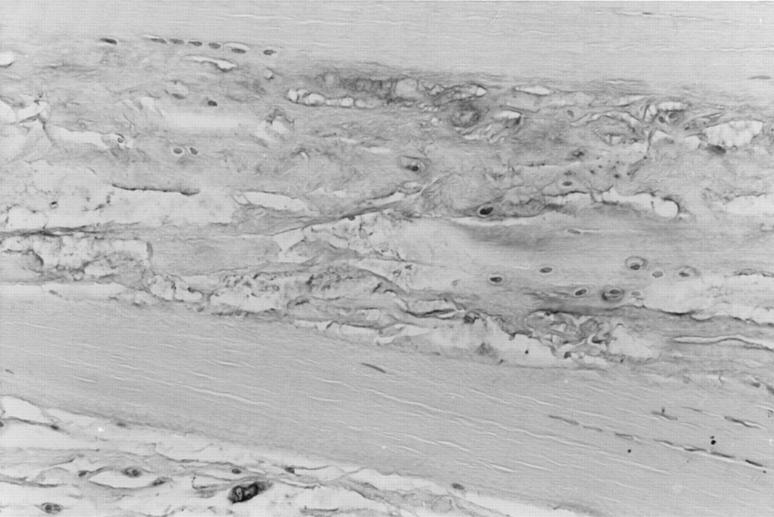
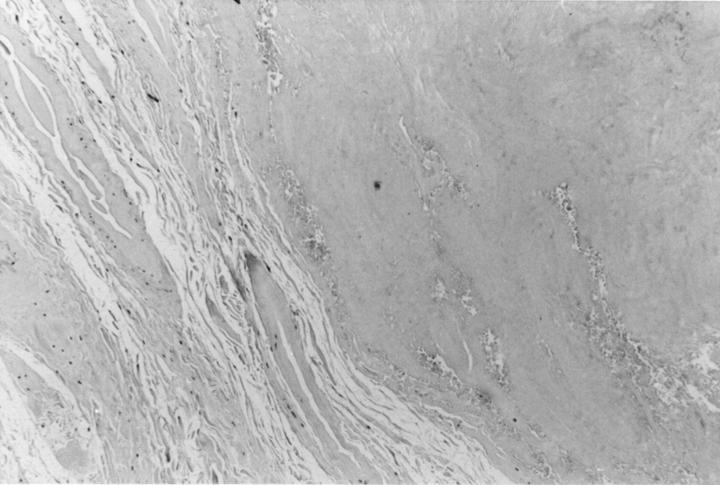
Methods: Twenty posterior cruciate ligaments, obtained during total knee arthroplasty, were evaluated histologically to study the relation between the degree of preoperative radiological joint destruction, structural integrity of the posterior cruciate ligament and the neurological integrity of the targeted tissue. Eleven patients had osteoarthritis and nine patients rheumatoid arthritis. Haematoxylin and eosin, Alcian blue (mucoid degeneration), elastica von Gieson, Gomori (elastic fibres and collagen), and immunohistochemical staining for neural structures were used.
Results: In all but one of the posterior cruciate ligaments, morphologically intact neural tissue was present in the peritendineum of the ligaments. Structural integrity of the collagen framework was present in only seven posterior cruciate ligaments. These cases all had grade three or four radiological joint destruction. In 13 of the specimens a certain degree of mucoid degeneration of collagen was present. All patients with grade five radiological knee joint destruction displayed mucoid degeneration and irregularity of the posterior cruciate ligament fibres.
Conclusion: Because of the extensive architectural and probably functional damage of the posterior cruciate ligament in patients who have grade five radiological knee joint destruction, retention of the posterior cruciate ligament in knee prosthesis should not be advocated.
Figures
References
MeSH terms
Substances
LinkOut - more resources
Full Text Sources
Medical
