


A common exocytotic mechanism mediates axonal and dendritic outgrowth
- PMID: 11356871
- PMCID: PMC6762683
- DOI: 10.1523/JNEUROSCI.21-11-03830.2001
A common exocytotic mechanism mediates axonal and dendritic outgrowth
Abstract
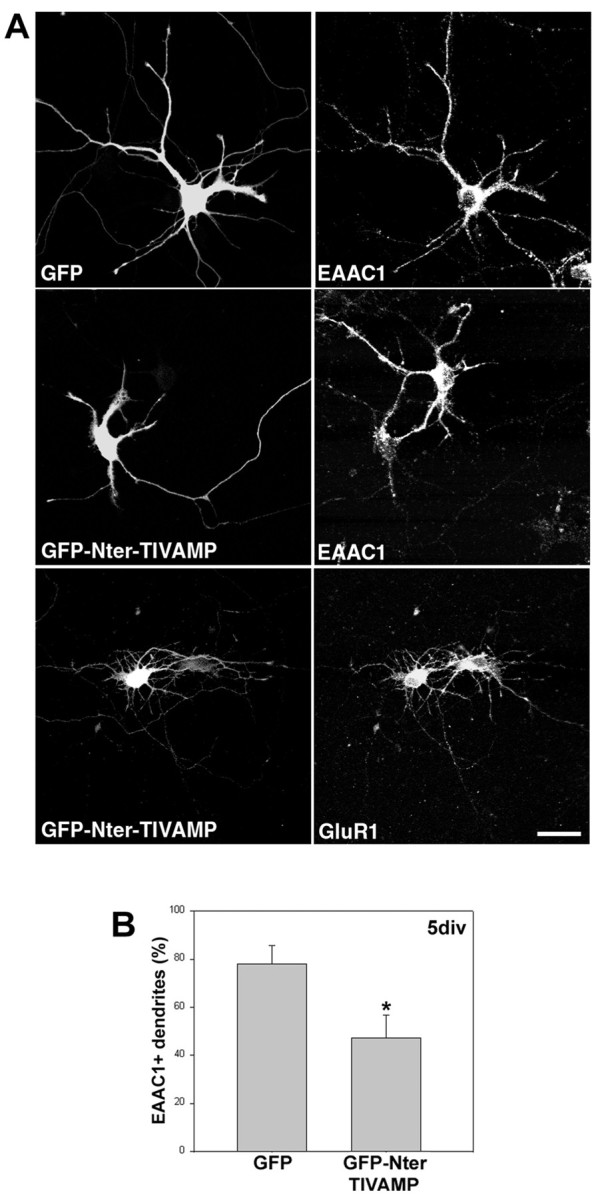
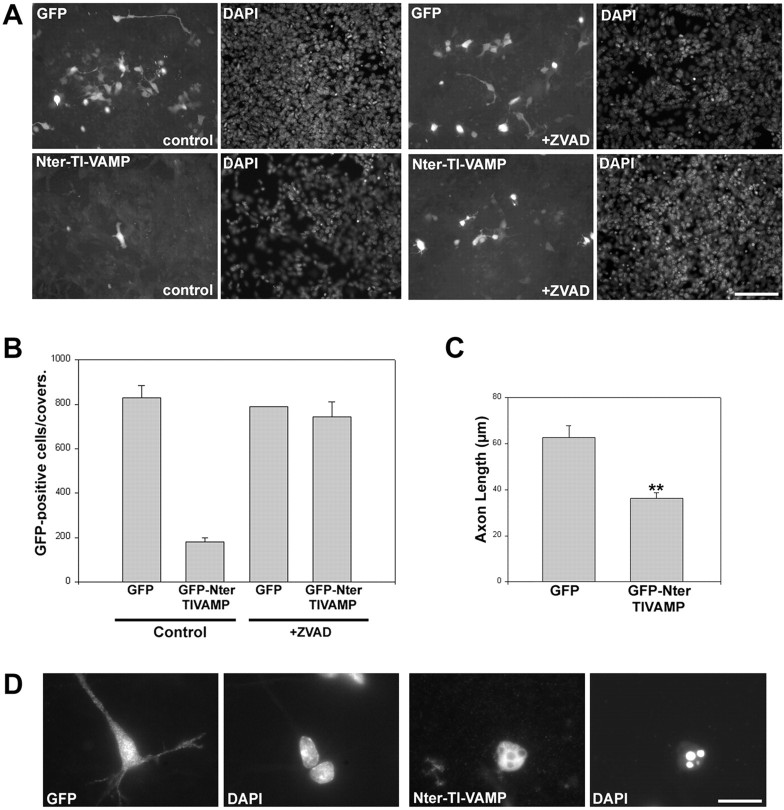
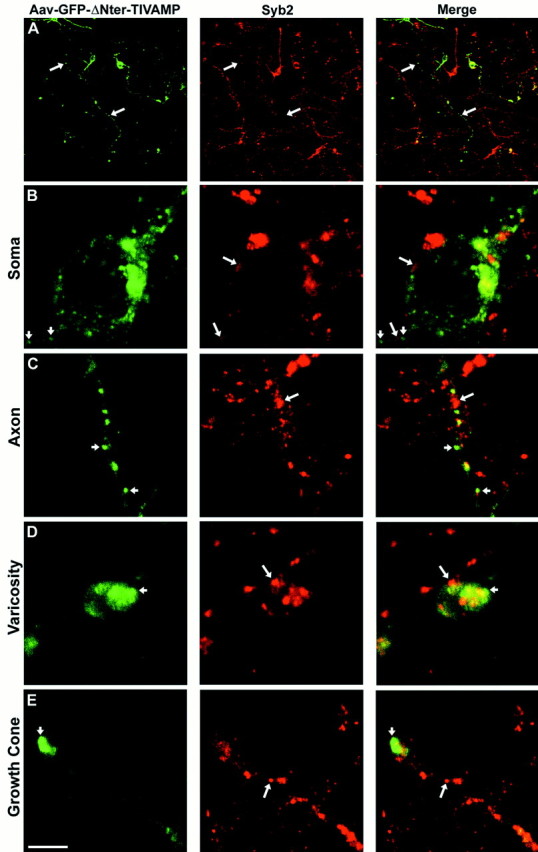
Outgrowth of the dendrites and the axon is the basis of the establishment of the neuronal shape, and it requires addition of new membrane to both growing processes. It is not yet clear whether one or two exocytotic pathways are responsible for the respective outgrowth of axons and dendrites. We have previously shown that tetanus neurotoxin-insensitive vesicle-associated membrane protein (TI-VAMP) defines a novel network of tubulovesicular structures present both at the leading edge of elongating dendrites and axons of immature hippocampal neurons developing in primary culture and that TI-VAMP is an essential protein for neurite outgrowth in PC12 cells. Here we show that the expression of the N-terminal domain of TI-VAMP inhibits the outgrowth of both dendrites and axons in neurons in primary culture. This effect is more prominent at the earliest stages of the development of neurons in vitro. Expression of the N-terminal domain deleted form of TI-VAMP has the opposite effect. This constitutively active form of TI-VAMP localizes as the endogenous protein, particularly concentrating at the leading edge of growing axons. Our results suggest that a common exocytotic mechanism that relies on TI-VAMP mediates both axonal and dendritic outgrowth in developing neurons.
Figures


References
-
- Advani RJ, Bae HR, Bock JB, Chao DS, Doung YC, Prekeris R, Yoo JS, Scheller RH. Seven novel mammalian SNARE proteins localize to distinct membrane compartments. J Biol Chem. 1998;273:10317–10324. - PubMed
-
- Atwal JK, Massie B, Miller FD, Kaplan DR. The TrkB-Shc site signals neuronal survival and local axon growth via MEK and P13-kinase. Neuron. 2000;27:265–277. - PubMed
Publication types
MeSH terms
Substances
Grants and funding
LinkOut - more resources
Full Text Sources
Molecular Biology Databases
