


Selection and identification of proteins bound to DNA triple-helical structures by combination of 2D-electrophoresis and MALDI-TOF mass spectrometry
- PMID: 11376162
- PMCID: PMC55697
- DOI: 10.1093/nar/29.11.2427
Selection and identification of proteins bound to DNA triple-helical structures by combination of 2D-electrophoresis and MALDI-TOF mass spectrometry
Abstract
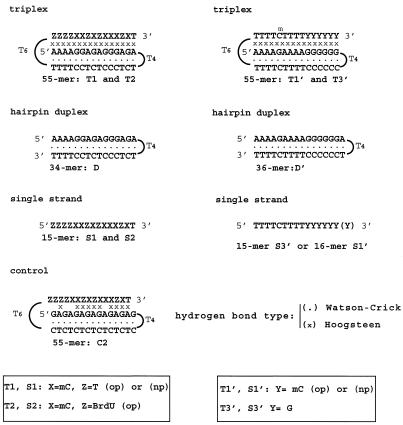
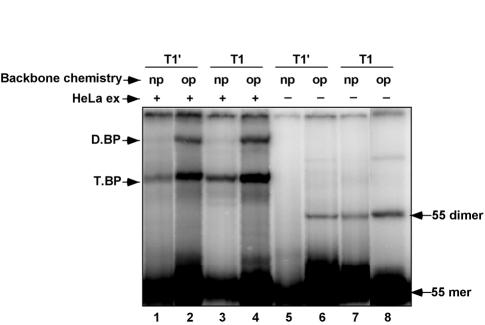
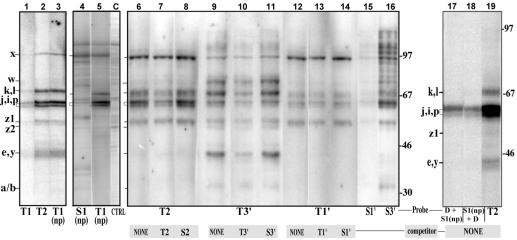
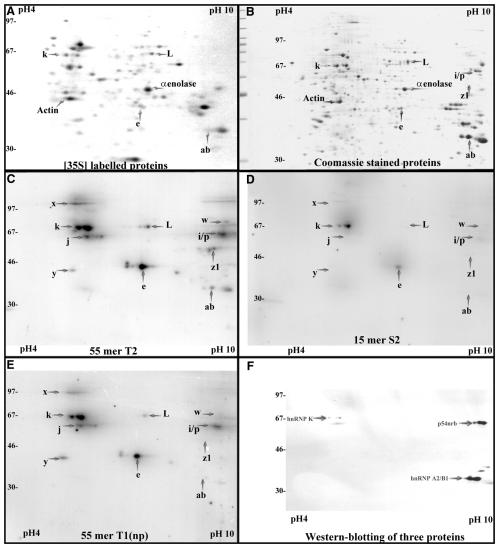
Identification of proteins binding specifically to peculiar nucleic acid structures can lead to comprehension of their role in vivo and contribute to the discovery of structure-related gene regulation. This work was devoted to establishing a reliable procedure to select proteins on the basis of their interaction with a nucleic acid probe chosen to fold into a given structure. 2D-electrophoresis and mass spectrometry were combined for protein identification. We applied this procedure to select and identify triplex-binding activities in HeLa nuclear extracts. To achieve this, we used a panel of deoxyribonucleic probes adopting intramolecular triple-helices, varying in their primary sequence, structure or triple-helix motif. A limited number of spots was reproducibly revealed by South-western blotting. Spots of interest were localised among a complex population of (35)S-labelled proteins according to their (32)P-specific emission. Position of the same spots was extrapolated on a preparative gel coloured with Coomassie blue, allowing excision and purification of the corresponding proteins. The material was subjected to mass spectrometry upon trypsin digestion and MALDI-TOF peptide fingerprinting was used for research in databases: five of them were identified and found to belong to the hnRNP family (K, L, A2/B1, E1 and I). The identities of several of them were confirmed by comparing western and South-western blots on the same membrane using specific antibodies. The recognition specificity of most of these proteins is large, according to previous reports and our own experiments. It includes pyrimidine-rich DNA sequences in different contexts: single strand to a small extent, triplex and possibly other higher-order structures.
Figures
References
-
- Mirkin S.M. and Frank-Kamenetskii,M.D. (1994) H-DNA and related structures. Annu. Rev. Biophys. Biomol. Struct., 23, 541–576. - PubMed
-
- Hampel K.J., Ashley,C. and Lee,J.S. (1994) Kilobase-range communication between polypurine.polypyrimidine tracts in linear plasmids mediated by triplex formation: a braided knot between two linear duplexes. Biochemistry, 33, 5674–5681. - PubMed
-
- Musso M., Nelson,L.D. and Van Dyke,M.W. (1998) Characterization of purine-motif triplex DNA-binding proteins in HeLa extracts. Biochemistry, 37, 3086–3095. - PubMed
-
- Guieysse A.L., Praseuth,D. and Hélène,C. (1997) Identification of a triplex DNA-binding protein from human cells. J. Mol. Biol., 267, 289–298. - PubMed
Publication types
MeSH terms
Substances
LinkOut - more resources
Full Text Sources
Other Literature Sources
