. 2001 Jul;183(13):4040-51.
doi: 10.1128/JB.183.13.4040-4051.2001.

Characterization of the Ustilago maydis sid2 gene, encoding a multidomain peptide synthetase in the ferrichrome biosynthetic gene cluster

Affiliations

Characterization of the Ustilago maydis sid2 gene, encoding a multidomain peptide synthetase in the ferrichrome biosynthetic gene cluster

W M Yuan et al. J Bacteriol. 2001 Jul.

Abstract

Ustilago maydis, the causal agent of corn smut disease, acquires and transports ferric ion by producing the extracellular, cyclic peptide, hydroxamate siderophores ferrichrome and ferrichrome A. Ferrichrome biosynthesis likely proceeds by hydroxylation and acetylation of L-ornithine, and later steps likely involve covalently bound thioester intermediates on a multimodular, nonribosomal peptide synthetase. sid1 encodes L-ornithine N(5)-oxygenase, which catalyzes hydroxylation of L-ornithine, the first committed step of ferrichrome and ferrichrome A biosynthesis in U. maydis. In this report we characterize sid2, another biosynthetic gene in the pathway, by gene complementation, gene replacement, DNA sequence, and Northern hybridization analysis. Nucleotide sequencing has revealed that sid2 is located 3.7 kb upstream of sid1 and encodes an intronless polypeptide of 3,947 amino acids with three iterated modules of an approximate length of 1,000 amino acids each. Multiple motifs characteristic of the nonribosomal peptide synthetase protein family were identified in each module. A corresponding iron-regulated sid2 transcript of 11 kb was detected by Northern hybridization analysis. By contrast, constitutive accumulation of this large transcript was observed in a mutant carrying a disruption of urbs1, a zinc finger, GATA family transcription factor previously shown to regulate siderophore biosynthesis in Ustilago. Multiple GATA motifs are present in the intergenic region between sid1 and sid2, suggesting bidirectional transcription regulation by urbs1 of this pathway. Indeed, mutation of two of these motifs, known to be important to regulation of sid1, altered the differential regulation of sid2 by iron.


Figures
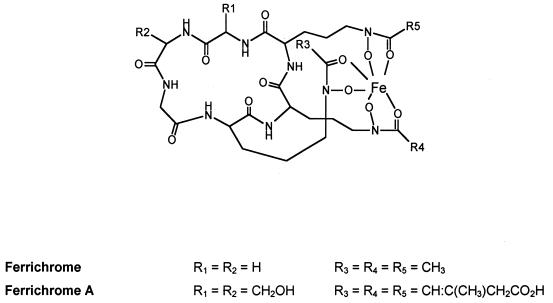
FIG. 1
FIG. 1
Structure of ferrichrome and ferrichrome A. Both siderophores have a hexapeptide ring containing three residues of δ-N-acyl-N-hydroxy-ornithine and a tripeptide of neutral amino acids consisting of three glycine residues in ferrichrome or one glycine and two serine residues in ferrichrome A.
FIG. 2
FIG. 2
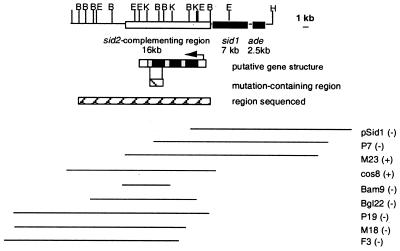
The ferrichrome biosynthesis gene cluster of U. maydis. The cosmids used to localize the sid2-complementing region by transformation of the ferrichrome mutant are at the bottom. The hatched-box region contains the mutation. Sequence analysis demonstrates that sid2 shares homology with members of the peptide synthetase protein family. The pSid1 DNA insert is in pJW42. All other inserts are in pANUMV2. trans complementation results are shown in parentheses: (+), complementation; (−), no complementation. Only BamHI (B), EcoRV (E), and KpnI (K) sites are indicated on the restriction map. One end of the map is defined by a HindIII site (H).
FIG. 3
FIG. 3
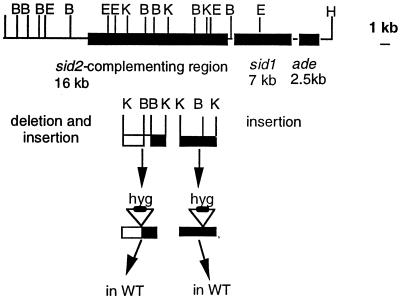
Gene disruption of sid2 in U. maydis. A hygromycin B resistance cassette was either inserted directly at the BamHI site in the 4.2-kb KpnI fragment (right-hand side) or was used to replace a 1-kb BamHI in the 4.8-kb KpnI fragment (left-hand side).
FIG. 4
FIG. 4
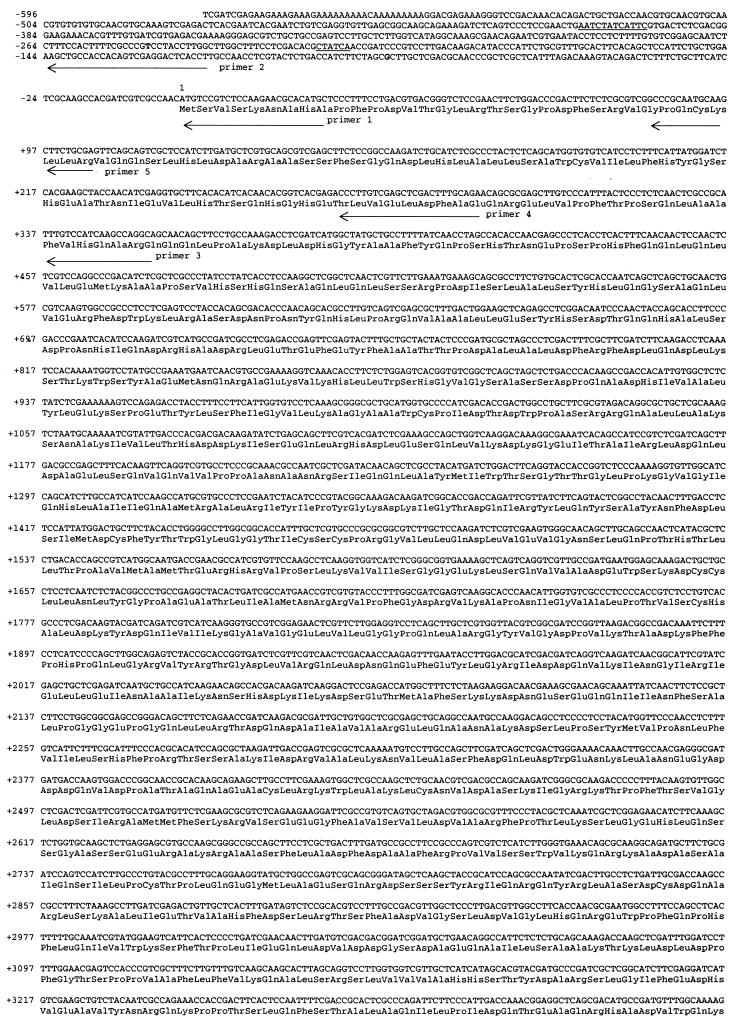
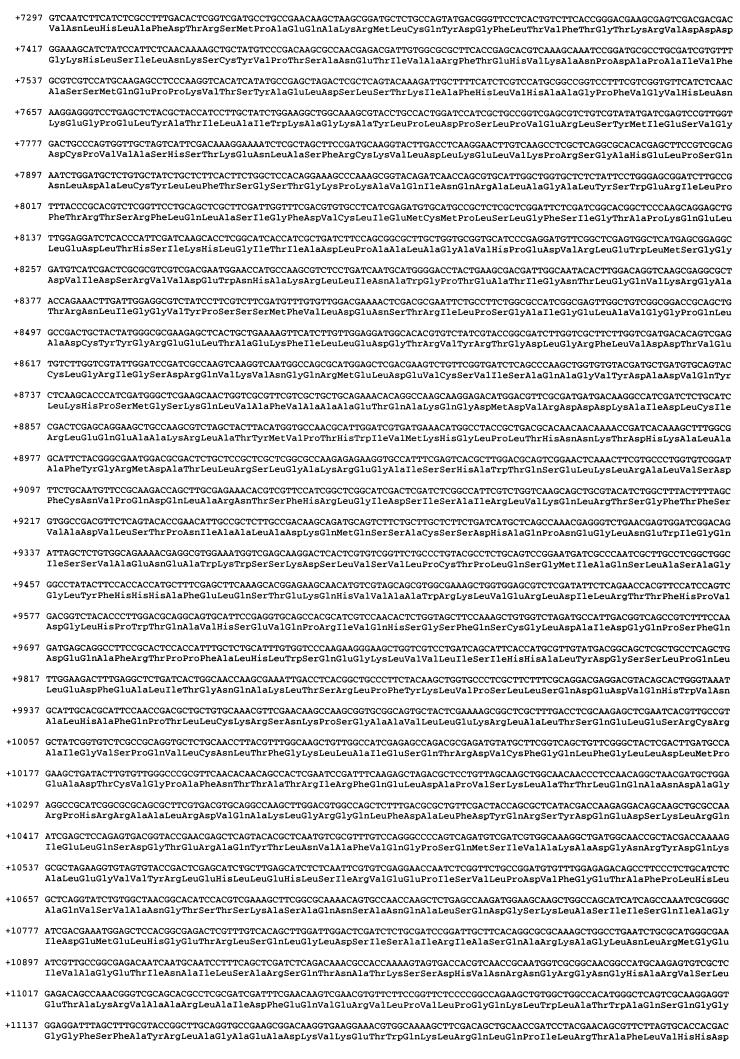
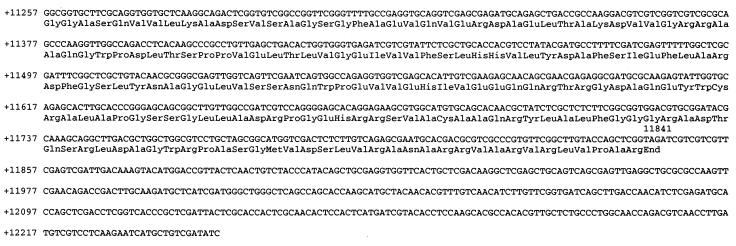
Nucleotide and deduced amino acid sequence of sid2, including 5′ and 3′ untranslated regions. The number, which refers to the nucleotide sequence, is based on the deduced ORF of sid2 from +1 at the adenine of the translational initiation codon (ATG). The transcription start sites are marked in bold. Primers used for primer extension and 5′ RACE are indicated as arrows with the respective primer number. Some putative transcription binding sites, including GATA boxes, are underlined.
FIG. 4
FIG. 4
Nucleotide and deduced amino acid sequence of sid2, including 5′ and 3′ untranslated regions. The number, which refers to the nucleotide sequence, is based on the deduced ORF of sid2 from +1 at the adenine of the translational initiation codon (ATG). The transcription start sites are marked in bold. Primers used for primer extension and 5′ RACE are indicated as arrows with the respective primer number. Some putative transcription binding sites, including GATA boxes, are underlined.
FIG. 4
FIG. 4
Nucleotide and deduced amino acid sequence of sid2, including 5′ and 3′ untranslated regions. The number, which refers to the nucleotide sequence, is based on the deduced ORF of sid2 from +1 at the adenine of the translational initiation codon (ATG). The transcription start sites are marked in bold. Primers used for primer extension and 5′ RACE are indicated as arrows with the respective primer number. Some putative transcription binding sites, including GATA boxes, are underlined.
FIG. 4
FIG. 4
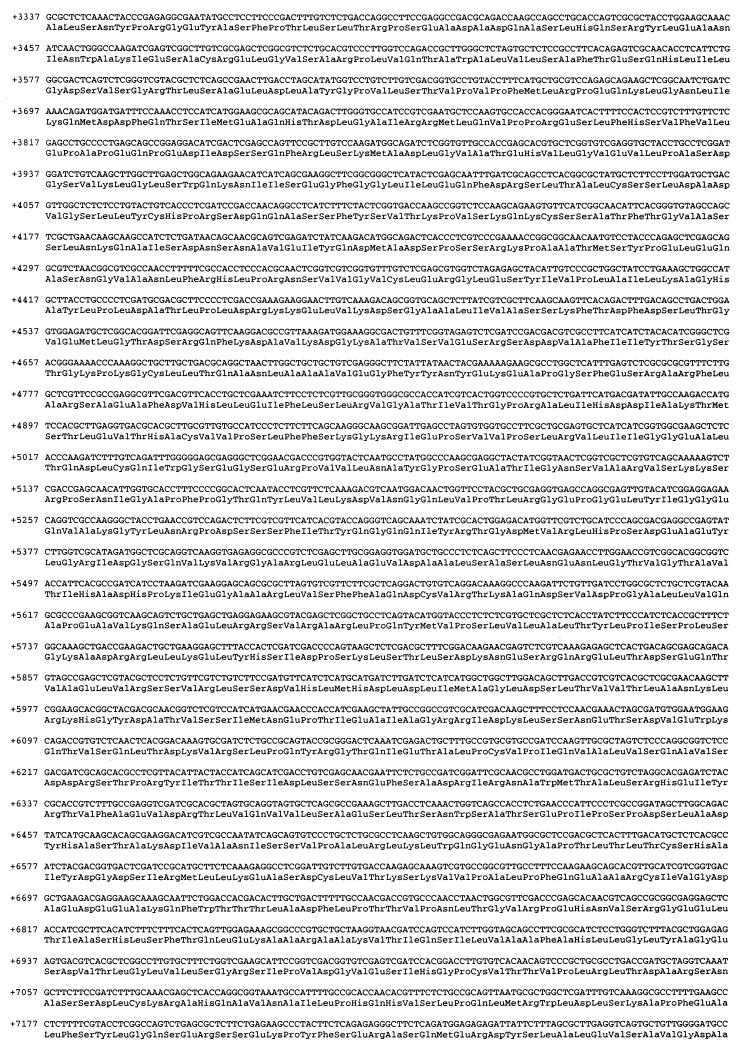
Nucleotide and deduced amino acid sequence of sid2, including 5′ and 3′ untranslated regions. The number, which refers to the nucleotide sequence, is based on the deduced ORF of sid2 from +1 at the adenine of the translational initiation codon (ATG). The transcription start sites are marked in bold. Primers used for primer extension and 5′ RACE are indicated as arrows with the respective primer number. Some putative transcription binding sites, including GATA boxes, are underlined.
FIG. 5
FIG. 5
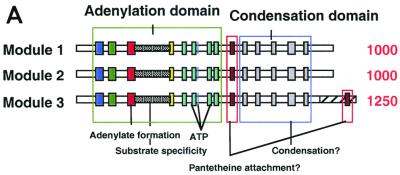
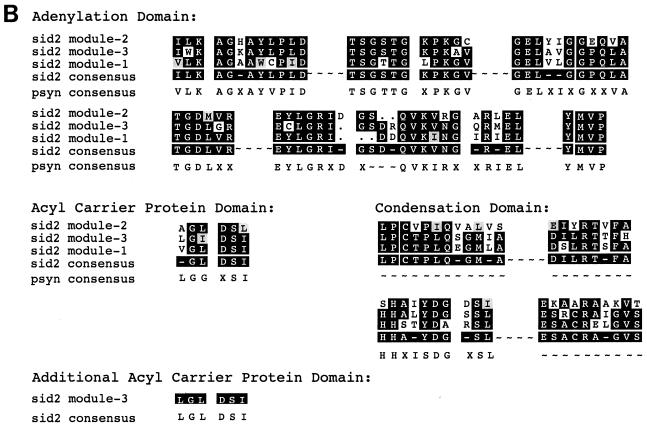
Multimodular structure of sid2 and multiple sequence alignment of key motifs in the modules. (A) A schematic representation of the highly conserved and ordered modular organization of the sid2 gene. (B) Sequence alignment of the modules. Conserved motifs are shaded and grouped according to the domain they reside in. The sequences were aligned using the PileUp program in the GCG package, with a gap penalty of 8 and a gap extension penalty of 2. The consensus sequence of the alignment was further calculated using Pretty in GCG.
FIG. 5
FIG. 5
Multimodular structure of sid2 and multiple sequence alignment of key motifs in the modules. (A) A schematic representation of the highly conserved and ordered modular organization of the sid2 gene. (B) Sequence alignment of the modules. Conserved motifs are shaded and grouped according to the domain they reside in. The sequences were aligned using the PileUp program in the GCG package, with a gap penalty of 8 and a gap extension penalty of 2. The consensus sequence of the alignment was further calculated using Pretty in GCG.
FIG. 6
FIG. 6
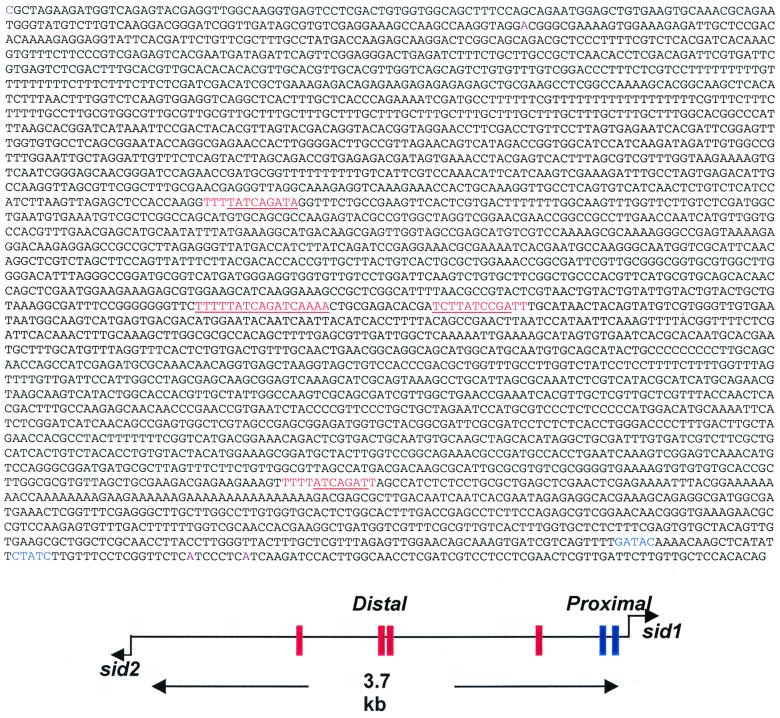
sid1/sid2 intergenic region. Conserved 12-bp GATA motif repeats are in red. The palindromic sequence within the repeat unit is underlined. The upstream “proximal” GATA (2, 28) in sid1 are in blue. The transcription start sites of sid1 and sid2 are indicated by dark rose coloring.
FIG. 7
FIG. 7
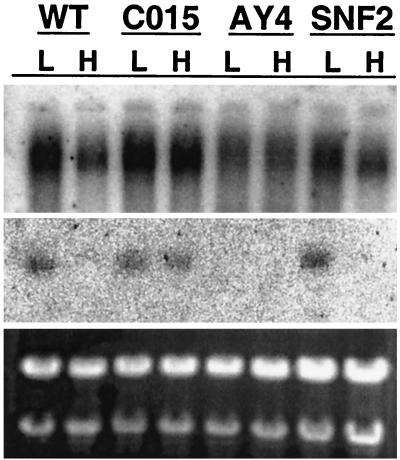
Northern hybridization analysis of sid2 total RNA. Total RNA (0.5 μg/well) was denatured in formamide and electrophoresed on a 1.2% SeaKem gold agarose gel in MOPS (morpholinepropanesulfonic acid) buffer with no denaturants. Ribosomal RNAs stained with ethidium bromide are shown in the lower panel to show equivalence of RNA loading. The RNA was transferred to nylon and hybridized sequentially with the sid1 (middle panel) or sid2 (upper panel) genomic DNA probes. Shown are RNA samples from L (low iron grown) and H (high iron grown): WT, wild type; CO15, urbs1 disruption mutant; AY4, sid1 deletion mutant UMS204; SNF2, umsnf2 disruption mutant of U. maydis.

References

    1. An Z, Farman M L, Taura S, Leong S A. New cosmid vectors for library construction, systematic chromosome walking and rapid restriction mapping in filamentous fungi. Gene. 1996;176:93–96. - PubMed
    1. An Z, Mei B, Yuan W, Leong S A. The distal GATA sequences of the sid1 promoter of Ustilago maydis mediate repression of siderophore production and interact directly with Urbs1, a GATA family transcription factor. EMBO J. 1997;16:1742–1750. - PMC - PubMed
    1. An Z, Zhao Q, McEvoy J, Yuan W, Markley J, Leong S A. The C-terminal finger domain of Urbs1 is required for iron-mediated regulation of siderophore biosynthesis in Ustilago maydis. Proc Natl Acad Sci USA. 1997;94:5882–5887. - PMC - PubMed
    1. Anke H, Anke T, Diekmann H. Biosynthesis of sideramines in fungi. Fusigen synthetase from extracts of Fusarium cubense. FEBS Lett. 1973;36:323–325. - PubMed
    1. Anke T, Diekmann H. Biosynthesis of sideramines in fungi. Rhodotorulic acid synthetase from extracts of Rhodotorula glutinis. FEBS Lett. 1972;27:259–262. - PubMed

Publication types

MeSH terms

LinkOut - more resources