


Flavonoids act as negative regulators of auxin transport in vivo in arabidopsis
- PMID: 11402184
- PMCID: PMC111146
- DOI: 10.1104/pp.126.2.524
Flavonoids act as negative regulators of auxin transport in vivo in arabidopsis
Abstract
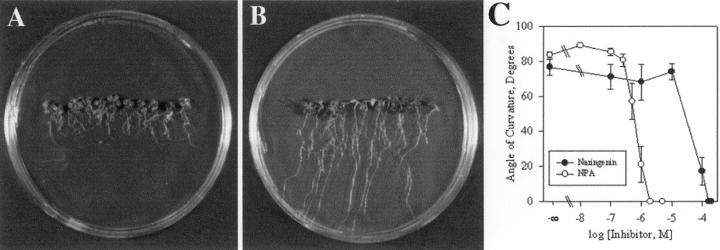
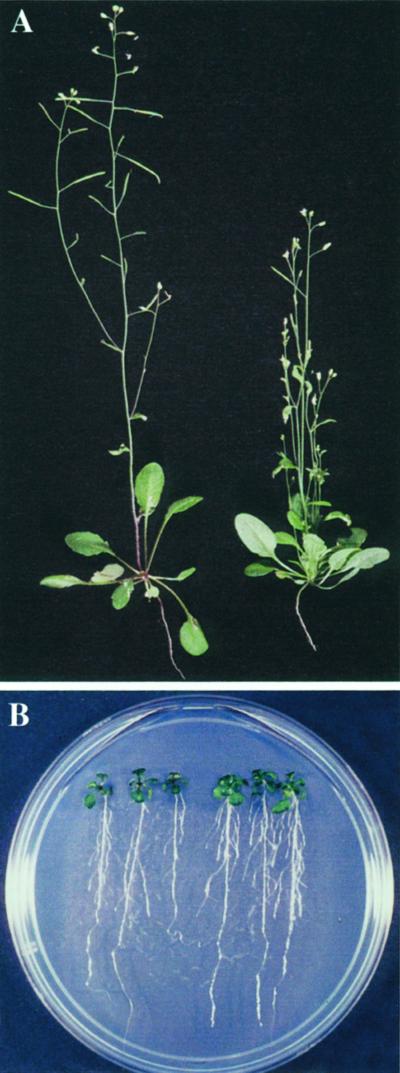
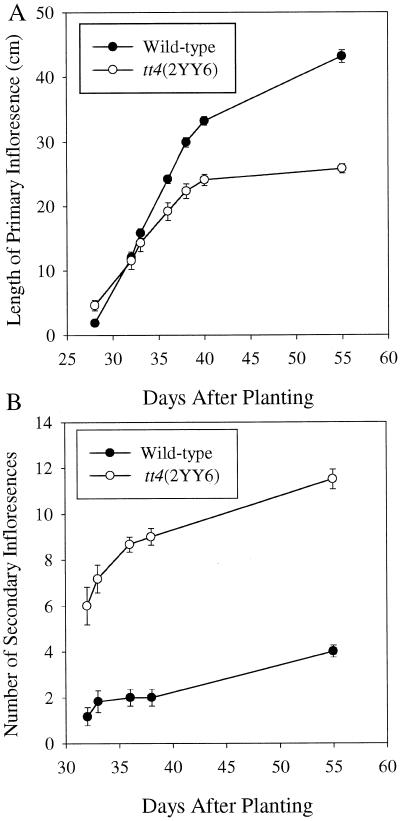
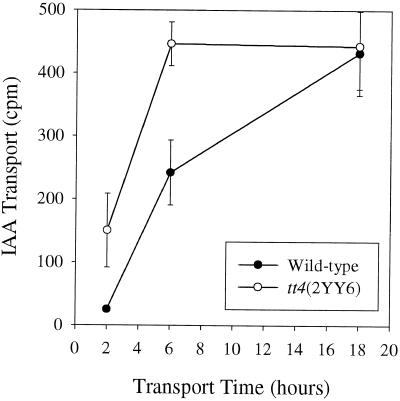
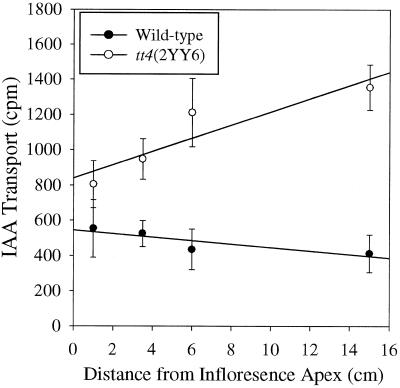
Polar transport of the plant hormone auxin controls many aspects of plant growth and development. A number of synthetic compounds have been shown to block the process of auxin transport by inhibition of the auxin efflux carrier complex. These synthetic auxin transport inhibitors may act by mimicking endogenous molecules. Flavonoids, a class of secondary plant metabolic compounds, have been suggested to be auxin transport inhibitors based on their in vitro activity. The hypothesis that flavonoids regulate auxin transport in vivo was tested in Arabidopsis by comparing wild-type (WT) and transparent testa (tt4) plants with a mutation in the gene encoding the first enzyme in flavonoid biosynthesis, chalcone synthase. In a comparison between tt4 and WT plants, phenotypic differences were observed, including three times as many secondary inflorescence stems, reduced plant height, decreased stem diameter, and increased secondary root development. Growth of WT Arabidopsis plants on naringenin, a biosynthetic precursor to those flavonoids with auxin transport inhibitor activity in vitro, leads to a reduction in root growth and gravitropism, similar to the effects of synthetic auxin transport inhibitors. Analyses of auxin transport in the inflorescence and hypocotyl of independent tt4 alleles indicate that auxin transport is elevated in plants with a tt4 mutation. In hypocotyls of tt4, this elevated transport is reversed when flavonoids are synthesized by growth of plants on the flavonoid precursor, naringenin. These results are consistent with a role for flavonoids as endogenous regulators of auxin transport.
Figures
References
-
- Bernasconi P. Effect of synthetic and natural protein tyrosine kinase inhibitors on auxin efflux in zucchini (Cucurbita pepo) hypocotyls. Physiol Plant. 1996;96:205–210.
-
- Brown D. Testing the hypothesis that flavonoids regulate polar auxin transport in vivo using Arabidopsis thaliana. MS thesis. Winston-Salem, NC: Wake Forest University; 1998.
Publication types
MeSH terms
Substances
Grants and funding
LinkOut - more resources
Full Text Sources
Other Literature Sources
Molecular Biology Databases
