


Target cell populations of human immunodeficiency virus type 1 in peripheral blood lymphocytes with different chemokine receptors at various stages of disease progression
- PMID: 11413305
- PMCID: PMC114361
- DOI: 10.1128/JVI.75.14.6384-6391.2001
Target cell populations of human immunodeficiency virus type 1 in peripheral blood lymphocytes with different chemokine receptors at various stages of disease progression
Abstract
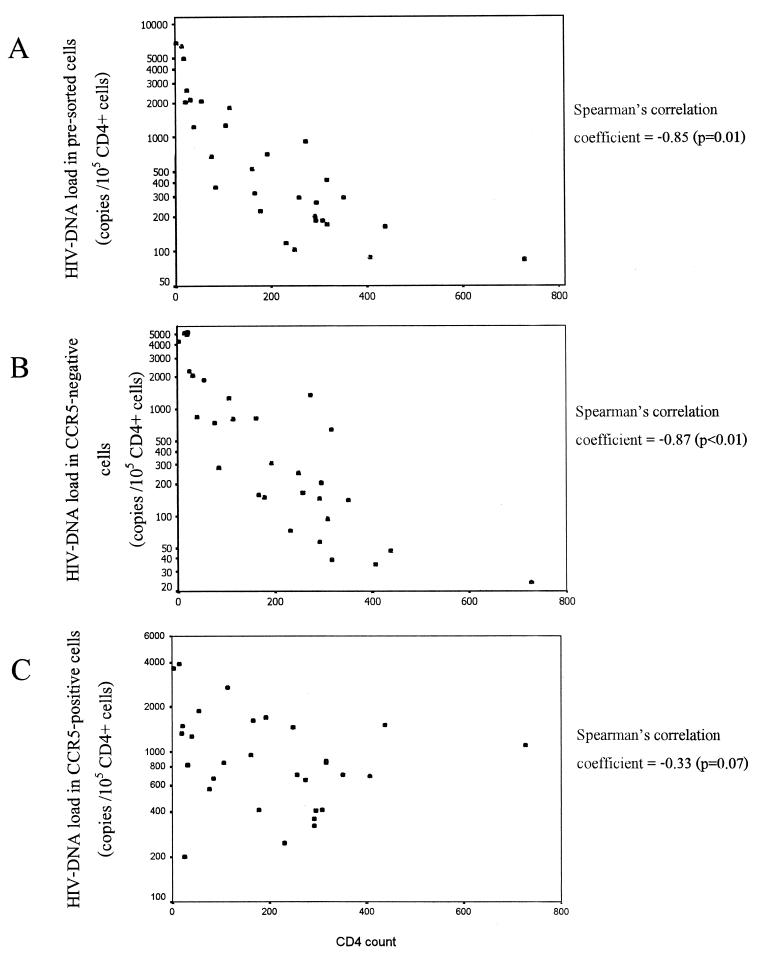
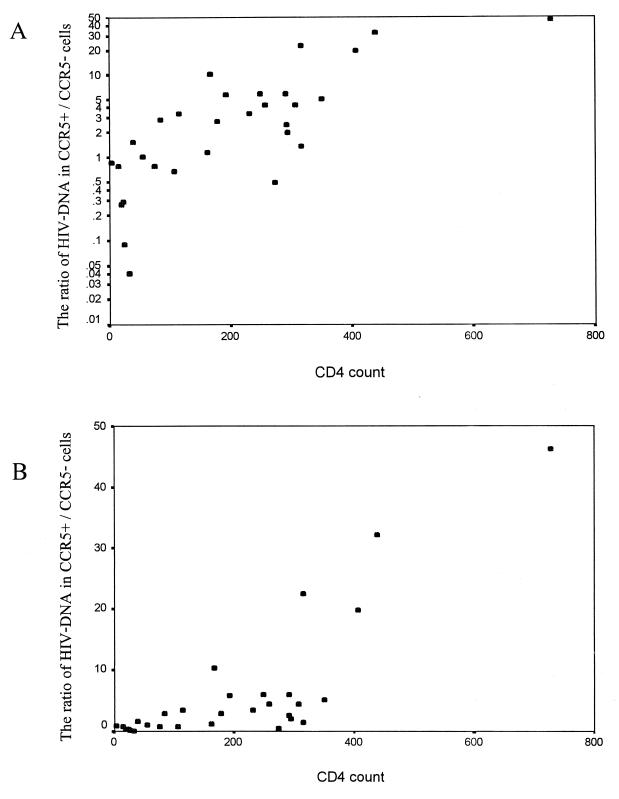
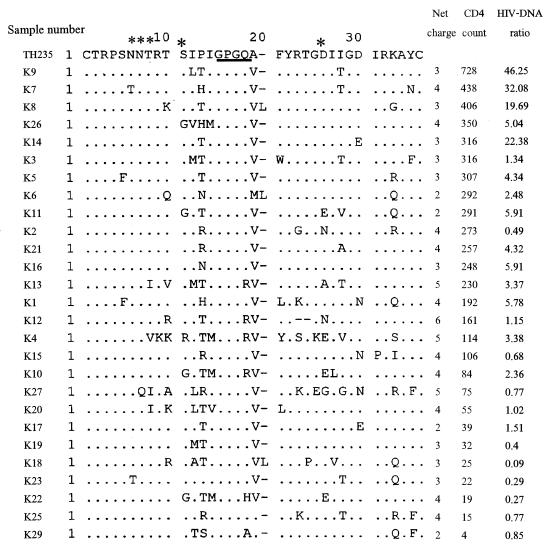
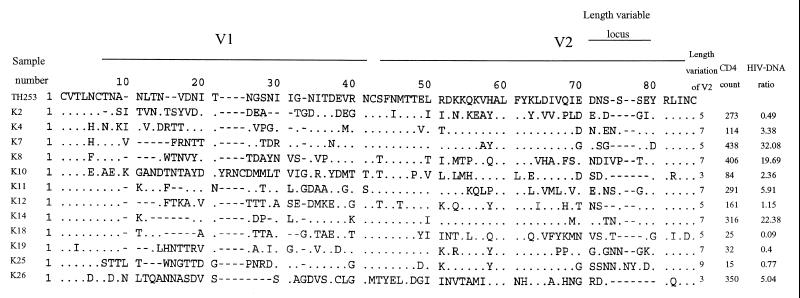
We studied the distribution of human immunodeficiency virus type 1 (HIV-1) DNA in CCR5-positive and -negative peripheral blood lymphocyte populations in HIV-1-infected individuals. While HIV-1 DNA in the CCR5-positive population showed no correlation with CD4 count, the increase of total HIV-1 DNA with lower CD4 count was mainly contributed by the increase of HIV-1 DNA in the CCR5-negative population. This might indicate the change in coreceptor usage from CCR5 to CXCR4 in later stages of disease progression. However, some of the samples with a high viral DNA load in the CCR5-negative population did not have any characteristic of the V3 loop sequence that is compatible with CXCR4 usage or the syncytium-inducing (SI) phenotype. We also did not find any known characteristic change predictive of the SI phenotype in V1 and V2 sequences. Our findings showed that there might be a shift in target cell populations during disease progression, and this shift was not necessarily associated with the genetic changes characteristic of CXCR4 usage.
Figures
References
-
- Auewarakul P, Sangsiriwut K, Pattanapanyasat K, Suwanagool S, Wasi C. Increase in activated CD4+ lymphocytes with CCR5 and CXCR4 in HIV type 1-infected persons. AIDS Res Hum Retrovir. 1999;15:1403–1404. - PubMed
-
- Chenine A L, Sattentau Q, Moulard M. Selective HIV-1-induced downmodulation of CD4 and coreceptors. Arch Virol. 2000;145:455–471. - PubMed
Publication types
MeSH terms
Substances
LinkOut - more resources
Full Text Sources
Medical
Research Materials
