


Controlled trial of direct physician order entry: effects on physicians' time utilization in ambulatory primary care internal medicine practices
- PMID: 11418543
- PMCID: PMC130081
- DOI: 10.1136/jamia.2001.0080361
Controlled trial of direct physician order entry: effects on physicians' time utilization in ambulatory primary care internal medicine practices
Abstract
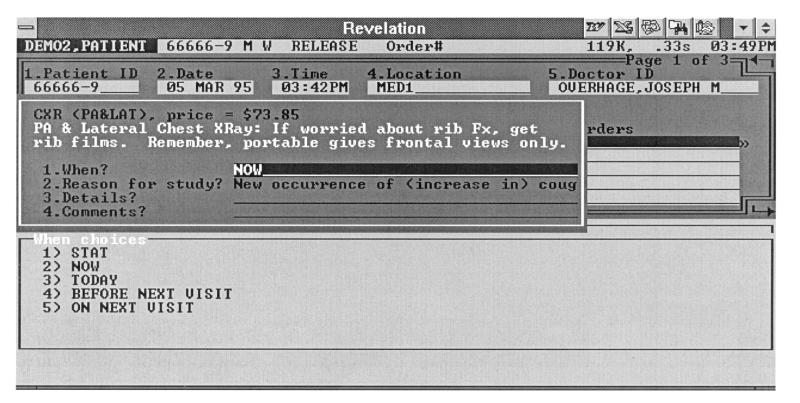
Objective: Direct physician order entry (POE) offers many potential benefits, but evidence suggests that POE requires substantially more time than traditional paper-based ordering methods. The Medical Gopher is a well-accepted system for direct POE that has been in use for more than 15 years. The authors hypothesized that physicians using the Gopher would not spend any more time writing orders than physicians using paper-based methods.
Design: A randomized controlled trial of POE using the Medical Gopher system in 11 primary care internal medicine practices.
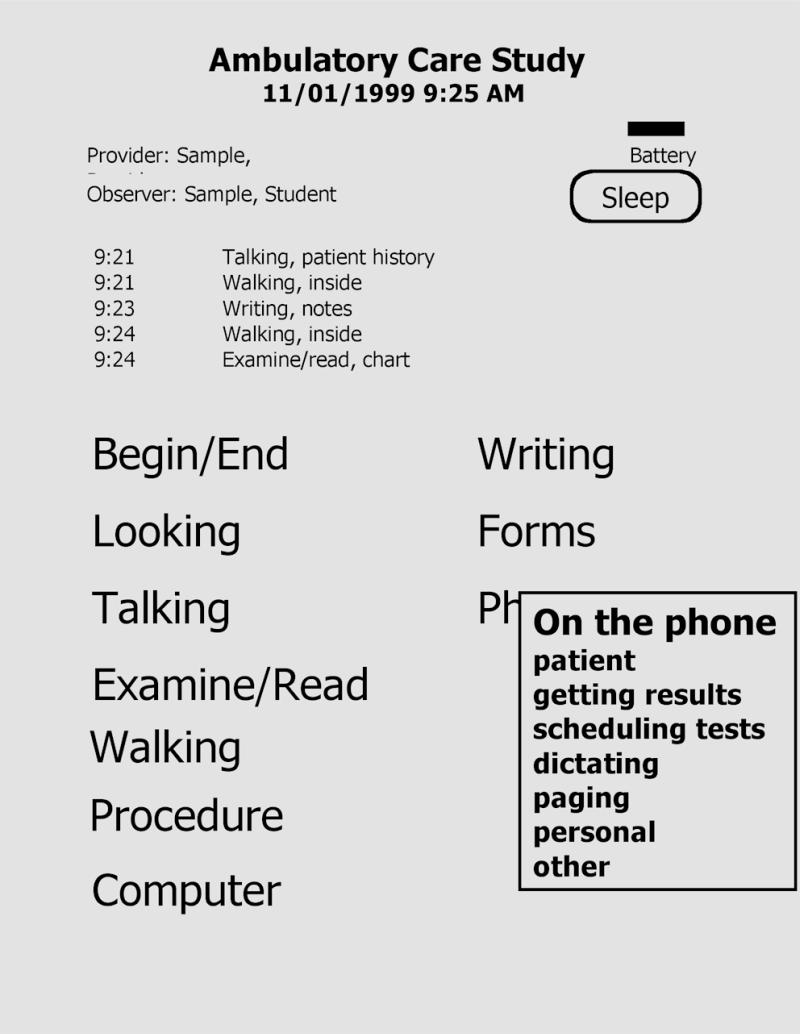
Measurements: The authors collected detailed time use data using time motion studies of the physicians and surveyed their opinions about the POE system.
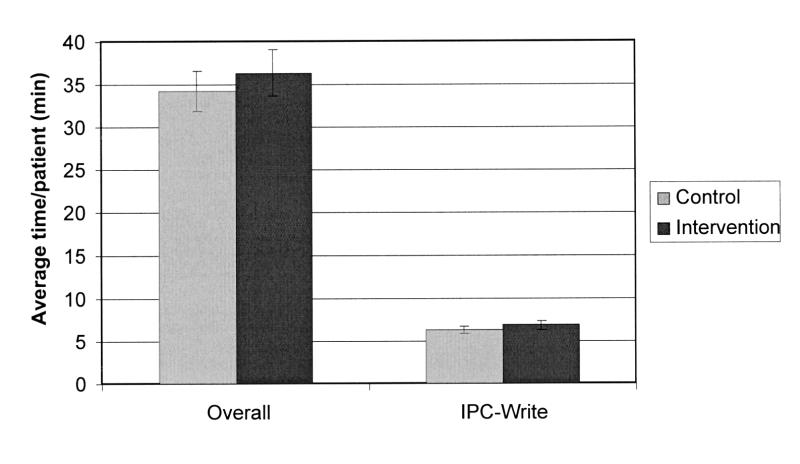
Results: The authors found that physicians using the Gopher spent 2.2 min more per patient overall, but when duplicative and administrative tasks were taken into account, physicians were found to have spent only 0.43 min more per patient. With experience, the order entry time fell by 3.73 min per patient. The survey revealed that the physicians believed that the system improved their patient care and wanted the Gopher to continue to be available in their practices.
Conclusions: Little extra time, if any, was required for physicians to use the POE system. With experience in its use, physicians may even save time while enjoying the many benefits of POE.
Figures
References
-
- Collen MG. General requirements for a medical information system (MIS). Comput Biomed Res. 1970;3:393–406. - PubMed
-
- Dick RS, Steen EB, Detmer DE (eds). The Computer-based Patient Record: An Essential Technology for Health Care. Rev. ed. Committee on Improving the Patient Record, Division of Health Care Services, Institute of Medicine. Washington, DC: National Academy Press, 1997. - PubMed
-
- Bodenheimer T. The American health care system: the movement for improved quality in health care. N Engl J Med. 1999;340(6):488–92. - PubMed
-
- Kaplan B. Reducing barriers to physician data entry for computer-based patient records. Top Health Inf Manag. 1994;15(1):24–34. - PubMed
Publication types
MeSH terms
Grants and funding
LinkOut - more resources
Full Text Sources
