


Interaction between Mycoplasma hyopneumoniae and swine influenza virus
- PMID: 11427564
- PMCID: PMC88180
- DOI: 10.1128/JCM.39.7.2525-2530.2001
Interaction between Mycoplasma hyopneumoniae and swine influenza virus
Abstract
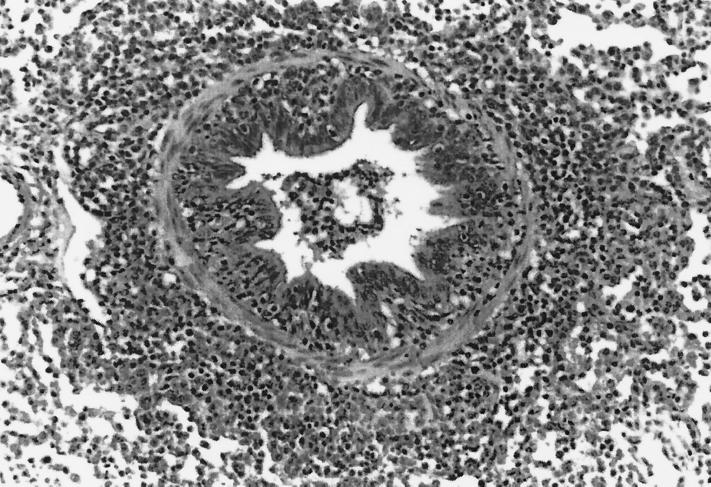
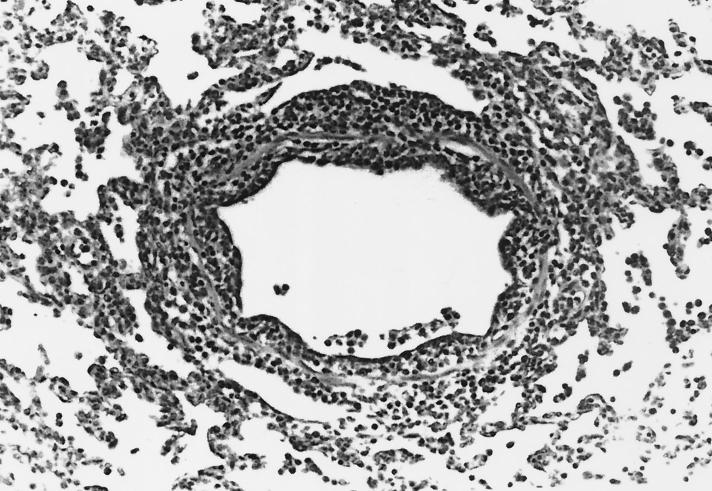
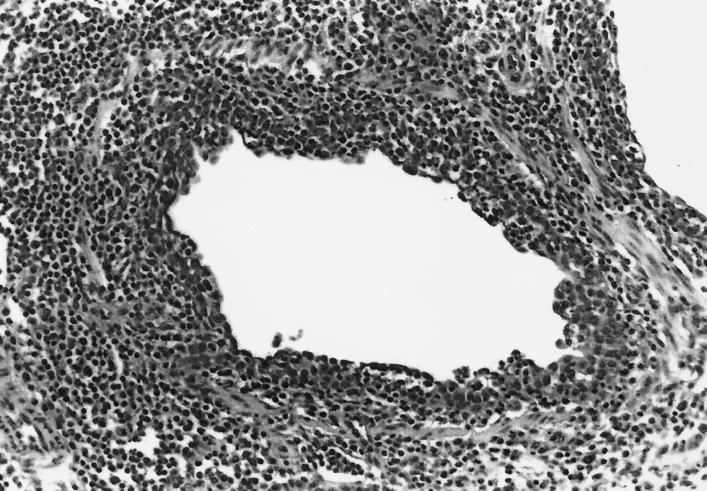
An experimental respiratory model was used to investigate the interaction between Mycoplasma hyopneumoniae and swine influenza virus (SIV) in the induction of pneumonia in susceptible swine. Previous studies demonstrated that M. hyopneumoniae, which produces a chronic bronchopneumonia in swine, potentiates a viral pneumonia induced by the porcine reproductive and respiratory syndrome virus (PRRSV). In this study, pigs were inoculated with M. hyopneumoniae 21 days prior to inoculation with SIV. Clinical disease as characterized by the severity of cough and fever was evaluated daily. Percentages of lung tissue with visual lesions and microscopic lesions were assessed upon necropsy at 3, 7, 14, and 21 days following SIV inoculation. Clinical observations revealed that pigs infected with both SIV and M. hyopneumoniae coughed significantly more than pigs inoculated with a single agent. Macroscopic pneumonia on necropsy at days 3 and 7 was greatest in both SIV-infected groups, with minimal levels of pneumonia in the M. hyopneumoniae-only-infected pigs. At 14 days post-SIV inoculation, pneumonia was significantly more severe in pigs infected with both pathogens. However, by 21 days postinoculation, the level of pneumonia in the dual-infected pigs was similar to that of the M. hyopneumoniae-only-infected group, and the pneumonia in the pigs inoculated with only SIV was nearly resolved. Microscopically, there was no apparent increase in the severity of pneumonia in pigs infected with both agents compared to that of single-agent-challenged pigs. The results of this study found that while pigs infected with both agents exhibited more severe clinical disease, the relationship between the two pathogens lacked the profound potentiation found with dual infection with M. hyopneumoniae and PRRSV. These findings demonstrate that the relationship between mycoplasmas and viruses varies with the individual agent.
Figures
References
-
- Amanfu W, Weng C N, Ross R F, Barnes H J. Diagnosis of mycoplasmal pneumoniae of swine: sequential study by direct immunofluorescence. Am J Vet Res. 1984;45:1349–1352. - PubMed
-
- Bereiter M, Young T F, Joo H S, Ross R F. Evaluation of the ELISA and comparison to the complement fixation test and radial immunodiffusion enzyme assay for detection of antibodies against Mycoplasma hyopneumoniae in swine serum. Vet Microbiol. 1990;25:177–192. - PubMed
-
- Halbur P G. Proceedings of the 15th Congress of the International Pig Veterinary Society. Nottingham, United Kingdom: Nottingham University Press; 1998. Porcine respiratory diseases; pp. 1–10.
Publication types
MeSH terms
LinkOut - more resources
Full Text Sources
