


Selective regulation of human immunodeficiency virus-infected CD4(+) lymphocytes by a synthetic immunomodulator leads to potent virus suppression in vitro and in hu-PBL-SCID mice
- PMID: 11435574
- PMCID: PMC114422
- DOI: 10.1128/JVI.75.15.6941-6952.2001
Selective regulation of human immunodeficiency virus-infected CD4(+) lymphocytes by a synthetic immunomodulator leads to potent virus suppression in vitro and in hu-PBL-SCID mice
Abstract
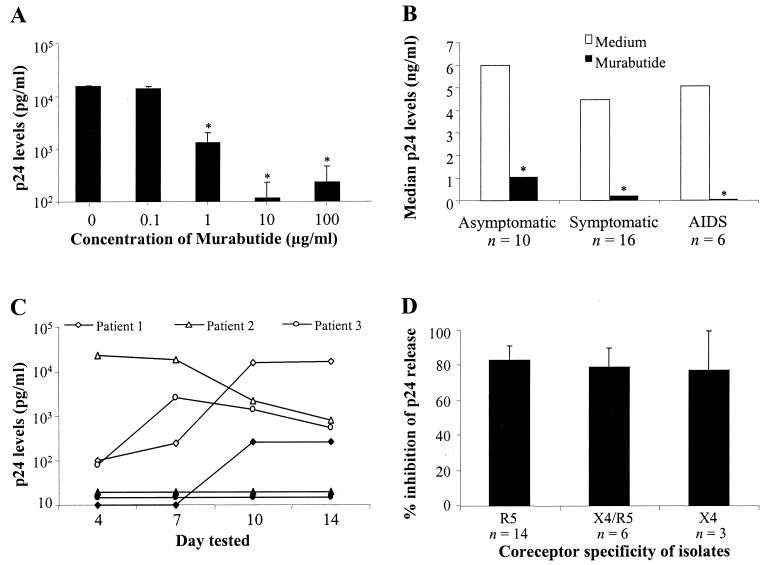
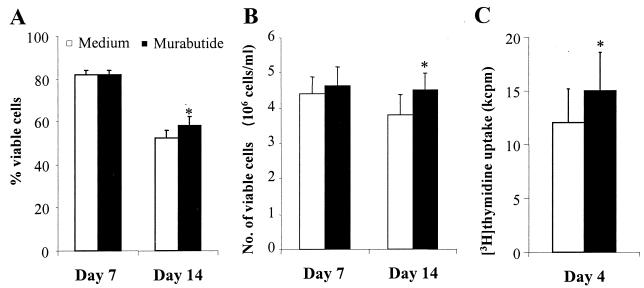
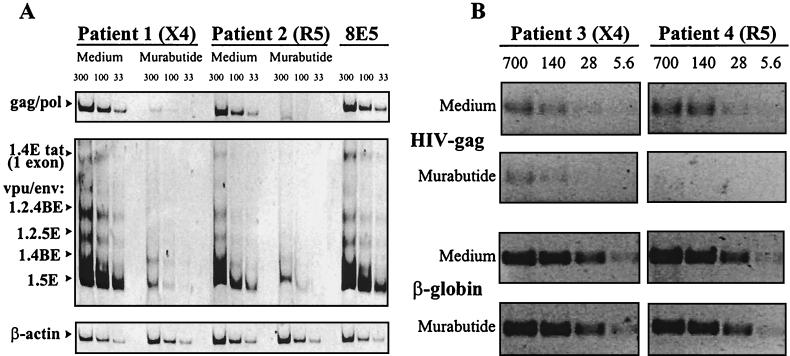
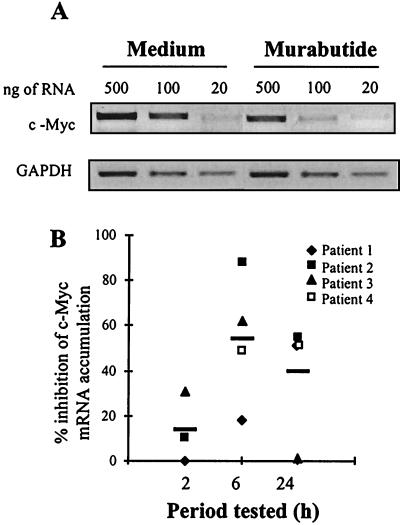
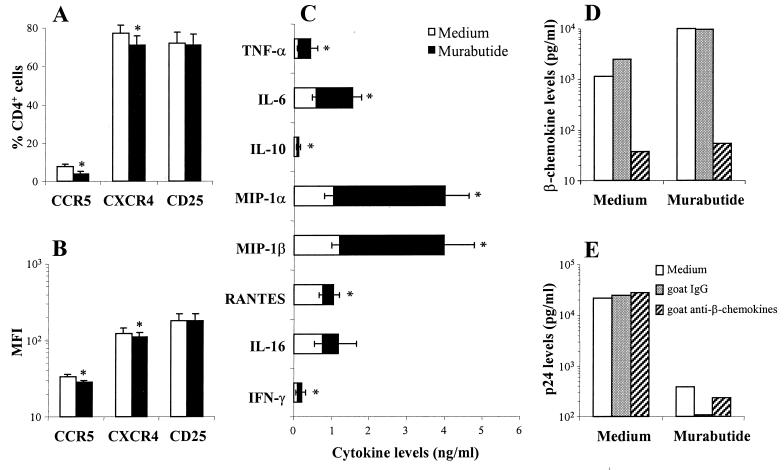
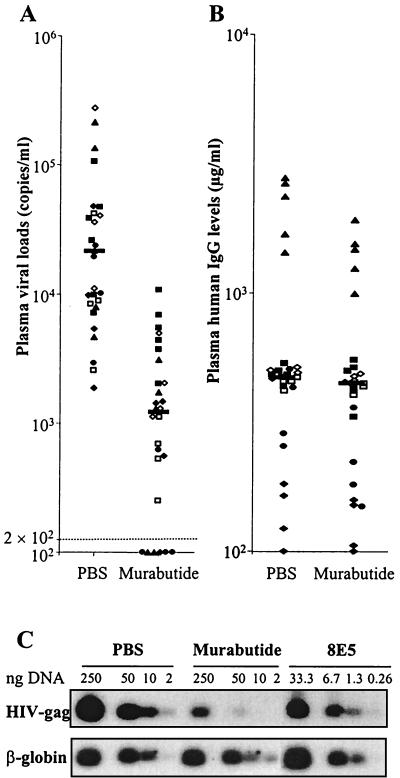
We have previously observed that the synthetic immunomodulator Murabutide inhibits human immunodeficiency virus type 1 (HIV-1) replication at multiple levels in macrophages and dendritic cells. The present study was designed to profile the activity of Murabutide on CD8-depleted phytohemagglutinin-activated lymphocytes from HIV-1-infected subjects and on the outcome of HIV-1 infection in severe combined immunodeficiency mice reconstituted with human peripheral blood leukocytes (hu-PBL-SCID mice). Maintaining cultures of CD8-depleted blasts from 36 patients in the presence of Murabutide produced dramatically reduced levels of viral p24 protein in the supernatants. This activity correlated with reduced viral transcripts and proviral DNA, was evident in cultures harboring R5, X4-R5, or X4 HIV-1 isolates, was not linked to inhibition of cellular DNA synthesis, and did not correlate with beta-chemokine release. Moreover, c-myc mRNA expression was down-regulated in Murabutide-treated cells, suggesting potential interference of the immunomodulator with the nuclear transport of viral preintegration complexes. On the other hand, daily treatment of HIV-1-infected hu-PBL-SCID mice with Murabutide significantly reduced the viral loads in plasma and the proviral DNA content in human peritoneal cells. These results are the first to demonstrate that a clinically acceptable synthetic immunomodulator with an ability to enhance the host's nonspecific immune defense mechanisms against infections can directly regulate cellular factors in infected lymphocytes, leading to controlled HIV-1 replication.
Figures
References
-
- Alfano M, Schmidtmayerova H, Bukrinsky M. Bacterial lipopolysaccharide is a potent inhibitor of HIV-1 replication in T lymphocytes and macrophages. AIDS. 1998;12:1724–1726. - PubMed
-
- Amiel C, Darcissac E, Truong M J, Dewulf J, Loyens M, Mouton Y, Capron A, Bahr G M. Interleukin-16 (IL-16) inhibits human immunodeficiency virus replication in cells from infected subjects, and serum IL-16 levels drop with disease progression. J Infect Dis. 1999;179:83–91. - PubMed
-
- Auci D L, Carucci J A, Chice S M, Smith M C, Dukor P, Durkin H G. Control of IgE responses. 4. Isotype-specific suppression of peak BPO-specific IgE antibody-forming cell responses and of BPO-specific IgE in serum by muramyldipeptide or murabutide after administration to mice by gavage. Int Arch Allergy Immunol. 1993;101:167–176. - PubMed
-
- Bahr G M, Chedid L. Immunological activities of muramyl peptides. Fed Proc. 1986;45:2541–2544. - PubMed
-
- Bahr G M, Darcissac E, Bevec D, Dukor P, Chedid L. Immunopharmacological activities and clinical development of muramyl peptides with particular emphasis on murabutide. Int J Immunopharmacol. 1995;17:117–131. - PubMed
Publication types
MeSH terms
Substances
LinkOut - more resources
Full Text Sources
Medical
Research Materials
