


Ethylene induces antifreeze activity in winter rye leaves
- PMID: 11457973
- PMCID: PMC116479
- DOI: 10.1104/pp.126.3.1232
Ethylene induces antifreeze activity in winter rye leaves
Abstract
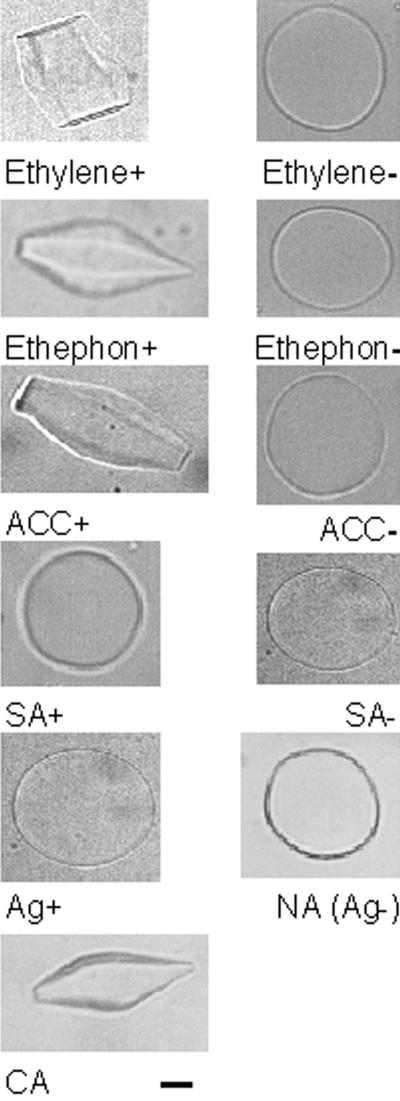
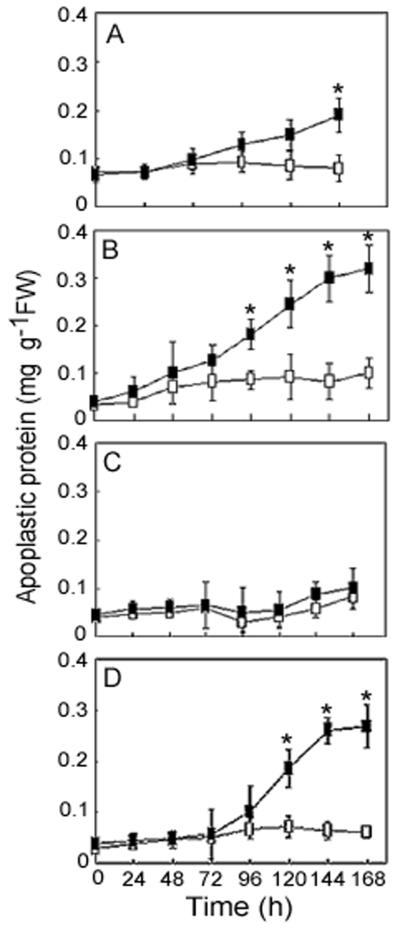
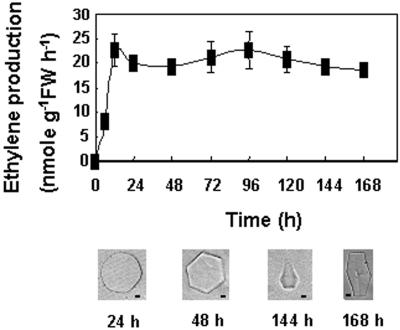
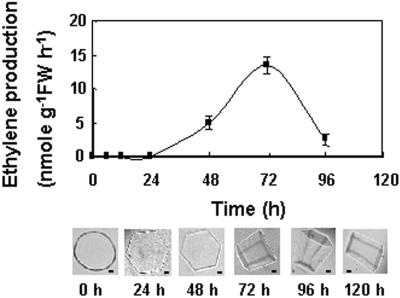
Antifreeze activity is induced by cold temperatures in winter rye (Secale cereale) leaves. The activity arises from six antifreeze proteins that accumulate in the apoplast of winter rye leaves during cold acclimation. The individual antifreeze proteins are similar to pathogenesis-related proteins, including glucanases, chitinases, and thaumatin-like proteins. The objective of this study was to study the regulation of antifreeze activity in response to ethylene and salicyclic acid, which are known regulators of pathogenesis-related proteins induced by pathogens. Nonacclimated plants treated with salicylic acid accumulated apoplastic proteins with no antifreeze activity. In contrast, when nonacclimated plants were exposed to ethylene, both antifreeze activity and the concentration of apoplastic protein increased in rye leaves. Immunoblotting revealed that six of the seven accumulated apoplastic proteins consisted of two glucanases, two chitinases, and two thaumatin-like proteins. The ethylene-releasing agent ethephon and the ethylene precursor 1-aminocyclopropane-1-carboxylate also induced high levels of antifreeze activity at 20 degrees C, and this effect could be blocked by the ethylene inhibitor AgNO(3). When intact rye plants were exposed to 5 degrees C, endogenous ethylene production and antifreeze activity were detected within 12 and 48 h of exposure to cold, respectively. Rye plants exposed to drought produced both ethylene and antifreeze activity within 24 h. We conclude that ethylene is involved in regulating antifreeze activity in winter rye in response to cold and drought.
Figures

References
-
- Abeles FB. Ethylene in Plant Biology. New York: Academic Press; 1973.
-
- Boller T, Gehri A, Mauch F, Voegeli U. Chitinase in bean leaves: induction by ethylene, purification, properties, and possible function. Planta. 1983;157:22–31. - PubMed
-
- Bradford MM. A rapid and sensitive method for the quantification of microgram quantities of protein utilizing the principle of protein-dye binding. Anal Biochem. 1976;72:341–347. - PubMed
-
- Brederode FT, Linthorst HJM, Bol JF. Differential induction of acquired resistance and PR gene expression in tobacco by virus infection, ethephon treatment, UV light and wounding. Plant Mol Biol. 1991;17:1117–1125. - PubMed
Publication types
MeSH terms
Substances
LinkOut - more resources
Full Text Sources
