


Heart regeneration in adult MRL mice
- PMID: 11493713
- PMCID: PMC55538
- DOI: 10.1073/pnas.181329398
Heart regeneration in adult MRL mice
Abstract
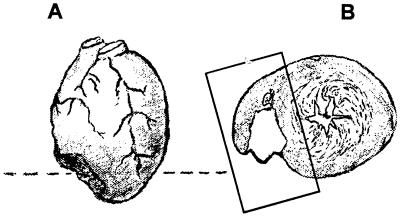
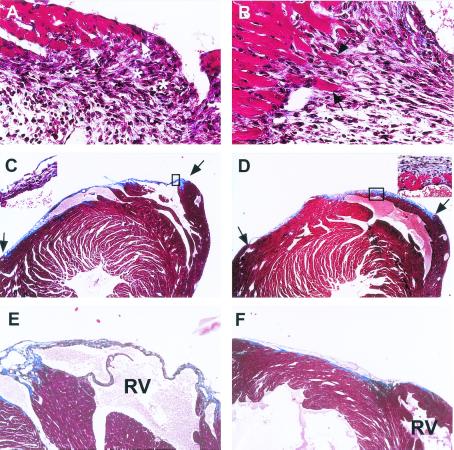
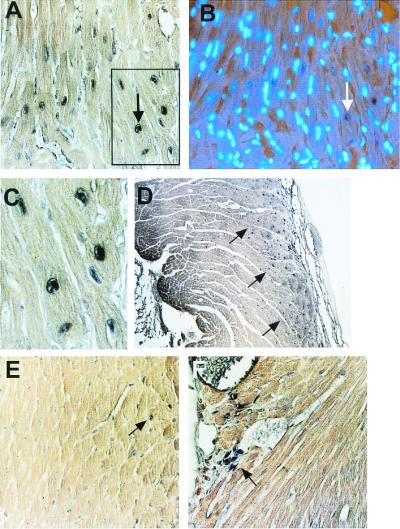
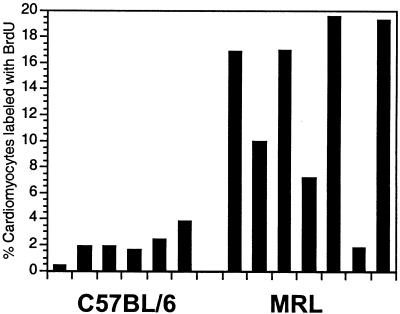
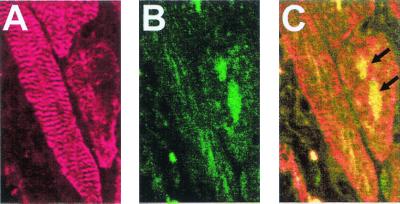
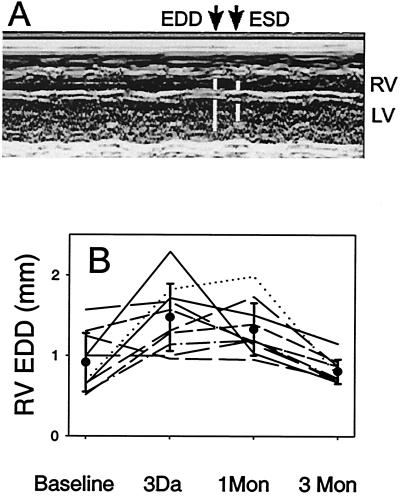
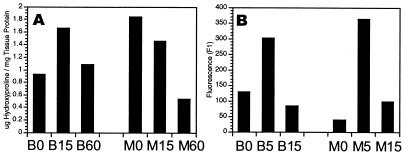
The reaction of cardiac tissue to acute injury involves interacting cascades of cellular and molecular responses that encompass inflammation, hormonal signaling, extracellular matrix remodeling, and compensatory adaptation of myocytes. Myocardial regeneration is observed in amphibians, whereas scar formation characterizes cardiac ventricular wound healing in a variety of mammalian injury models. We have previously shown that the MRL mouse strain has an extraordinary capacity to heal surgical wounds, a complex trait that maps to at least seven genetic loci. Here, we extend these studies to cardiac wounds and demonstrate that a severe transmural, cryogenically induced infarction of the right ventricle heals extensively within 60 days, with the restoration of normal myocardium and function. Scarring is markedly reduced in MRL mice compared with C57BL/6 mice, consistent with both the reduced hydroxyproline levels seen after injury and an elevated cardiomyocyte mitotic index of 10-20% for the MRL compared with 1-3% for the C57BL/6. The myocardial response to injury observed in these mice resembles the regenerative process seen in amphibians.
Figures
References
-
- Clark R A F. In: The Molecular and Cellular Biology of Wound Repair. Clark R, editor. New York: Plenum; 1996. pp. 3–35.
-
- Gross J. Wound Repair Regen. 1996;4:190–202. - PubMed
-
- Stocum D L. Wound Repair Regen. 1996;4:3–15. - PubMed
-
- Koishi K, Zhang M, McLennan I S, Harris A J. Dev Dyn. 1995;202:244–254. - PubMed
Publication types
MeSH terms
Substances
Grants and funding
LinkOut - more resources
Full Text Sources
Other Literature Sources
Medical
Molecular Biology Databases
