


Non-stationary distributed source approximation: an alternative to improve localization procedures
- PMID: 11500992
- PMCID: PMC6871930
- DOI: 10.1002/hbm.1043
Non-stationary distributed source approximation: an alternative to improve localization procedures
Abstract
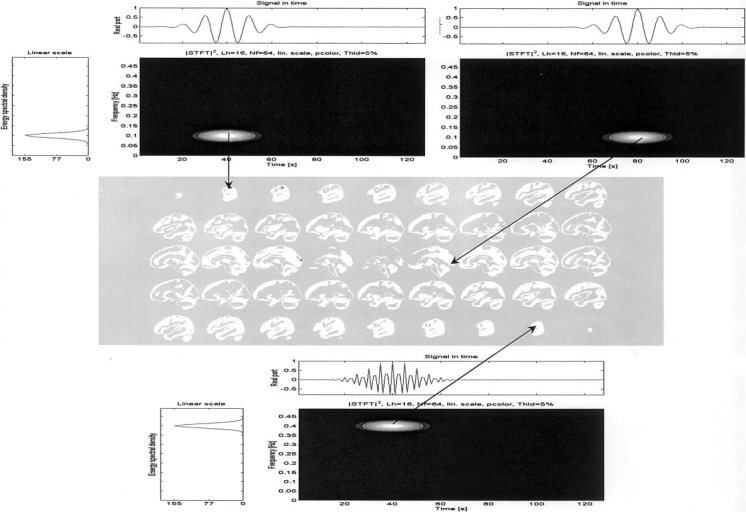
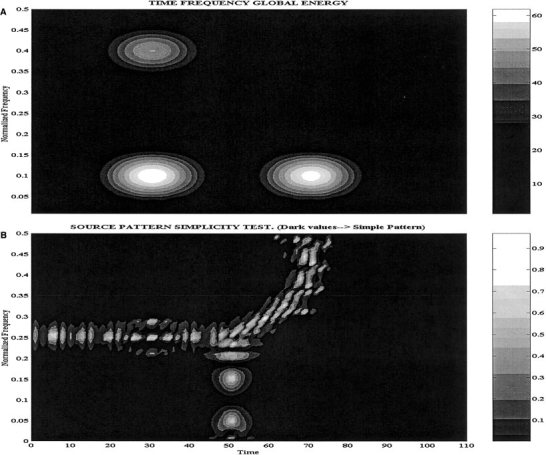
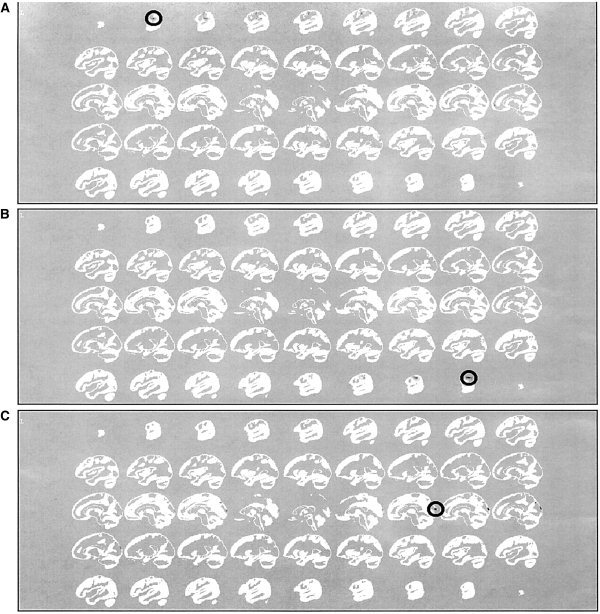
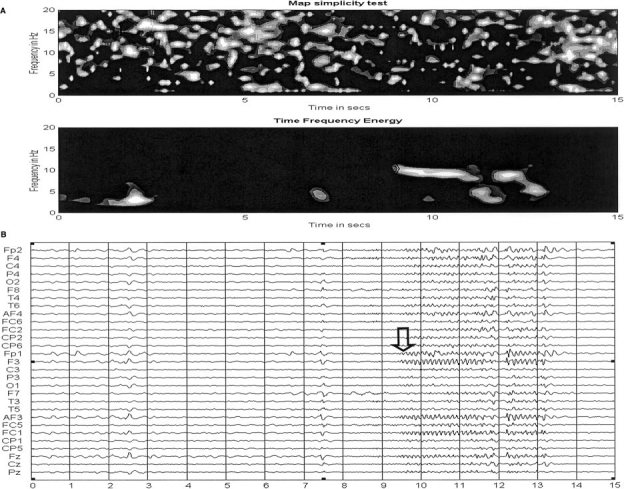
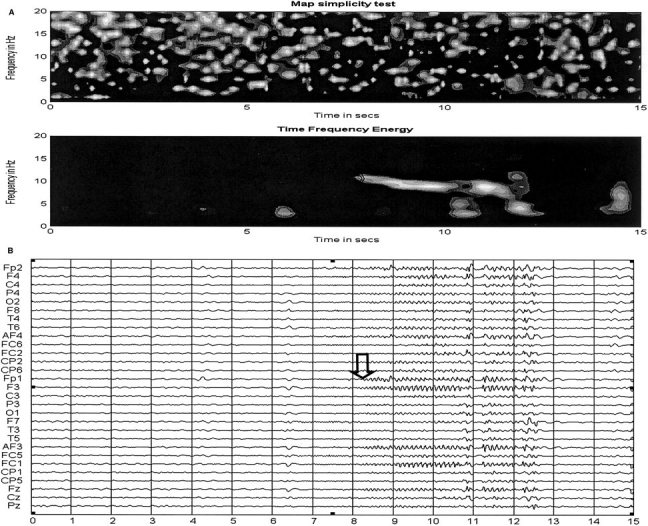
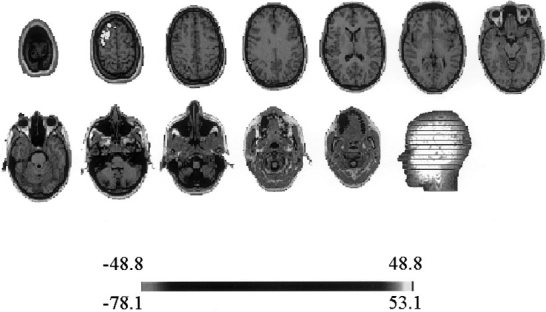
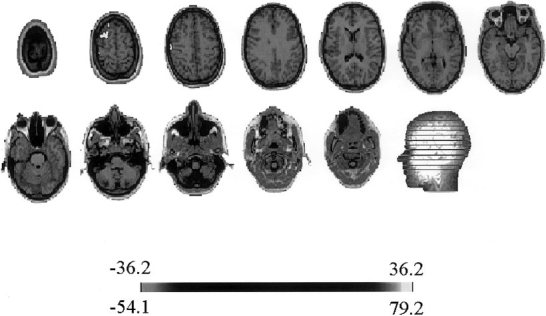
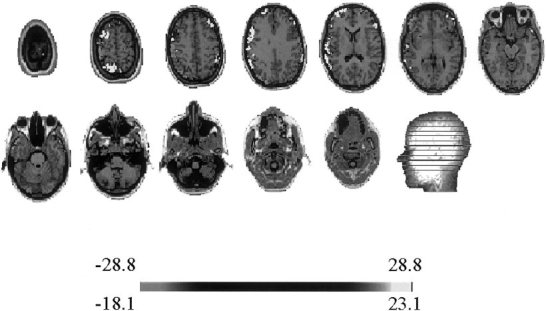
Localization of the generators of the scalp measured electrical activity is particularly difficult when a large number of brain regions are simultaneously active. In this study, we describe an approach to automatically isolate scalp potential maps, which are simple enough to expect reasonable results after applying a distributed source localization procedure. The isolation technique is based on the time-frequency decomposition of the scalp-measured data by means of a time-frequency representation. The basic rationale behind the approach is that neural generators synchronize during short time periods over given frequency bands for the codification of information and its transmission. Consequently potential patterns specific for certain time-frequency pairs should be simpler than those appearing at single times but for all frequencies. The method generalizes the FFT approximation to the case of distributed source models with non-stationary time behavior. In summary, the non-stationary distributed source approximation aims to facilitate the localization of distributed source patterns acting at specific time and frequencies for non-stationary data such as epileptic seizures and single trial event related potentials. The merits of this approach are illustrated here in the analysis of synthetic data as well as in the localization of the epileptogenic area at seizure onset in patients. It is shown that time and frequency at seizure onset can be precisely detected in the time-frequency domain and those localization results are stable over seizures. The results suggest that the method could also be applied to localize generators in single trial evoked responses or spontaneous activity.
Copyright 2001 Wiley-Liss, Inc.
Figures
References
-
- Achim A, Richer F, Saint‐Hilaire J. 1991. Methodological considerations for the evaluation of spatio‐temporal source models. Electroencephalogr Clin Neurophysiol 79: 227–240. - PubMed
-
- Blanke O, Lantz G, Seeck M, Spinelli L, Grave de Peralta Menendez R, Thut G, Landis T, Michel CM. 2000. Temporal and spatial determination of EEG seizure onset in the frequency domain. Clin Neurophysiol 111: 763–772. - PubMed
-
- Boudreaux‐Bartel GF. 1996. Mixed time‐frequency signal transformations In: Poularikas A, editor. The transforms and applications handbook. Boca Raton: CRC Press; p 887–963.
-
- Cabrera Fernandez D, Grave de Peralta R, Gonzalez Andino S. 1995. Some limitations of spatio temporal source models. Brain Topogr 7: 233–243. - PubMed
-
- Dierks T, Engelhart W, Maurer K. 1993. Equivalent dipoles of FFT data visualize drug interaction at benzodiazepine receptors. Electroencephalogr Clin Neurophysiol 86: 231–237. - PubMed
Publication types
MeSH terms
LinkOut - more resources
Full Text Sources
