


HIV-1 induces phenotypic and functional perturbations of B cells in chronically infected individuals
- PMID: 11504927
- PMCID: PMC56966
- DOI: 10.1073/pnas.181347898
HIV-1 induces phenotypic and functional perturbations of B cells in chronically infected individuals
Abstract
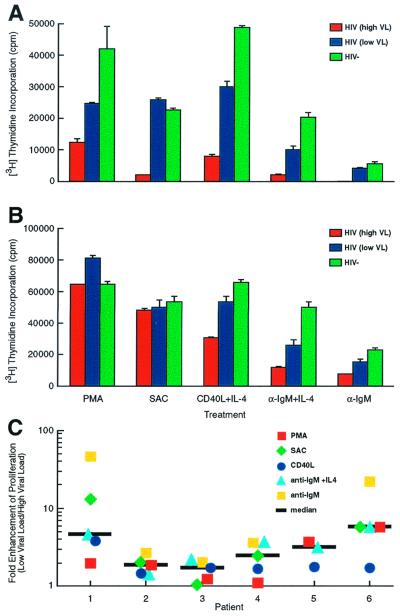
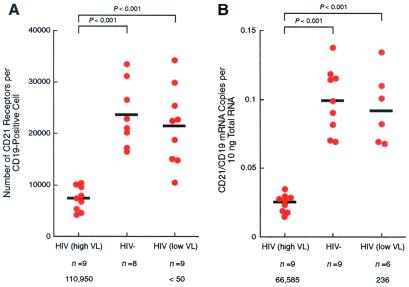
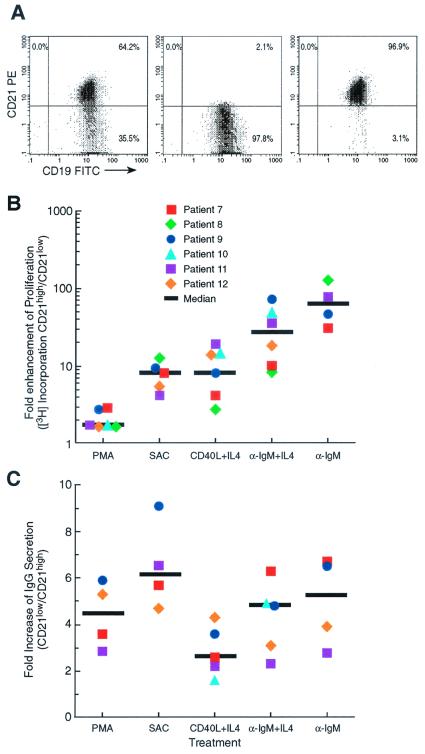
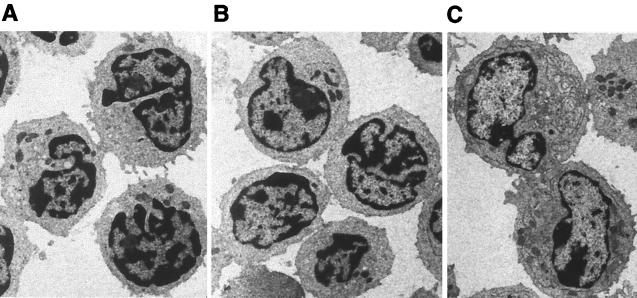
A number of perturbations of B cells has been described in the setting of HIV infection; however, most remain poorly understood. To directly address the effect of HIV replication on B cell function, we investigated the capacity of B cells isolated from HIV-infected patients to respond to a variety of stimuli before and after reduction of viremia by effective antiretroviral therapy. B cells taken from patients with high levels of plasma viremia were defective in their proliferative responses to various stimuli. Viremia was also associated with the appearance of a subpopulation of B cells that expressed reduced levels of CD21. After fractionation into CD21(high)- and CD21(low)-expressing B cells, the CD21(low) fraction showed dramatically reduced proliferation in response to B cell stimuli and enhanced secretion of immunoglobulins when compared with the CD21(high) fraction. Electron microscopic analysis of each fraction revealed cells with plasmacytoid features in the CD21(low) B cell population but not in the CD21(high) fraction. These results indicate that HIV viremia induces the appearance of a subset of B cells whose function is impaired and which may be responsible for the hypergammaglobulinemia associated with HIV disease.
Figures
References
-
- Lane H C, Masur H, Edgar L C, Whalen G, Rook A H, Fauci A S. N Engl J Med. 1983;309:453–458. - PubMed
-
- Pahwa S G, Quilop M T, Lange M, Pahwa R N, Grieco M H. Ann Intern Med. 1984;101:757–763. - PubMed
-
- Katz I R, Krown S E, Safai B, Oettgen H F, Hoffmann M K. Clin Immunol Immunopathol. 1986;39:359–367. - PubMed
-
- Gaidano G, Capello D, Carbone A. Semin Oncol. 2000;27:431–441. - PubMed
-
- Martinez-Maza O, Crabb E, Mitsuyasu R T, Fahey J L, Giorgi J V. J Immunol. 1987;138:3720–3724. - PubMed
Publication types
MeSH terms
Substances
Grants and funding
LinkOut - more resources
Full Text Sources
Other Literature Sources
Medical
