


DnaK chaperone-mediated control of activity of a sigma(32) homolog (RpoH) plays a major role in the heat shock response of Agrobacterium tumefaciens
- PMID: 11514513
- PMCID: PMC95412
- DOI: 10.1128/JB.183.18.5302-5310.2001
DnaK chaperone-mediated control of activity of a sigma(32) homolog (RpoH) plays a major role in the heat shock response of Agrobacterium tumefaciens
Abstract
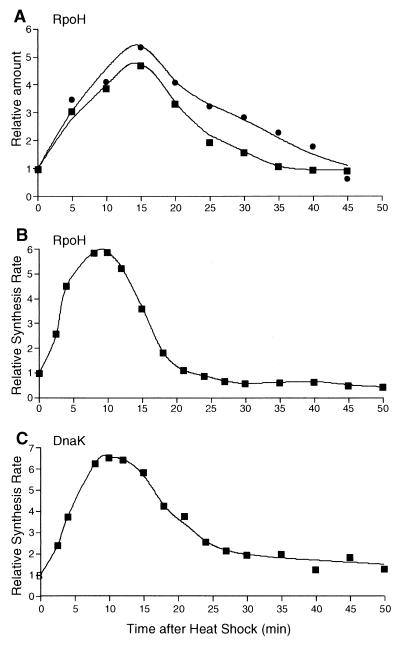
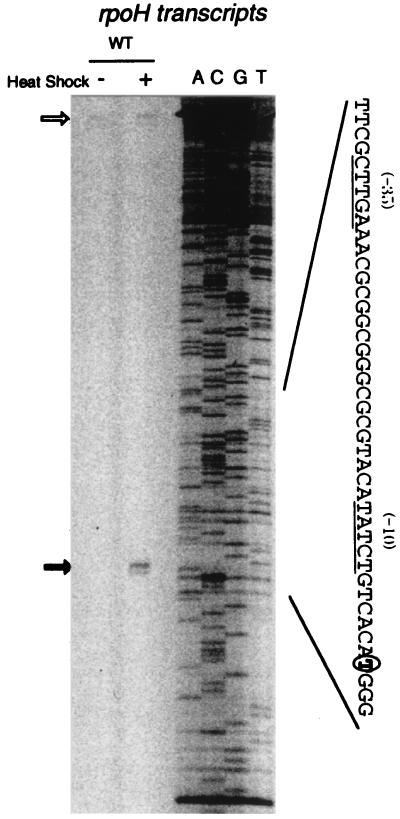
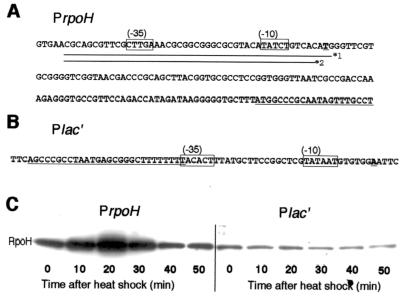
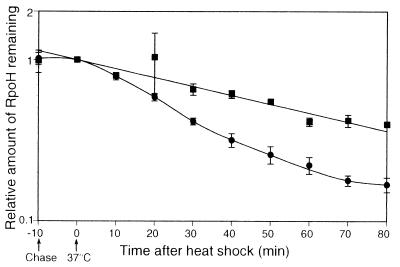
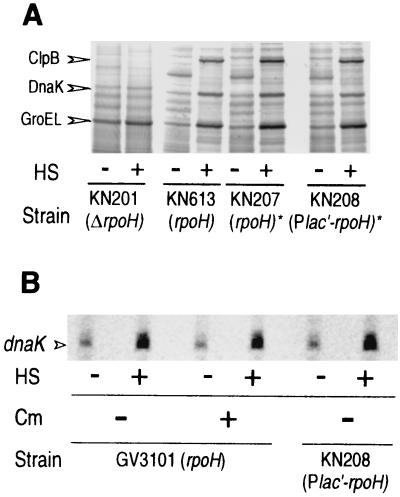
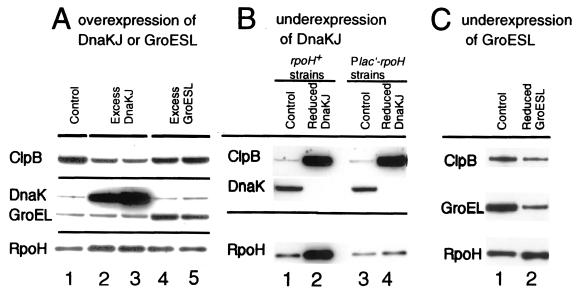
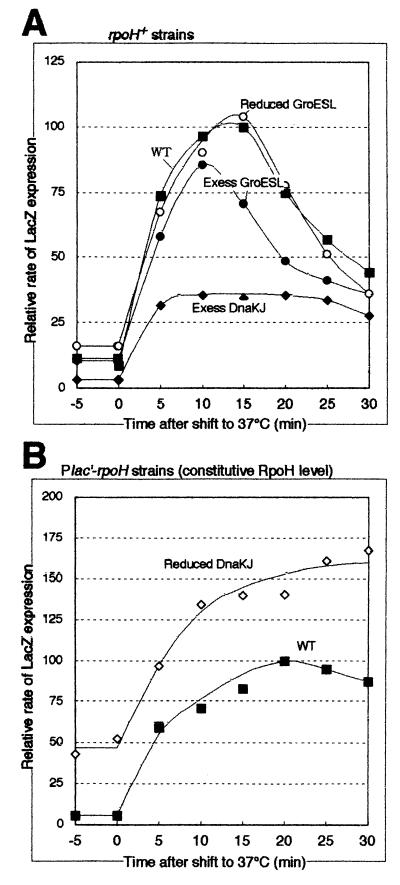
RpoH (Escherichia coli sigma(32) and its homologs) is the central regulator of the heat shock response in gram-negative proteobacteria. Here we studied salient regulatory features of RpoH in Agrobacterium tumefaciens by examining its synthesis, stability, and activity while increasing the temperature from 25 to 37 degrees C. Heat induction of RpoH synthesis occurred at the level of transcription from an RpoH-dependent promoter, coordinately with that of DnaK, and followed by an increase in the RpoH level. Essentially normal induction of heat shock proteins was observed even with a strain that was unable to increase the RpoH level upon heat shock. Moreover, heat-induced accumulation of dnaK mRNA occurred without protein synthesis, showing that preexisting RpoH was sufficient for induction of the heat shock response. These results suggested that controlling the activity, rather than the amount, of RpoH plays a major role in regulation of the heat shock response. In addition, increasing or decreasing the DnaK-DnaJ chaperones specifically reduced or enhanced the RpoH activity, respectively. On the other hand, the RpoH protein was normally stable and remained stable during the induction phase but was destabilized transiently during the adaptation phase. We propose that the DnaK-mediated control of RpoH activity plays a primary role in the induction of heat shock response in A. tumefaciens, in contrast to what has been found in E. coli.
Figures
References
-
- Ausubel F M, Brent R, Kingston R E, Moore D D, Seidman J G, Smith J A, Struhl K, editors. Current protocols in molecular biology. New York, N.Y: Wiley; 1987.
-
- Babst M, Hennecke H, Fischer H M. Two different mechanisms are involved in the heat-shock regulation of chaperonin gene expression in Bradyrhizobium japonicum. Mol Microbiol. 1996;19:827–839. - PubMed
-
- Blaszczak A, Georgopoulos C, Liberek K. On the mechanism of FtsH-dependent degradation of the ς32 transcriptional regulator of Escherichia coli and the role of the DnaK chaperone machine. Mol Microbiol. 1999;31:157–166. - PubMed
-
- Bukau B, Horwich A L. The HSP70 and HSP60 chaperone machines. Cell. 1998;92:351–366. - PubMed
MeSH terms
Substances
LinkOut - more resources
Full Text Sources
