


Identifying patient preferences for communicating risk estimates: a descriptive pilot study
- PMID: 11545684
- PMCID: PMC55342
- DOI: 10.1186/1472-6947-1-2
Identifying patient preferences for communicating risk estimates: a descriptive pilot study
Abstract
Background: Patients increasingly seek more active involvement in health care decisions, but little is known about how to communicate complex risk information to patients. The objective of this study was to elicit patient preferences for the presentation and framing of complex risk information.
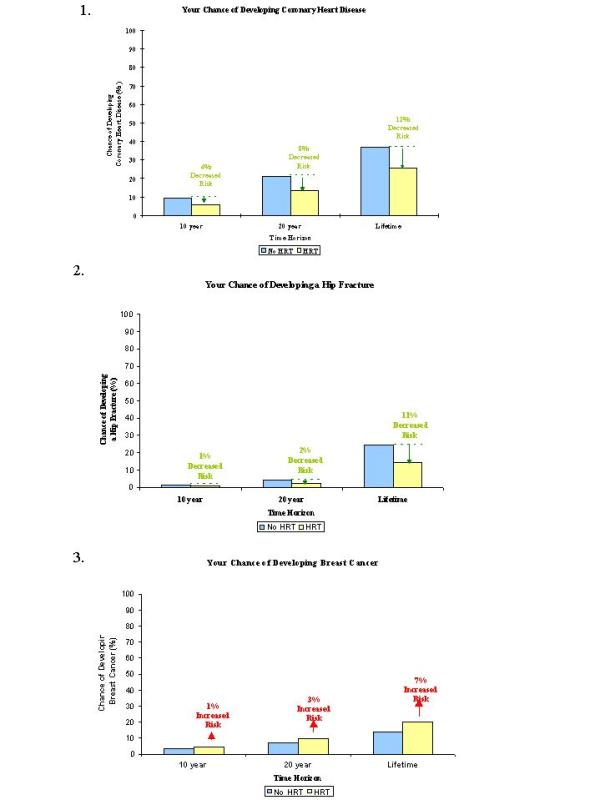
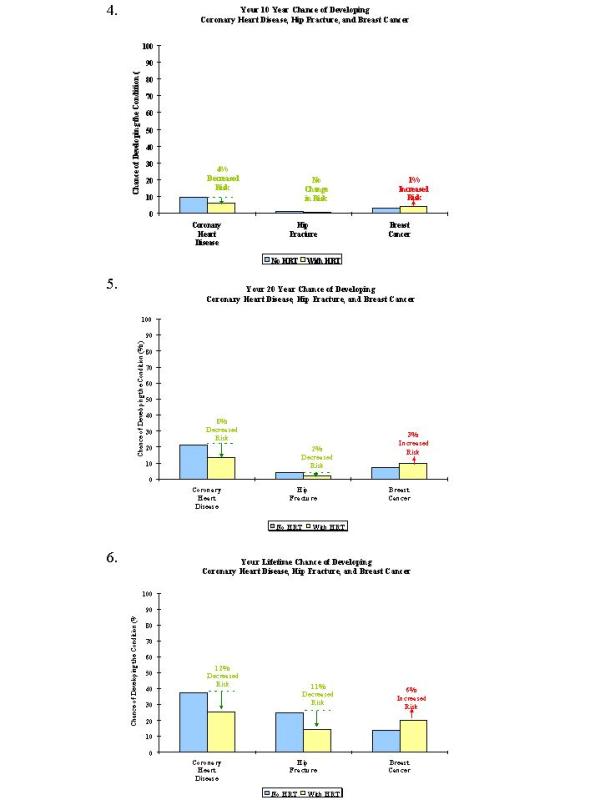
Method: To accomplish this, eight focus group discussions and 15 one-on-one interviews were conducted, where women were presented with risk data in a variety of different graphical formats, metrics, and time horizons. Risk data were based on a hypothetical woman's risk for coronary heart disease, hip fracture, and breast cancer, with and without hormone replacement therapy. Participants' preferences were assessed using likert scales, ranking, and abstractions of focus group discussions.
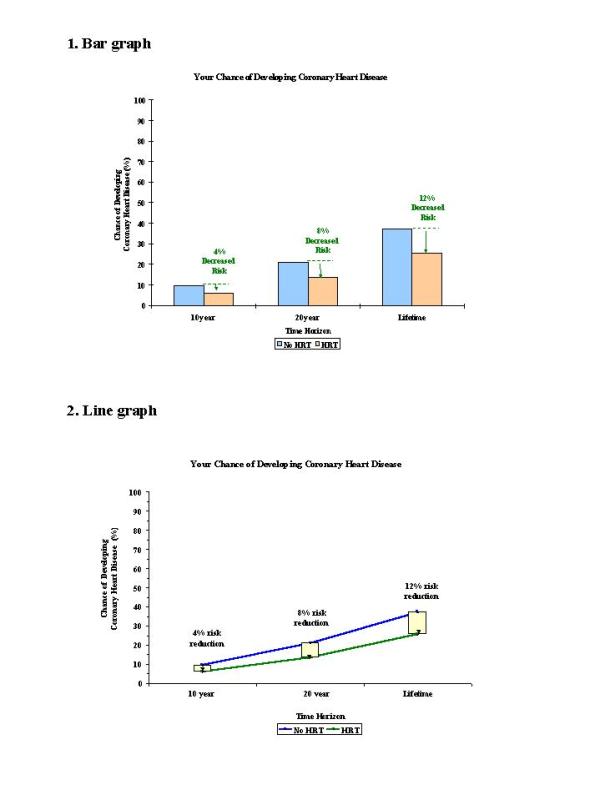
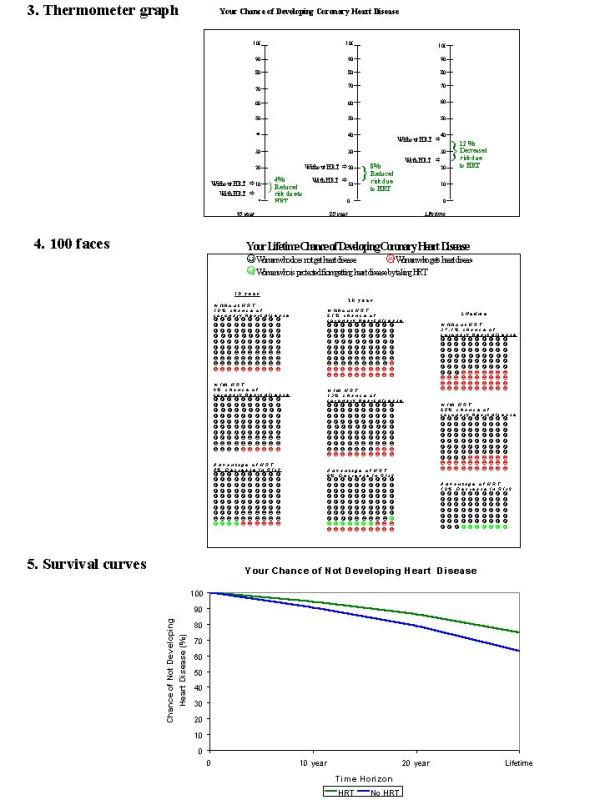
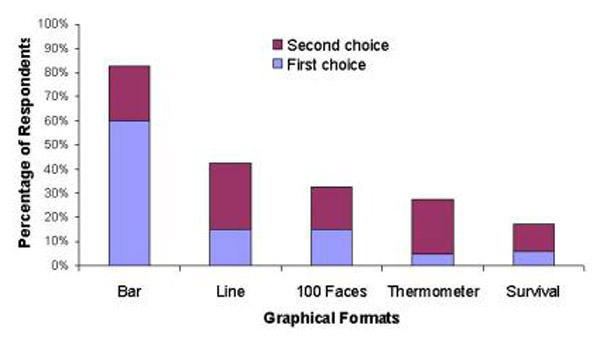
Results: Forty peri- and postmenopausal women were recruited through hospital fliers (n = 25) and a community health fair (n = 15). Mean age was 51 years, 50% were non-Caucasian, and all had completed high school. Bar graphs were preferred by 83% of participants over line graphs, thermometer graphs, 100 representative faces, and survival curves. Lifetime risk estimates were preferred over 10 or 20-year horizons, and absolute risks were preferred over relative risks and number needed to treat.
Conclusion: Although there are many different formats for presenting and framing risk information, simple bar charts depicting absolute lifetime risk were rated and ranked highest overall for patient preferences for format.
Figures
References
-
- Mazur DH, Hickam DH. Interpretation of graphic data by patients in a general medicine clinic. JGIM. 1990;5:402–405. - PubMed
-
- Mazur DJ, Merz JF. How the manner of presentation of data influences older patients in determining their treatment preferences. JAGS. 1993;41:223–228. - PubMed
-
- Mazur DJ, Hickam DH. Patients' and physicians' interpretations of graphic data displays. Med Decis Mak. 1993;13:59–63. - PubMed
-
- Woloshin S, Schwartz LM, Black WC, Welch HG. Women's perceptions of breast cancer risk: How you ask matters. Med Decis Mak. 1999;19:221–229. - PubMed
Publication types
MeSH terms
LinkOut - more resources
Full Text Sources
