


T cells augment monocyte and neutrophil function in host resistance against oropharyngeal candidiasis
- PMID: 11553549
- PMCID: PMC98740
- DOI: 10.1128/IAI.69.10.6110-6118.2001
T cells augment monocyte and neutrophil function in host resistance against oropharyngeal candidiasis
Abstract
The purpose of this study was to identify the cell populations involved in recovery from oral infections with Candida albicans. Monoclonal antibodies specific for CD4+ cells, CD8+ cells, and polymorphonuclear leukocytes were used to deplete BALB/c and CBA/CaH mice of the relevant cell populations in systemic circulation. Monocytes were inactivated with the cytotoxic chemical carrageenan. Mice were infected with 10(8) C. albicans yeast cells and monitored for 21 days. Systemic depletion of CD4+ and CD8+ T lymphocytes alone did not increase the severity of oral infection compared to that of controls. Oral colonization persisted in animals treated with head and neck irradiation and depleted of CD4+ T cells, whereas infections in animals that received head and neck irradiation alone or irradiation and anti-CD8 antibody cleared the infection in a comparable fashion. The depletion of polymorphonuclear cells and the cytotoxic inactivation of mononuclear phagocytes significantly increased the severity of oral infection in both BALB/c and CBA/CaH mice. High levels of interleukin 12 (IL-12) and gamma interferon (IFN-gamma) were produced by lymphocytes from the draining lymph nodes of recovering animals, whereas IL-6, tumor necrosis factor alpha, and IFN-gamma were detected in the oral mucosae of both naïve and infected mice. The results indicate that recovery from oropharyngeal candidiasis in this model is dependent on CD4+-T-cell augmentation of monocyte and neutrophil functions exerted by Th1-type cytokines such as IL-12 and IFN-gamma.
Figures
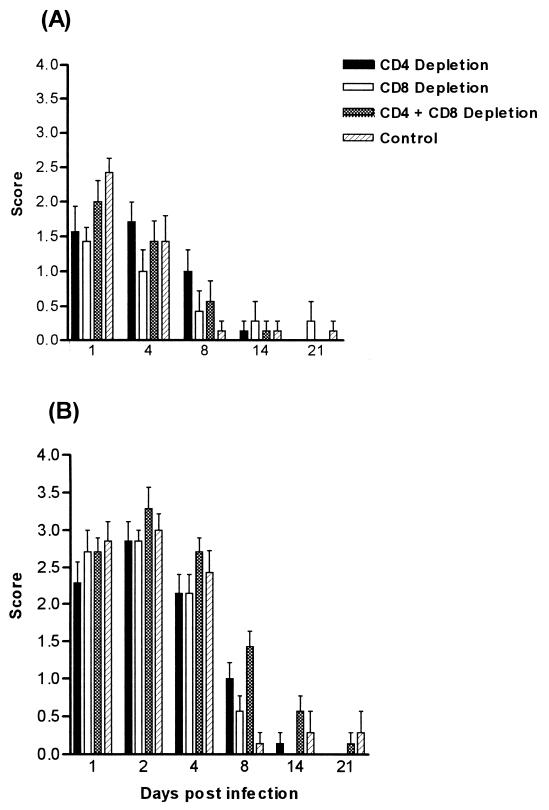
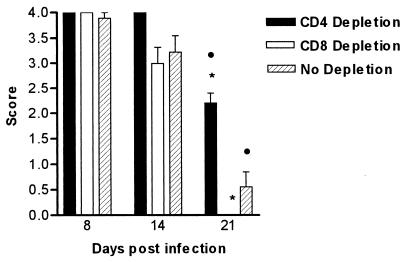
 , P < 0.001). SEM were 0 if error bars are not shown.
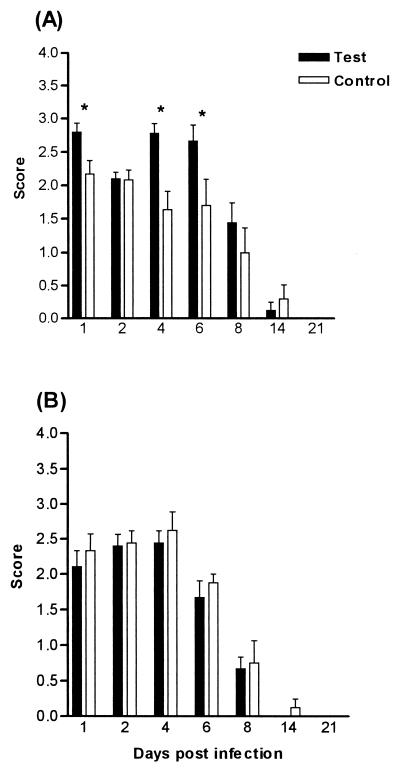 , P < 0.05) using Dunnett's test of the ANOVA.
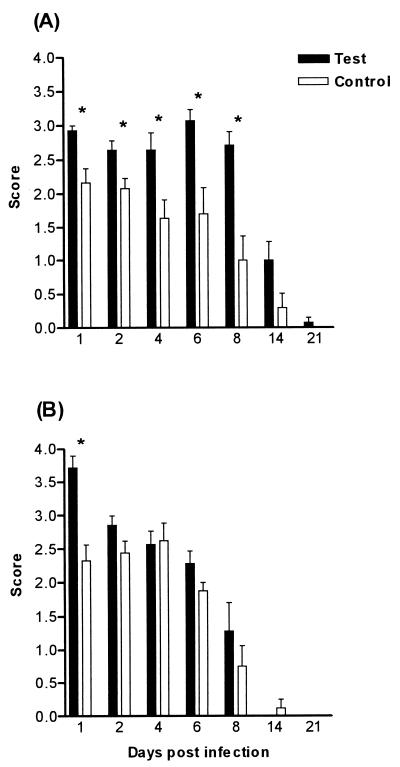 , P < 0.01) using Dunnett's test of the ANOVA.
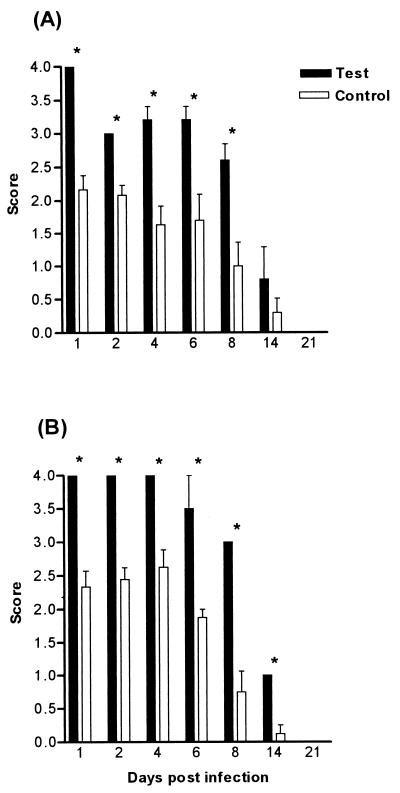 , P < 0.01) using Dunnett's test of the ANOVA.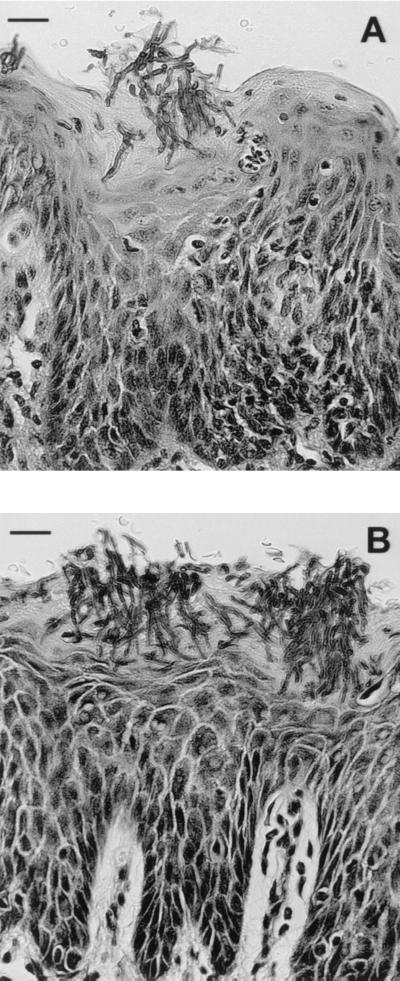
References
-
- Ashman R B, Fulurija A, Papadimitriou J M. Both CD4+ and CD8+ lymphocytes reduce the severity of tissue lesions in murine systemic candidiasis, and CD4+ cells also demonstrate strain-specific immunopathological effects. Microbiology. 1999;145:1631–1640. - PubMed
-
- Bodey G P, Buckley M, Sathe Y S, Freireich E J. Quantitative relationships between circulating leukocytes and infection in patients with acute leukemia. Ann Intern Med. 1966;64:328–340. - PubMed
Publication types
MeSH terms
Substances
LinkOut - more resources
Full Text Sources
Medical
Molecular Biology Databases
Research Materials
