


Mimicry of a G protein mutation by pertussis toxin expression in transgenic Caenorhabditis elegans
- PMID: 11553570
- PMCID: PMC98761
- DOI: 10.1128/IAI.69.10.6271-6275.2001
Mimicry of a G protein mutation by pertussis toxin expression in transgenic Caenorhabditis elegans
Abstract
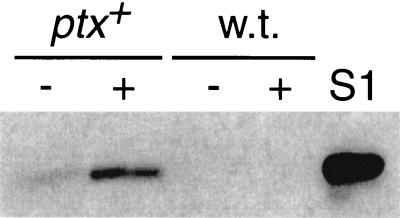
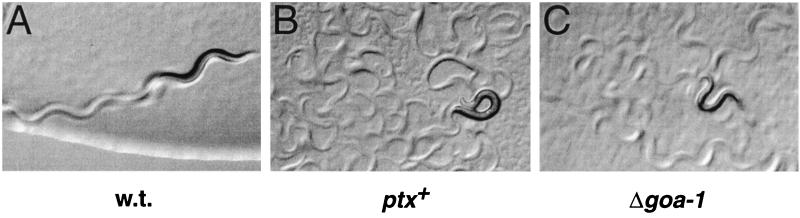
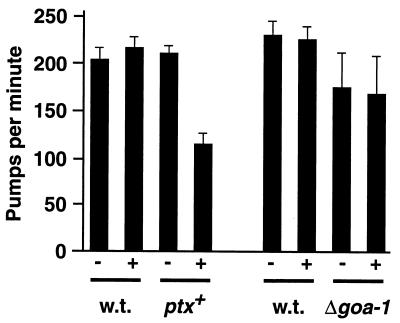
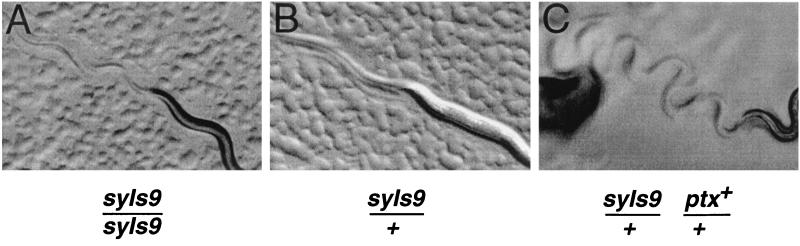
Pathogens produce virulence factors that interact directly with host molecules, but in many cases the host targets are unknown. The genetic and molecular identification of these orphan targets is often not feasible with mammalian experimental models. However, a substantial number of known targets are molecules and pathways that are conserved among eukaryotes, and therefore the use of nonmammalian model hosts to identify orphan targets may prove useful. To demonstrate the feasibility of this approach, we transformed the nematode Caenorhabditis elegans with a gene encoding the catalytic subunit of pertussis toxin (PTX), which in mammals inactivates G(o/i)alpha proteins. Expression of PTX in C. elegans produced phenotypes almost identical to those of a null mutation in the nematode gene encoding G(o/i)alpha. Furthermore, PTX suppressed the phenotype of a constitutively active form of nematode G(o/i)alpha protein. These results indicate that PTX is functional in nematodes and acts specifically on the C. elegans homologue of the mammalian target.
Figures
References
-
- Aballay A, Yorgey P, Ausubel F M. Salmonella typhimurium proliferates and establishes a persistent infection in the intestine of Caenorhabditis elegans. Curr Biol. 2000;10:1539–1542. - PubMed
-
- C. elegans Sequencing Consortium. Genome sequence of the nematode C. elegans: a platform for investigating biology. Science. 1998;282:2012–2018. - PubMed
Publication types
MeSH terms
Substances
LinkOut - more resources
Full Text Sources
