


Primary care for patients infected with human immunodeficiency virus: a randomized controlled trial
- PMID: 11556937
- PMCID: PMC1495270
- DOI: 10.1046/j.1525-1497.2001.016009573.x
Primary care for patients infected with human immunodeficiency virus: a randomized controlled trial
Abstract
Objective: To measure the impact of a teaching intervention and to compare process and outcomes of care for HIV-infected patients randomly assigned to a general medicine clinic (GMC) or an infectious disease clinic (IDC) for primary care.
Design: Prospective, randomized, controlled trial.
Setting: University hospital in Durham, NC.
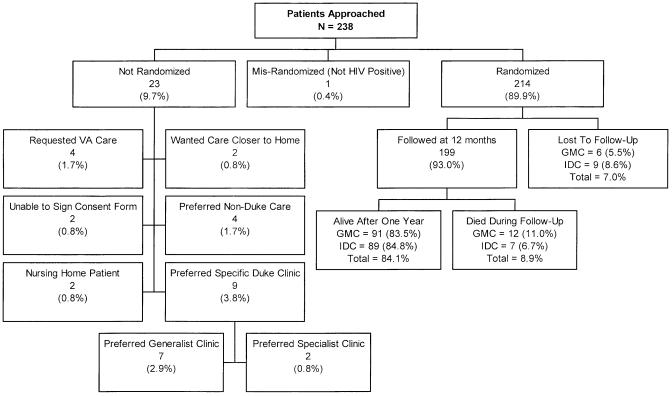
Patients: Two hundred fourteen consecutive HIV-infected patients presenting for primary care.
Intervention: Physicians at the GMC received HIV-related training and evidence-based practice guidelines.
Measurements: Utilization of services, health-related quality of life, preventive and screening measures, and antiretroviral use for one year.
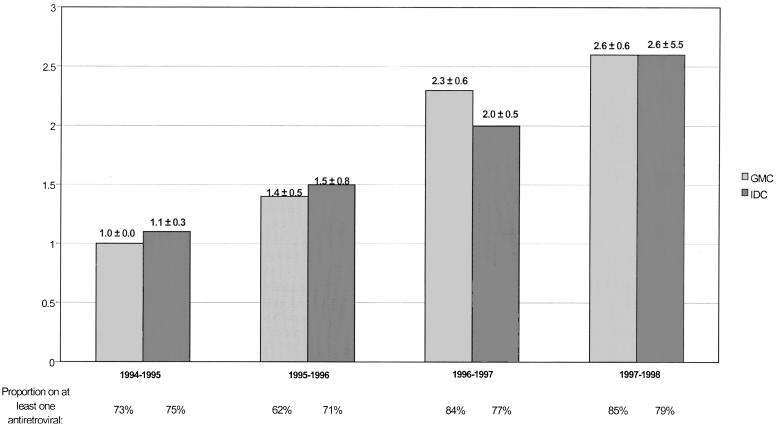
Results: At baseline GMC patients were more likely to be African American (85% vs 71%; P =.03) and had lower baseline CD4+ cell counts than IDC patients (262 +/- 269 vs 329 +/- 275; P =.05). A similar and high proportion of patients in both groups received appropriate preventive care services including Pneumocystis carinii pneumonia (PCP) prophylaxis, pneumococcal vaccination, and antiretroviral therapy. Screening for TB was more frequent in GMC (89% vs 68%; P =.001). In the year following randomization, GMC patients made more visits to the emergency department than IDC patients (1.6 +/- 3.0 vs 0.7 +/- 1.5; P =.05). Hospital use was higher for GMC patients with average length of stay 7.8 +/- 6.3 days compared to 5.7 +/- 3.8 days for IDC patients (P =.01). In analyses, which adjust for potential baseline imbalances, these differences remained.
Conclusions: Targeted education in GMC achieved similar provision of primary care for GMC patients, yet use of health care services was higher for this group. The delivery of adequate primary care is necessary but not sufficient to produce changes in health care utilization.
Figures
References
-
- Turner BJ, McKee L, Fanning T, Markson LE. AIDS specialist versus generalist ambulatory care for advanced HIV infection and impact on hospital use. Med Care. 1994;32:902–16. - PubMed
-
- Markson LE, Cosler LE, Turner BJ. Implications of generalists' slow adoption of zidovudine in clinical practice. Arch Intern Med. 1994;154:1497–504. - PubMed
-
- Kitahata MM, Koepsell TD, Deyo RA, Maxwell CL, Dodge WT, Wagner EH. Physicians' experience with the acquired immunodeficiency syndrome as a factor in patients' survival. N Engl J Med. 1996;334:701–6. - PubMed
-
- Hayward RA, Kravitz RL, Shapiro MF. Program directors' attitudes towards residents' care of patients who have AIDS. J Gen Intern Med. 1991;6:18–26. - PubMed
-
- Hayward RA, Weissfeld JL. Coming to terms with the era of AIDS: attitudes of physicians in U.S. residency programs. J Gen Intern Med. 1993;8:10–8. - PubMed
Publication types
MeSH terms
LinkOut - more resources
Full Text Sources
Medical
Research Materials