


The modified human DNA repair enzyme O(6)-methylguanine-DNA methyltransferase is a negative regulator of estrogen receptor-mediated transcription upon alkylation DNA damage
- PMID: 11564893
- PMCID: PMC99886
- DOI: 10.1128/MCB.21.20.7105-7114.2001
The modified human DNA repair enzyme O(6)-methylguanine-DNA methyltransferase is a negative regulator of estrogen receptor-mediated transcription upon alkylation DNA damage
Abstract
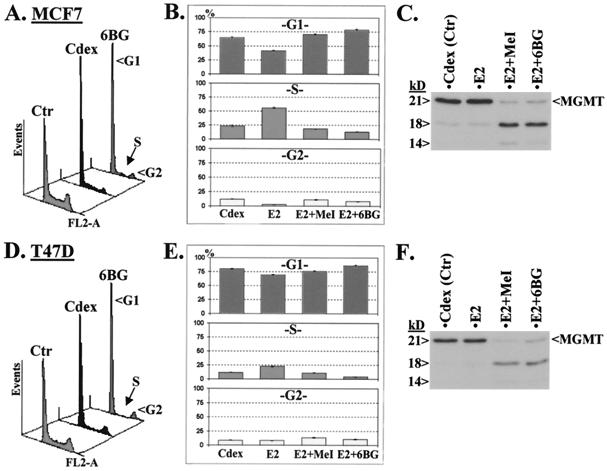
Cell proliferation requires precise control to prevent mutations from replication of (unrepaired) damaged DNA in cells exposed spontaneously to mutagens. Here we show that the modified human DNA repair enzyme O(6)-methylguanine-DNA methyltransferase (R-MGMT), formed from the suicidal repair of the mutagenic O(6)-alkylguanine (6RG) lesions by MGMT in the cells exposed to alkylating carcinogens, functions in such control by preventing the estrogen receptor (ER) from transcription activation that mediates cell proliferation. This function is in contrast to the phosphotriester repair domain of bacterial ADA protein, which acts merely as a transcription activator for its own synthesis upon repair of phosphotriester lesions. First, MGMT, which is constitutively present at active transcription sites, coprecipitates with the transcription integrator CREB-binding protein CBP/p300 but not R-MGMT. Second, R-MGMT, which adopts an altered conformation, utilizes its exposed VLWKLLKVV peptide domain (codons 98 to 106) to bind ER. This binding blocks ER from association with the LXXLL motif of its coactivator, steroid receptor coactivator-1, and thus represses ER effectively from carrying out transcription that regulates cell growth. Thus, through a change in conformation upon repair of the 6RG lesion, MGMT switches from a DNA repair factor to a transcription regulator (R-MGMT), enabling the cell to sense as well as respond to mutagens. These results have implications in chemotherapy and provide insights into the mechanisms for linking transcription suppression with transcription-coupled DNA repair.
Figures



References
-
- Abott P, Saffhill R. DNA synthesis with methylated poly (dC · dG) templates; evidence for a competitive nature of miscoding by O6-methylguanine. Biochim Biophys Acta. 1979;567:51–61. - PubMed
-
- Ali R B, Teo A K C, Oh H K, Chuang L S H, Ayi T C, Li B F L. Implication of localization of human DNA repair enzyme O6-methylguanine-DNA methyltransferase at active transcription sites in transcription-repair coupling of the mutagenic O6-methylguanine lesion. Mol Cell Biol. 1998;8:1660–1669. - PMC - PubMed
-
- Ayi T C, Oh H K, Lee T K Y, Li B F L. A method for the simultaneous identification of human active and active-site alkylated DNA repair enzyme, O6-methylguanine-DNA methyltransferase, and its application for monitoring human exposure to alkylating carcinogens. Cancer Res. 1994;54:3726–3731. - PubMed
-
- Bartek J, Iggo R, Gannon J, Lane D P. Genetic and immunochemical analysis of mutant p53 in human breast cancer cell lines. Oncogene. 1990;6:893–899. - PubMed
-
- Beral V, Banks E, Reeves G, Appleby P. Use of HRT and the subsequent risk of cancer. J Epidemiol Biostat. 1999;4:191–210. - PubMed
Publication types
MeSH terms
Substances
LinkOut - more resources
Full Text Sources
Other Literature Sources
Molecular Biology Databases
Research Materials
Miscellaneous
